

 Image 1 of 5
 Image 2 of 5
 Image 3 of 5
 Image 4 of 5
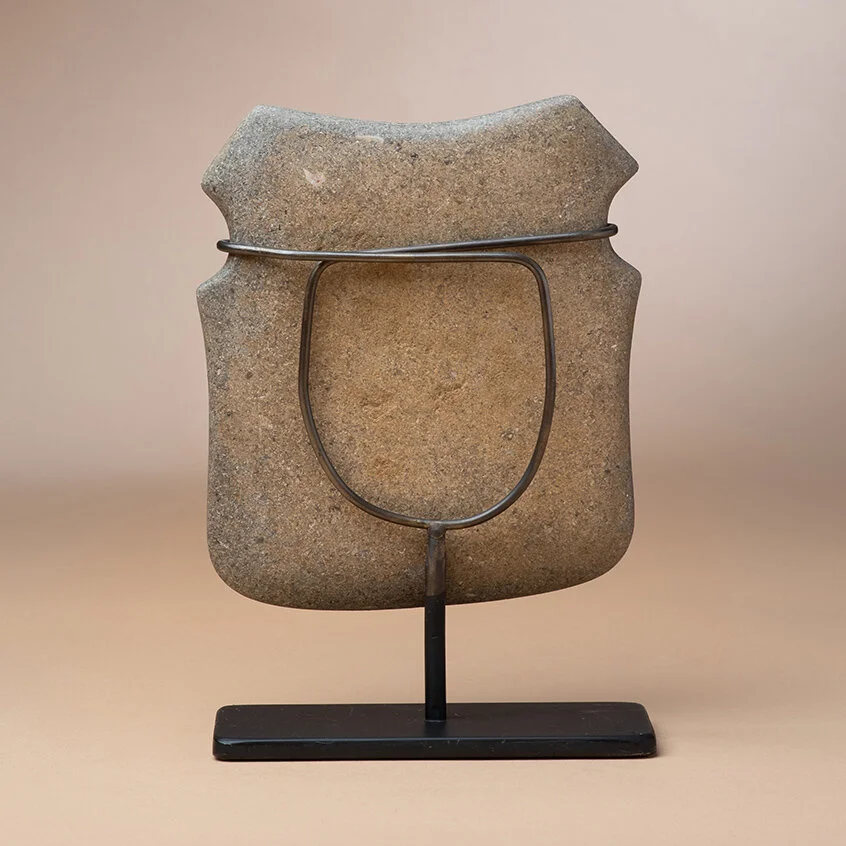 Image 5 of 5
Ecuador, Valdivia culture
Circa 3000 BC
Stone
Height: 8¼ in (21 cm), Width: 5¼ in (13.3 cm), Depth: 2½ in (6.4 cm)
Provenance: Joseph Henry Sharp, Taos, New Mexico; Christian Rub, Santa Barbara, California; Martha Pillard, Honolulu, Hawaii
The Valdivia culture of coastal Ecuador, dating to approximately 3500–1500 BC, is among the earliest ceramic-producing and stone-working traditions in the Americas. Votive stone axes of this type were produced as ceremonial objects rather than functional tools, distinguished by their refined shaping, symmetrical profiles, and the absence of use wear consistent with actual cutting. They are associated with ritual deposits and elite contexts within Valdivia settlements and burials along the Santa Elena Peninsula.
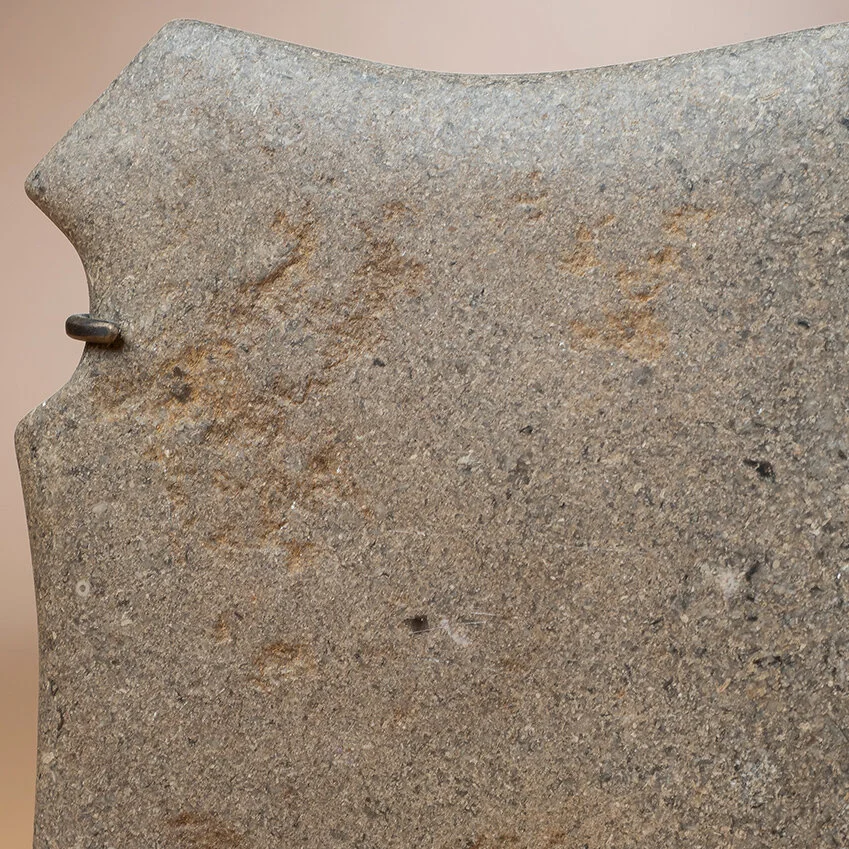
This example is shaped from a dense gray stone with a broad shouldered profile, notched lateral projections, and a flat polished surface consistent with ceremonial production of the period. The form follows the characteristic Valdivia votive axe outline, with careful attention to bilateral symmetry and edge refinement. The provenance chain through Joseph Henry Sharp, Taos, and two further distinguished American collections gives this piece an ownership history of considerable depth.
We ship free anywhere in the world, fully insured, packed by hand.
Ecuador, Valdivia culture
Circa 3000 BC
Stone
Height: 8¼ in (21 cm), Width: 5¼ in (13.3 cm), Depth: 2½ in (6.4 cm)
Provenance: Joseph Henry Sharp, Taos, New Mexico; Christian Rub, Santa Barbara, California; Martha Pillard, Honolulu, Hawaii
The Valdivia culture of coastal Ecuador, dating to approximately 3500–1500 BC, is among the earliest ceramic-producing and stone-working traditions in the Americas. Votive stone axes of this type were produced as ceremonial objects rather than functional tools, distinguished by their refined shaping, symmetrical profiles, and the absence of use wear consistent with actual cutting. They are associated with ritual deposits and elite contexts within Valdivia settlements and burials along the Santa Elena Peninsula.
This example is shaped from a dense gray stone with a broad shouldered profile, notched lateral projections, and a flat polished surface consistent with ceremonial production of the period. The form follows the characteristic Valdivia votive axe outline, with careful attention to bilateral symmetry and edge refinement. The provenance chain through Joseph Henry Sharp, Taos, and two further distinguished American collections gives this piece an ownership history of considerable depth.
We ship free anywhere in the world, fully insured, packed by hand.