East Sepik River, Papua New Guinea
Early 20th century
Wood, red ocher, white lime pigment
Height: 26½ in (67.3 cm)
Provenance: Collection of Frank Hodgkinson, Sydney, Australia (1919–2001), acquired in the 1960s; remained in the Hodgkinson family home for 65 years
Among the Warasei people of the East Sepik, northwest of Ambunti, the yam was central to both economic and spiritual life, and three sequential harvest ceremonies were required before the stored yams could be consumed. The third and most significant of these — the nogwi — was attended exclusively by the most powerful men in the region and involved the installation of two female spirit figures, representing Hameiyau and Sanggriyau, on an elevated platform before baskets of harvested yams decorated with shell ornaments, clan hair, and headband bags containing food. The figures were understood to dance together during the ceremony, and when removed, the food from the headband bags was distributed to women to ensure success in fishing.
This figure represents one of the female spirits, her arms arching backward with hands secured at the narrow waist, the posture accentuating the vulva as the source of female fertility and power. The face is painted in bright red ocher with eyes, mouth, and forehead highlighted in white lime, the ears and septum pierced for ceremonial attachments. Multiple layers of pigment are visible across the surface, evidence of the figure's use across successive ceremonial cycles, the accumulated repainting resulting in the deep glossy patina the wood now carries.
We ship free anywhere in the world, fully insured, packed by hand.
East Sepik River, Papua New Guinea
Early 20th century
Wood, red ocher, white lime pigment
Height: 26½ in (67.3 cm)
Provenance: Collection of Frank Hodgkinson, Sydney, Australia (1919–2001), acquired in the 1960s; remained in the Hodgkinson family home for 65 years
Among the Warasei people of the East Sepik, northwest of Ambunti, the yam was central to both economic and spiritual life, and three sequential harvest ceremonies were required before the stored yams could be consumed. The third and most significant of these — the nogwi — was attended exclusively by the most powerful men in the region and involved the installation of two female spirit figures, representing Hameiyau and Sanggriyau, on an elevated platform before baskets of harvested yams decorated with shell ornaments, clan hair, and headband bags containing food. The figures were understood to dance together during the ceremony, and when removed, the food from the headband bags was distributed to women to ensure success in fishing.
This figure represents one of the female spirits, her arms arching backward with hands secured at the narrow waist, the posture accentuating the vulva as the source of female fertility and power. The face is painted in bright red ocher with eyes, mouth, and forehead highlighted in white lime, the ears and septum pierced for ceremonial attachments. Multiple layers of pigment are visible across the surface, evidence of the figure's use across successive ceremonial cycles, the accumulated repainting resulting in the deep glossy patina the wood now carries.
We ship free anywhere in the world, fully insured, packed by hand.


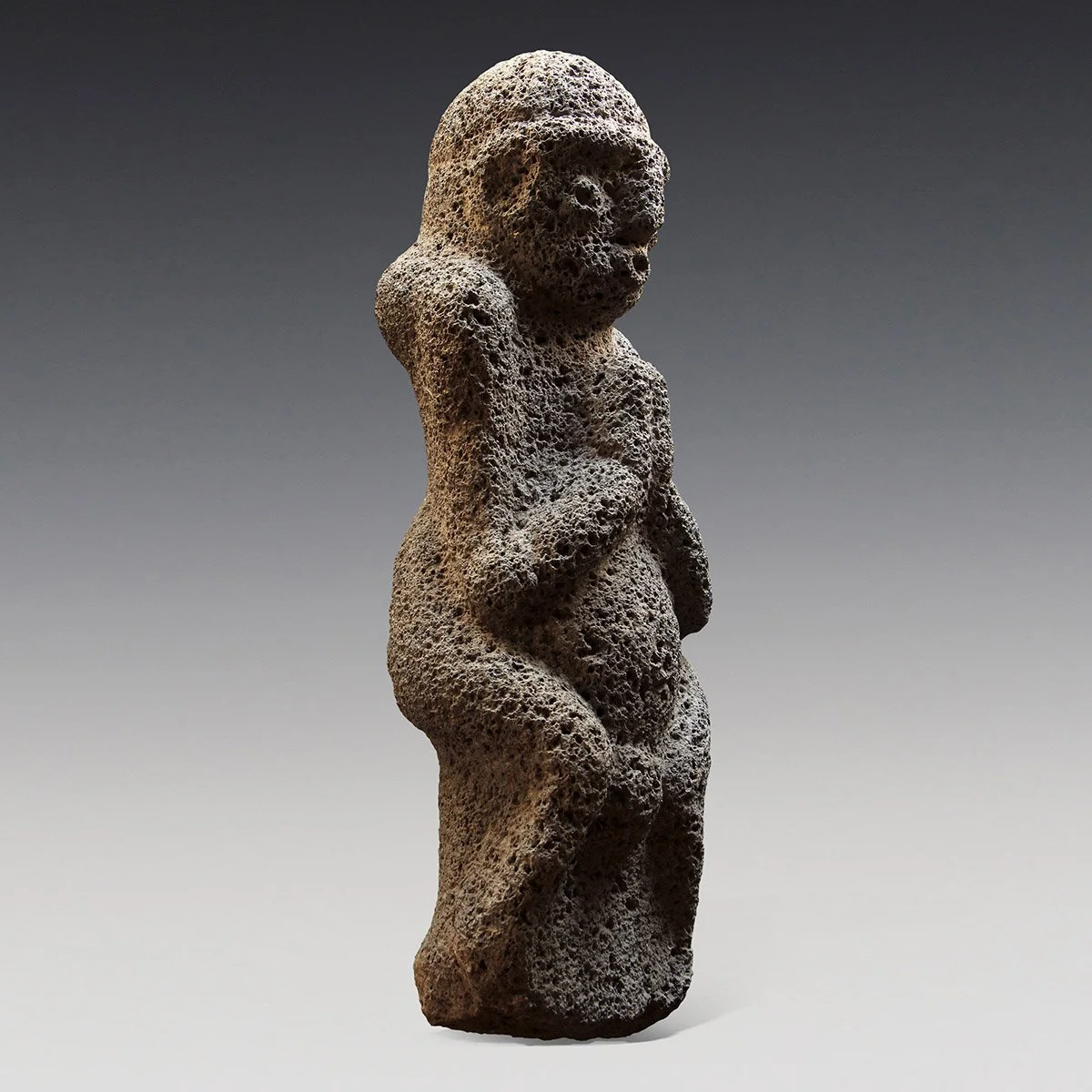 Image 1 of 6
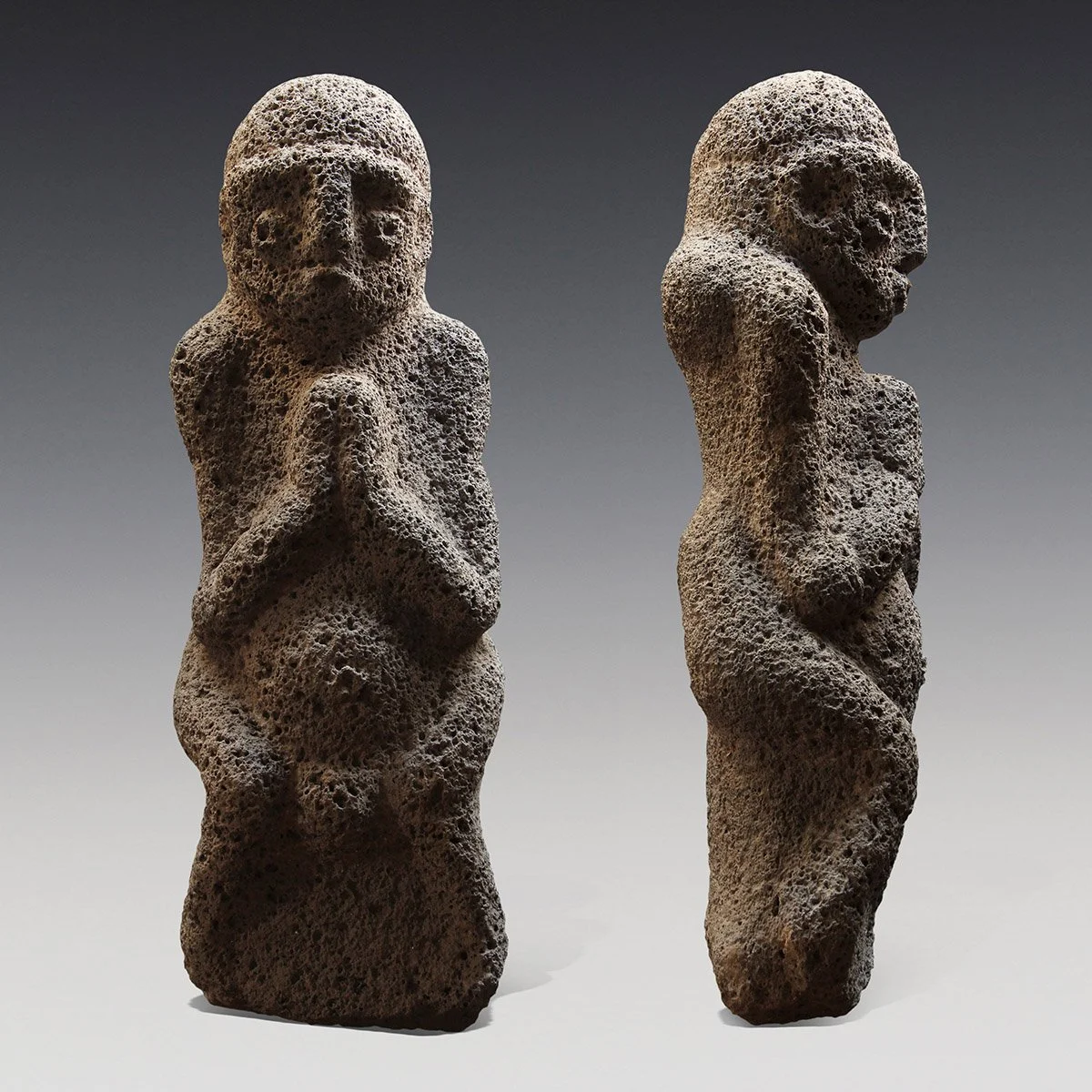 Image 2 of 6
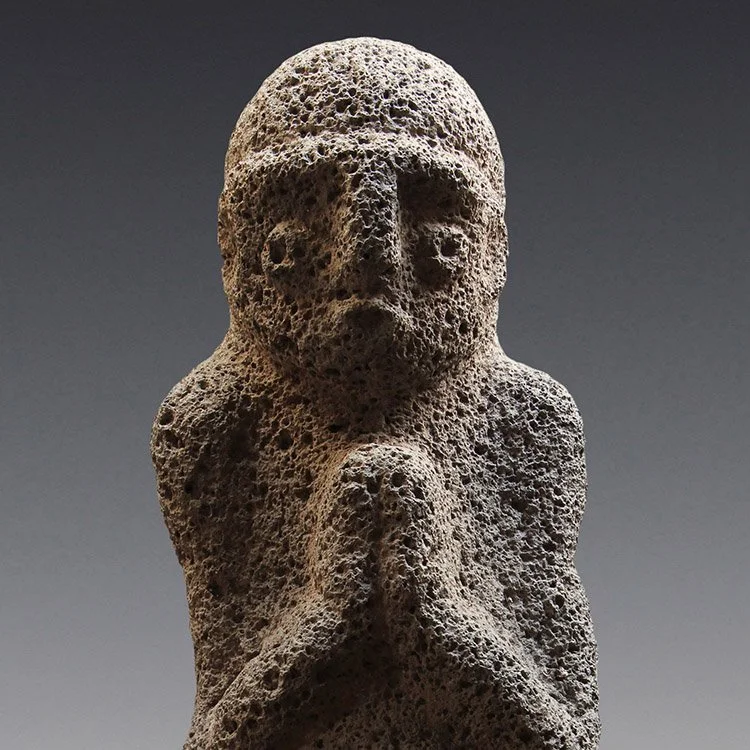 Image 3 of 6
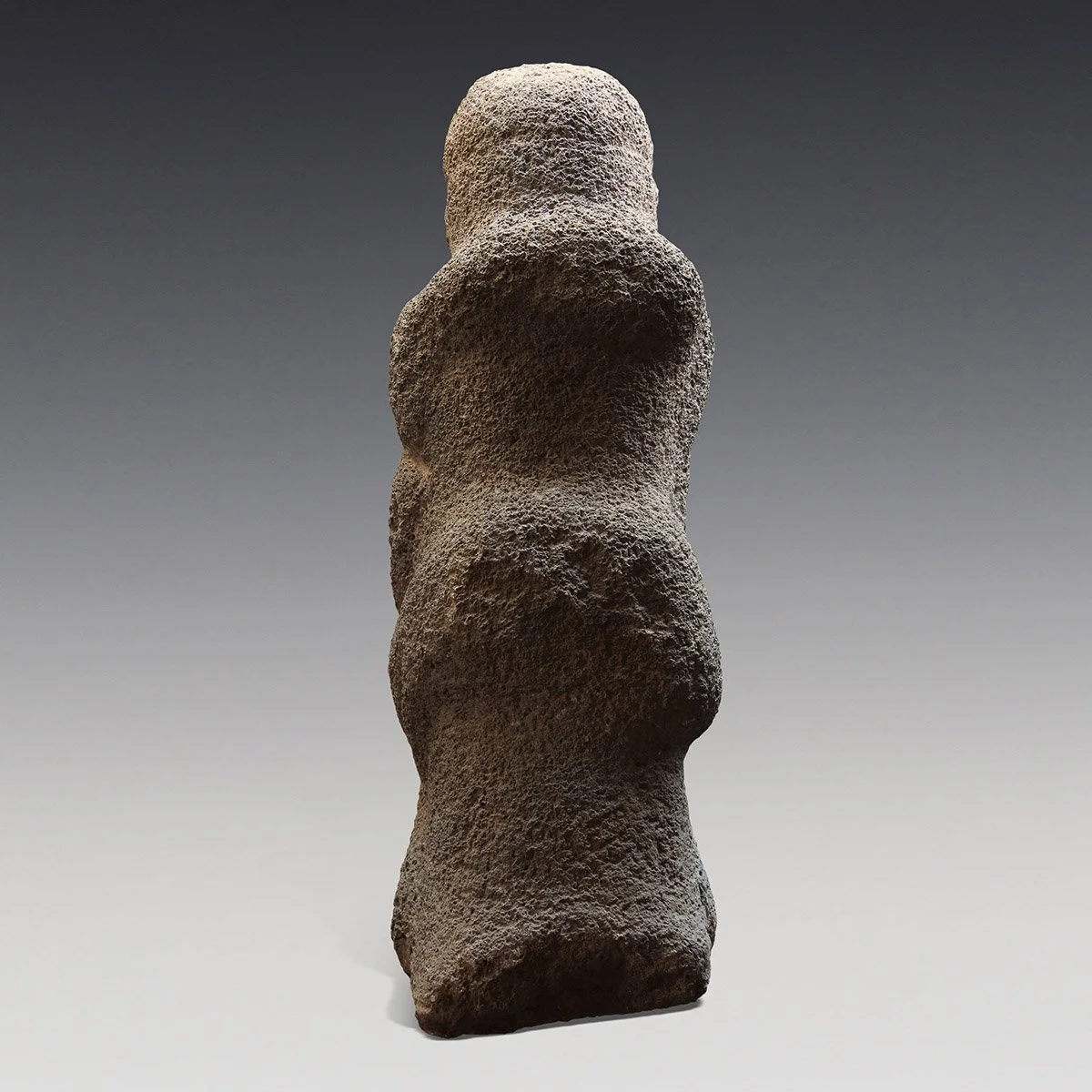 Image 4 of 6
 Image 5 of 6
 Image 6 of 6