Southwest Bay, Malekula Island, Vanuatu
Cane, palm fiber, pandanus, overmodeled clay, red ocher, charcoal, white lime
Height: 33½ in (85.1 cm)
Provenance: Field collected in 1963 by Nicolai Michoutouchkine; American East Coast private collection
Temes or temes nevimbur refers to a category of ritual objects — masks, puppets, and dance staffs — used in the Nimangki secret society initiation ceremonies of Malekula Island, where they were deployed to represent powerful spirits and enact mythological narratives. These masks were constructed over a complex armature of cane and palm fiber, the face overmodeled in clay and painted with natural pigments, and were worn or displayed during ceremonies that marked the progression of initiates through the grades of the Nimangki system. Nicolai Michoutouchkine, who field-collected this mask in 1963, spent decades in Vanuatu and became one of the most significant documentarians of Malekula ceremonial culture.
The mask presents ancestral facial features painted in red ocher, black charcoal, and white lime, the elongated conical crown constructed from wrapped fiber rising above the face. The upper portion retains interwoven pandanus fibers that would originally have secured a display of cockerel feathers, now absent. The overall assembly of cane frame, overmodeled face, and painted surface remains coherent, the pigments intact across the facial register.
We ship free anywhere in the world, fully insured, packed by hand.
Southwest Bay, Malekula Island, Vanuatu
Cane, palm fiber, pandanus, overmodeled clay, red ocher, charcoal, white lime
Height: 33½ in (85.1 cm)
Provenance: Field collected in 1963 by Nicolai Michoutouchkine; American East Coast private collection
Temes or temes nevimbur refers to a category of ritual objects — masks, puppets, and dance staffs — used in the Nimangki secret society initiation ceremonies of Malekula Island, where they were deployed to represent powerful spirits and enact mythological narratives. These masks were constructed over a complex armature of cane and palm fiber, the face overmodeled in clay and painted with natural pigments, and were worn or displayed during ceremonies that marked the progression of initiates through the grades of the Nimangki system. Nicolai Michoutouchkine, who field-collected this mask in 1963, spent decades in Vanuatu and became one of the most significant documentarians of Malekula ceremonial culture.
The mask presents ancestral facial features painted in red ocher, black charcoal, and white lime, the elongated conical crown constructed from wrapped fiber rising above the face. The upper portion retains interwoven pandanus fibers that would originally have secured a display of cockerel feathers, now absent. The overall assembly of cane frame, overmodeled face, and painted surface remains coherent, the pigments intact across the facial register.
We ship free anywhere in the world, fully insured, packed by hand.


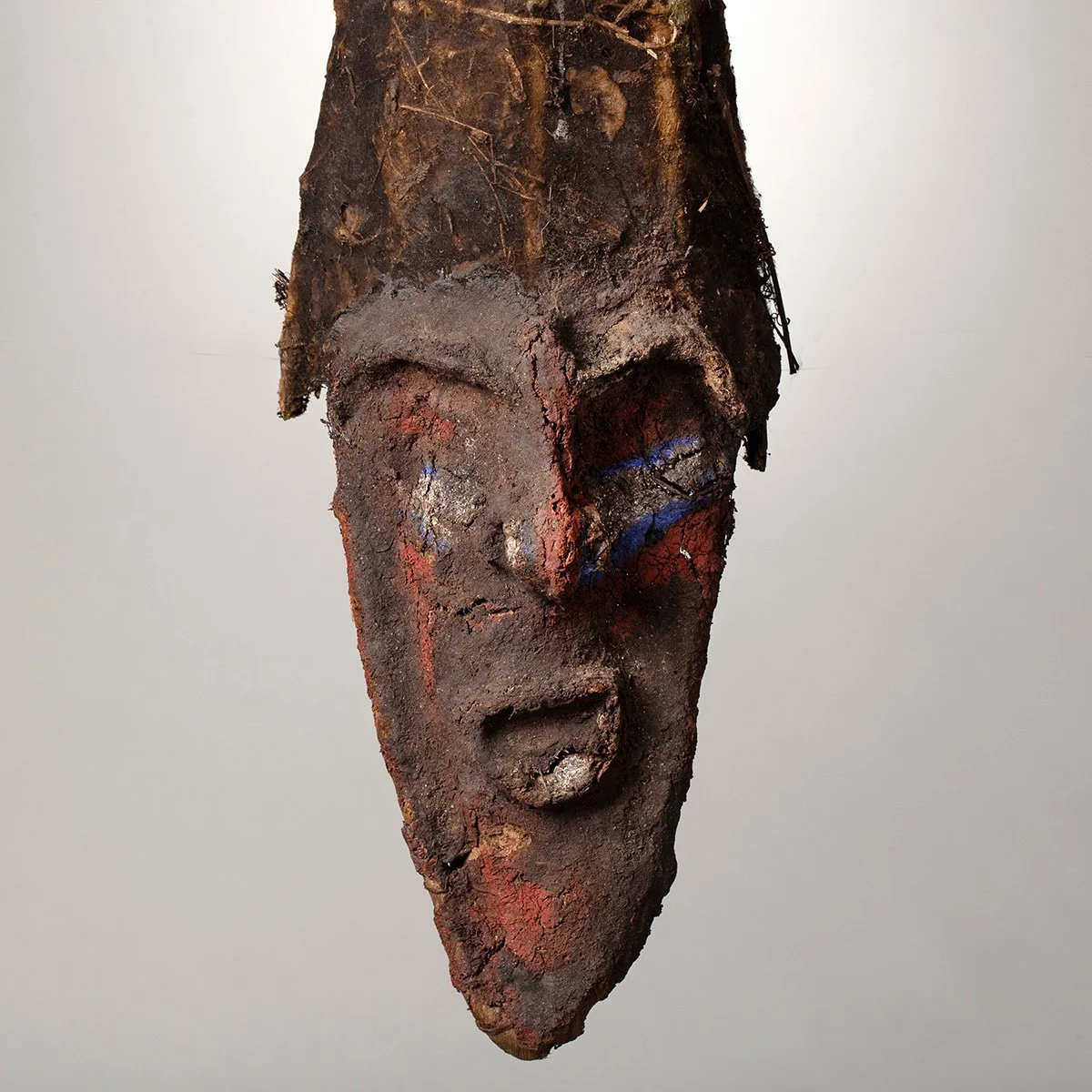 Image 1 of 6
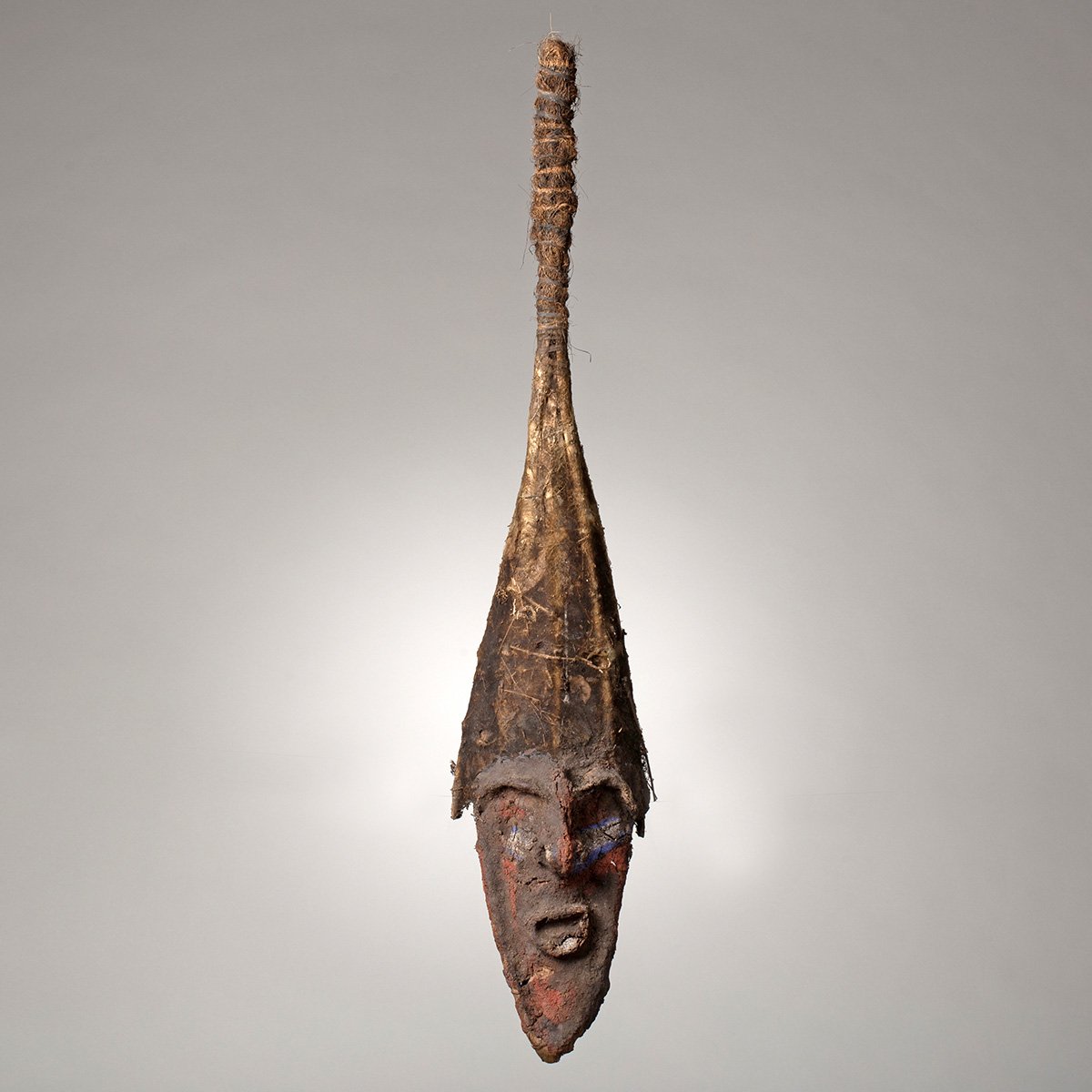 Image 2 of 6
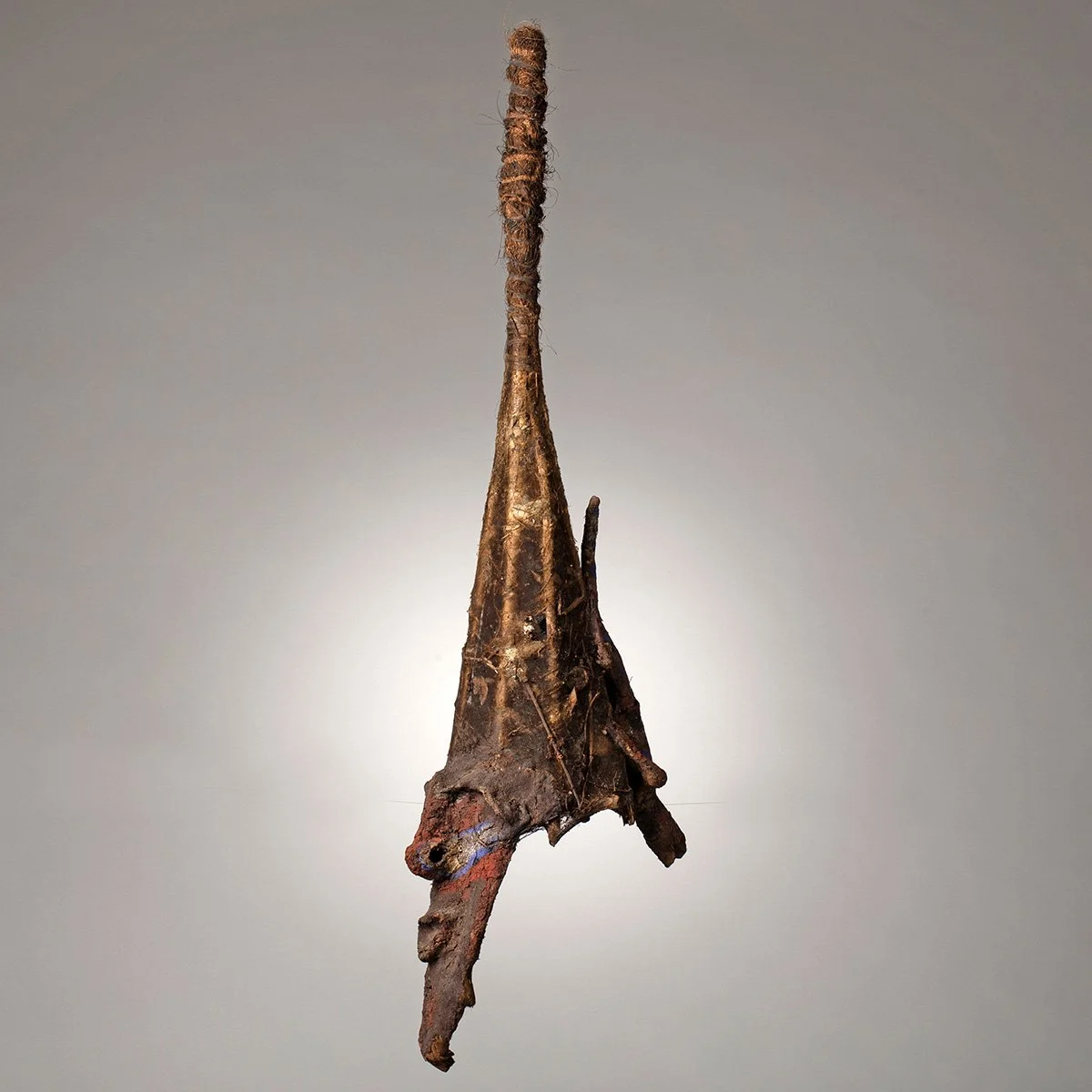 Image 3 of 6
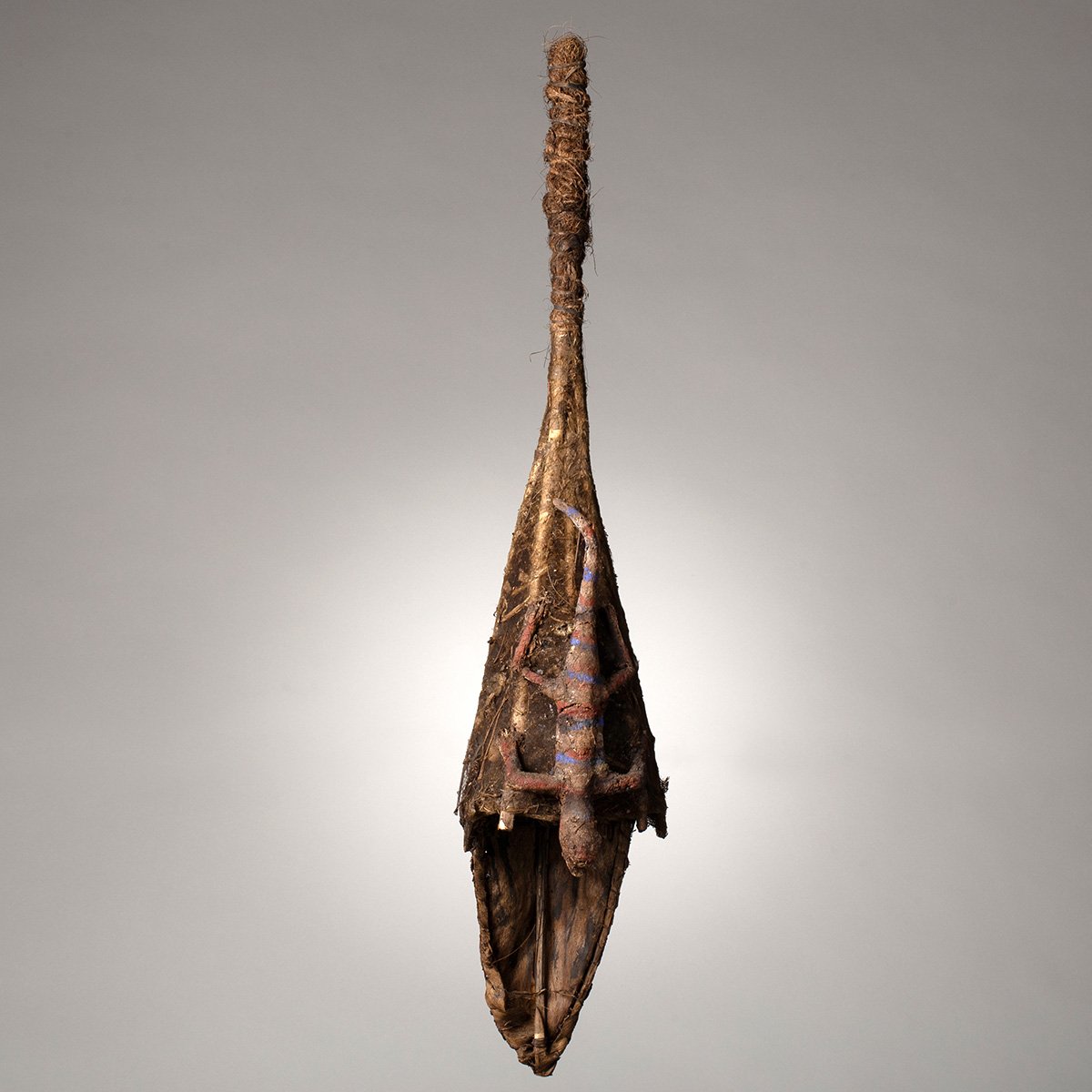 Image 4 of 6
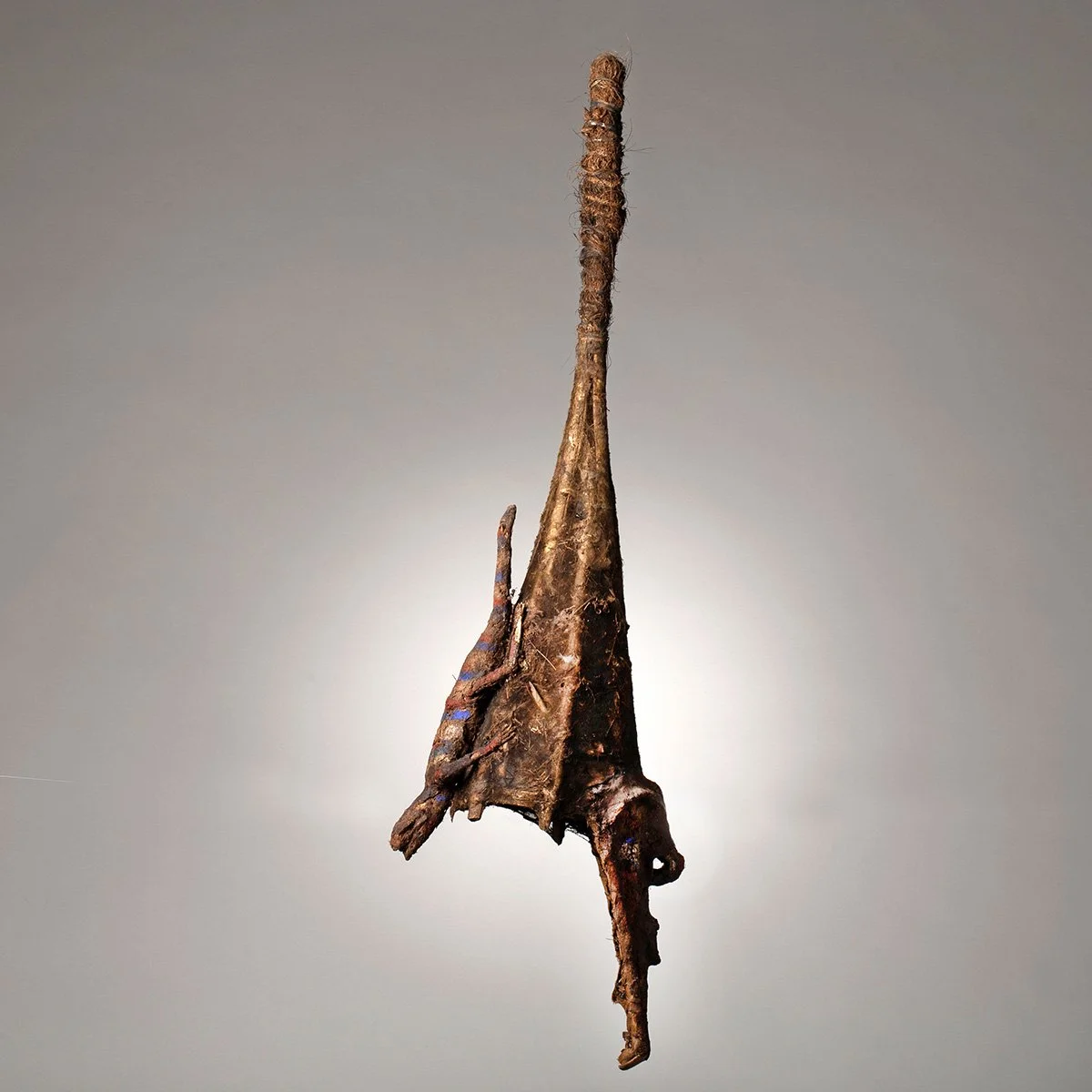 Image 5 of 6
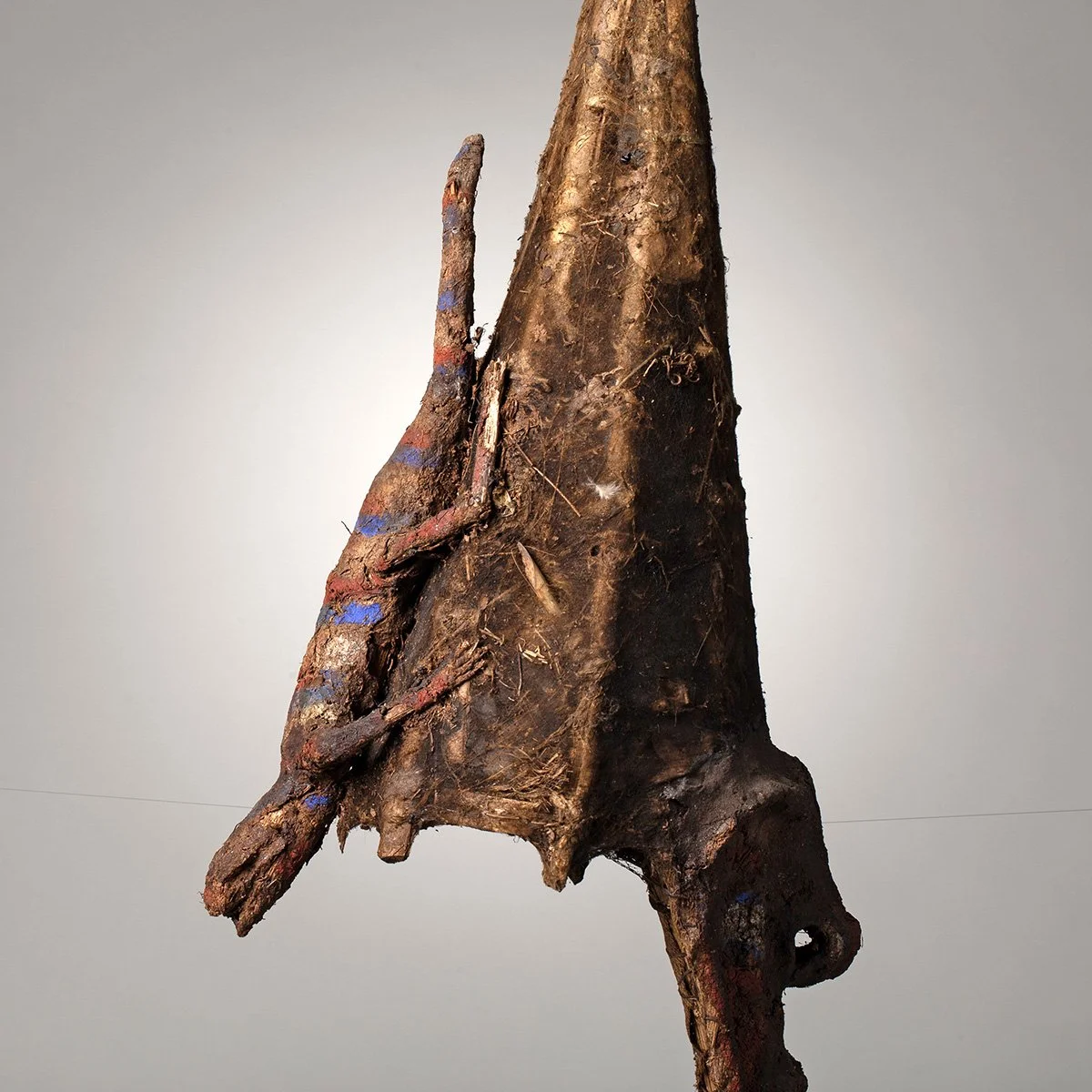 Image 6 of 6