

 Image 1 of 2
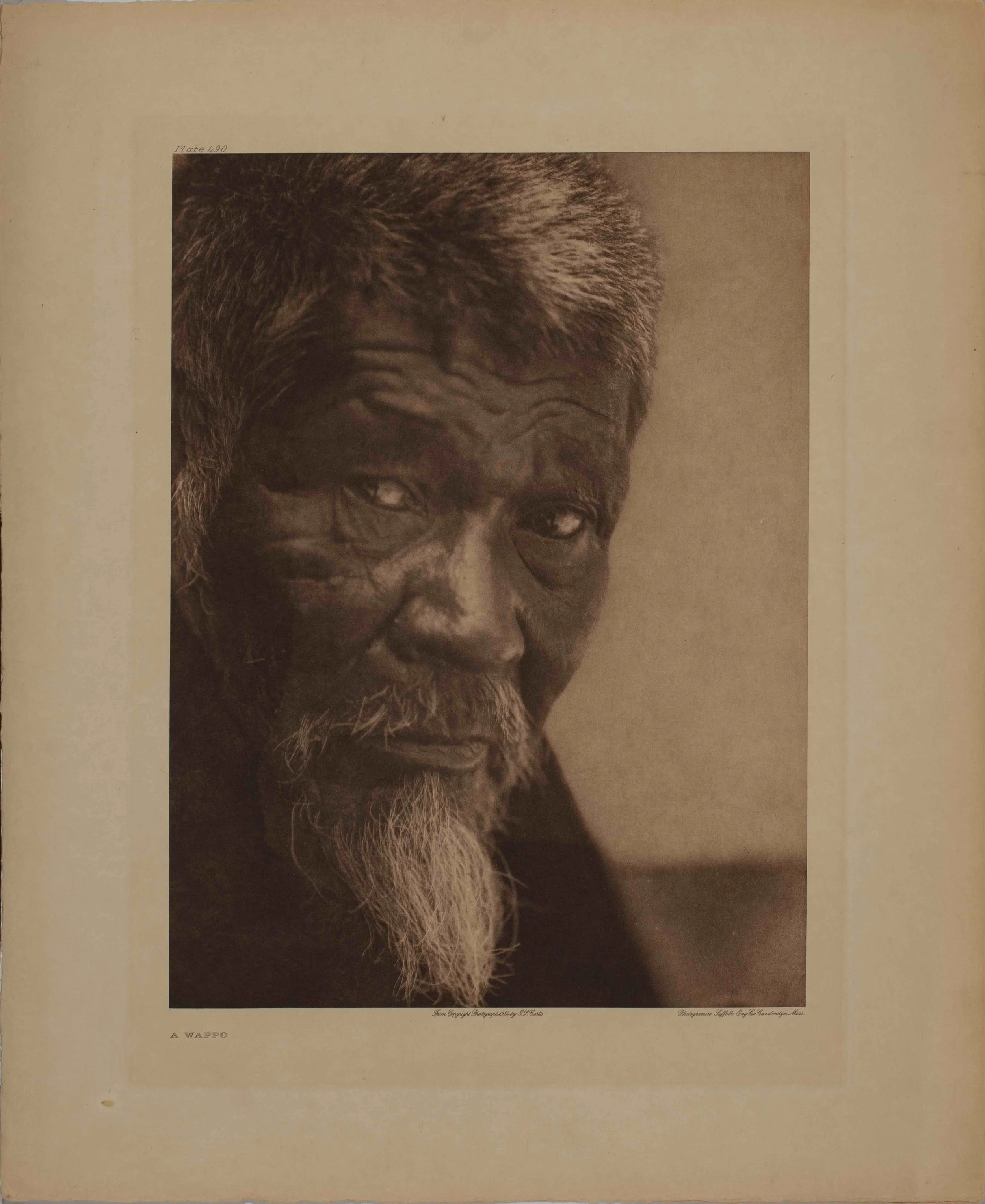 Image 2 of 2
Wappo, Northern California
1924
Photogravure on Dutch Van Gelder paper
Image 11 7/16 x 15 9/16 inches; sheet 17 15/16 x 21 7/8 inches
Provenance: Private collection, Tucson, AZ
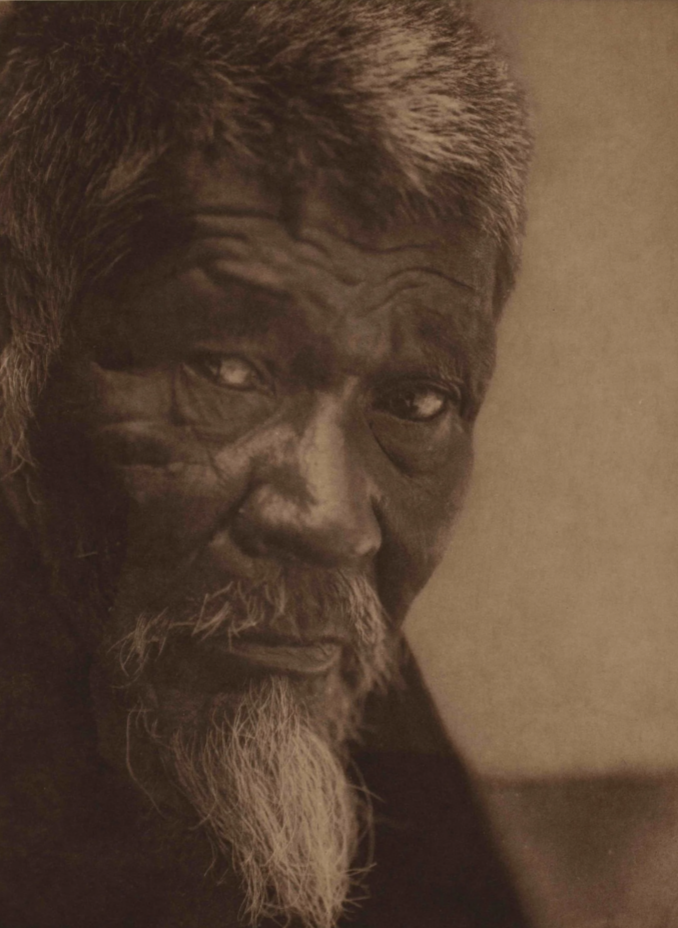
This photogravure portrait of a Wappo man was printed in 1924 on Dutch Van Gelder paper as part of Edward S. Curtis's documentation of North American indigenous peoples in The North American Indian. The Wappo people of the Alexander Valley and Clear Lake region of present day Sonoma and Lake counties in northern California were among the smallest and most geographically isolated of California's indigenous groups, and by the early 1920s their population had been drastically reduced by colonization. Curtis photogravures depicting Wappo subjects are among the less commonly encountered examples of his work, giving this portrait particular scarcity within the Curtis corpus.
The image is one of exceptional psychological presence, the subject rendered in close profile with a tonal depth and surface quality characteristic of Curtis's finest Dutch Van Gelder printings. As a visual record of a people and culture at a moment of profound historical transformation, it carries both documentary and artistic weight. From a Tucson private collection.
We ship free anywhere in the world, fully insured, packed by hand.
Wappo, Northern California
1924
Photogravure on Dutch Van Gelder paper
Image 11 7/16 x 15 9/16 inches; sheet 17 15/16 x 21 7/8 inches
Provenance: Private collection, Tucson, AZ
This photogravure portrait of a Wappo man was printed in 1924 on Dutch Van Gelder paper as part of Edward S. Curtis's documentation of North American indigenous peoples in The North American Indian. The Wappo people of the Alexander Valley and Clear Lake region of present day Sonoma and Lake counties in northern California were among the smallest and most geographically isolated of California's indigenous groups, and by the early 1920s their population had been drastically reduced by colonization. Curtis photogravures depicting Wappo subjects are among the less commonly encountered examples of his work, giving this portrait particular scarcity within the Curtis corpus.
The image is one of exceptional psychological presence, the subject rendered in close profile with a tonal depth and surface quality characteristic of Curtis's finest Dutch Van Gelder printings. As a visual record of a people and culture at a moment of profound historical transformation, it carries both documentary and artistic weight. From a Tucson private collection.
We ship free anywhere in the world, fully insured, packed by hand.