Yap Island, Federated States of Micronesia
Japanese colonial period (1914–1945)
Wood, pigment, fiber, shell
Height: 18¼ inches (46.4 cm)
Provenance: Michael Evans, Massachusetts
Carved figures representing ancestors or chiefs were produced on Yap Island within a tradition that placed considerable importance on rank, lineage, and the visible markers of status. This figure is male, standing upright, with tattooing rendered in pigment across the chest, arms, and legs — a direct reference to the practice of bodily tattooing that in Yapese society signified social position and passage through prescribed life stages. The facial features, ear ornaments, and fiber waist wrap are rendered with attention to the conventions of Yapese figural representation.
The Japanese colonial period on Yap, running from 1914 through 1945, saw continued production of traditional carved objects alongside significant disruption to island life, and figures of this type from that period document the persistence of ancestral imagery within a community under sustained external pressure. The polychrome surface retains original pigment in the tattooed areas, and the fiber and material attachments at the waist and wrists remain intact.
We ship free anywhere in the world, fully insured, packed by hand.
Yap Island, Federated States of Micronesia
Japanese colonial period (1914–1945)
Wood, pigment, fiber, shell
Height: 18¼ inches (46.4 cm)
Provenance: Michael Evans, Massachusetts
Carved figures representing ancestors or chiefs were produced on Yap Island within a tradition that placed considerable importance on rank, lineage, and the visible markers of status. This figure is male, standing upright, with tattooing rendered in pigment across the chest, arms, and legs — a direct reference to the practice of bodily tattooing that in Yapese society signified social position and passage through prescribed life stages. The facial features, ear ornaments, and fiber waist wrap are rendered with attention to the conventions of Yapese figural representation.
The Japanese colonial period on Yap, running from 1914 through 1945, saw continued production of traditional carved objects alongside significant disruption to island life, and figures of this type from that period document the persistence of ancestral imagery within a community under sustained external pressure. The polychrome surface retains original pigment in the tattooed areas, and the fiber and material attachments at the waist and wrists remain intact.
We ship free anywhere in the world, fully insured, packed by hand.


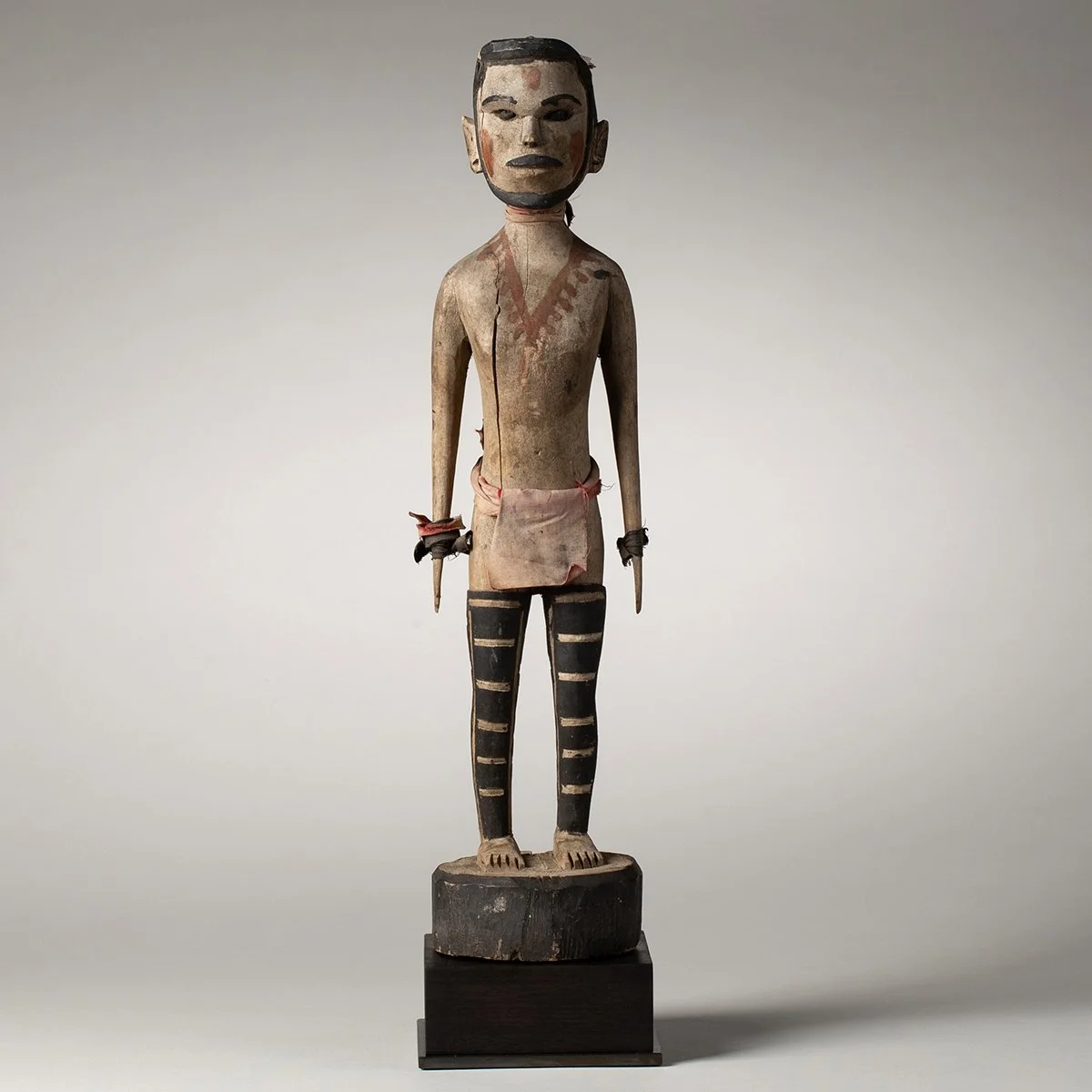 Image 1 of 8
 Image 2 of 8
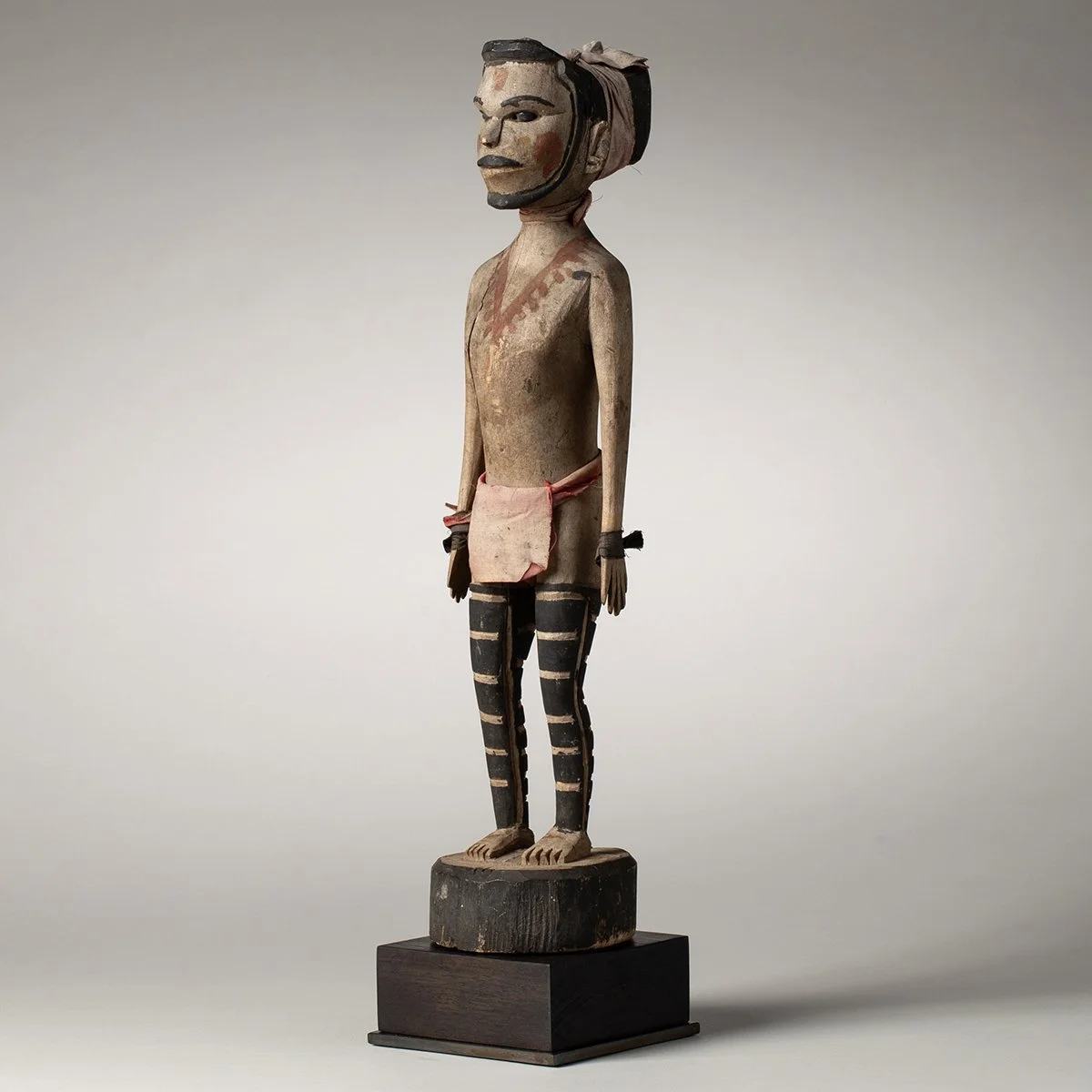 Image 3 of 8
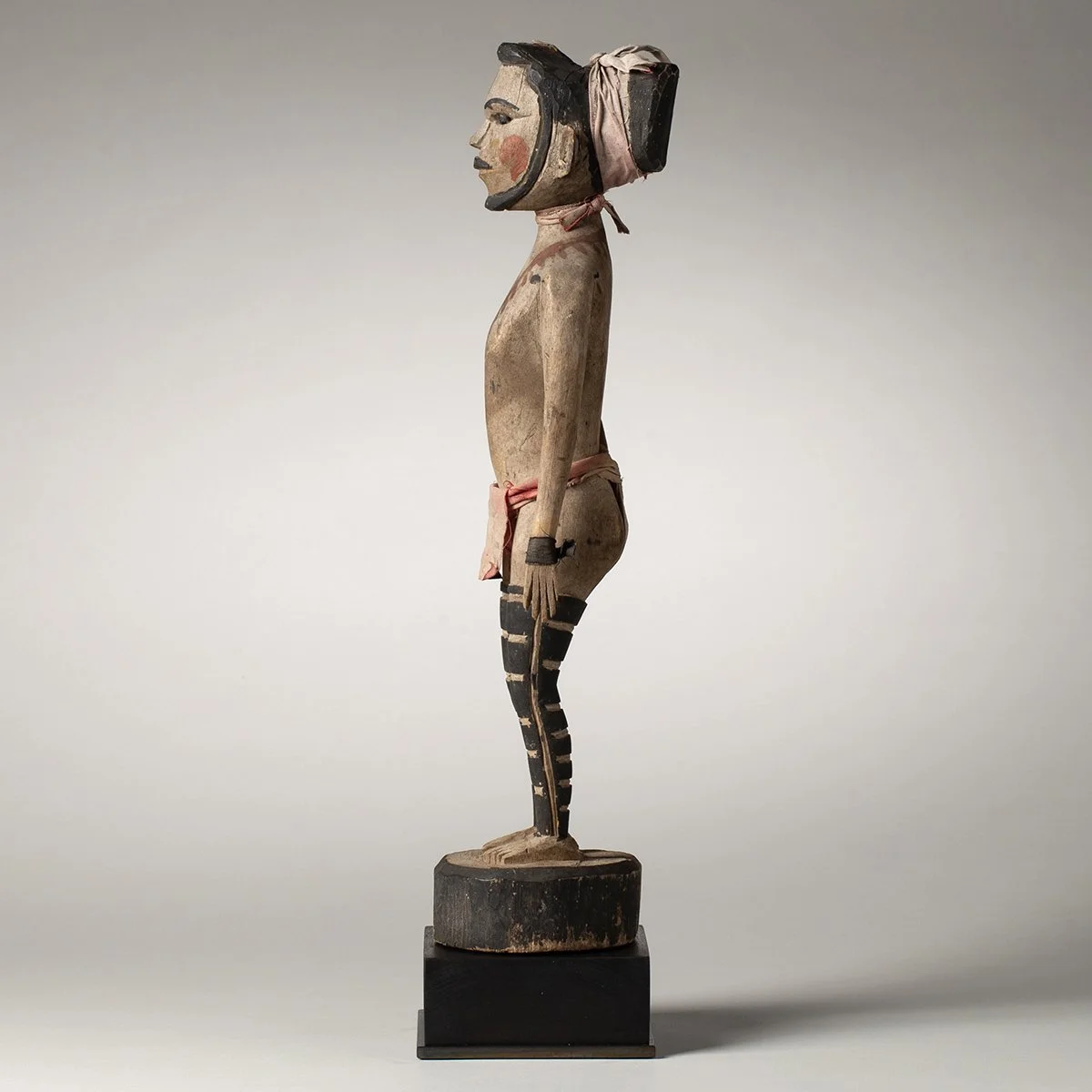 Image 4 of 8
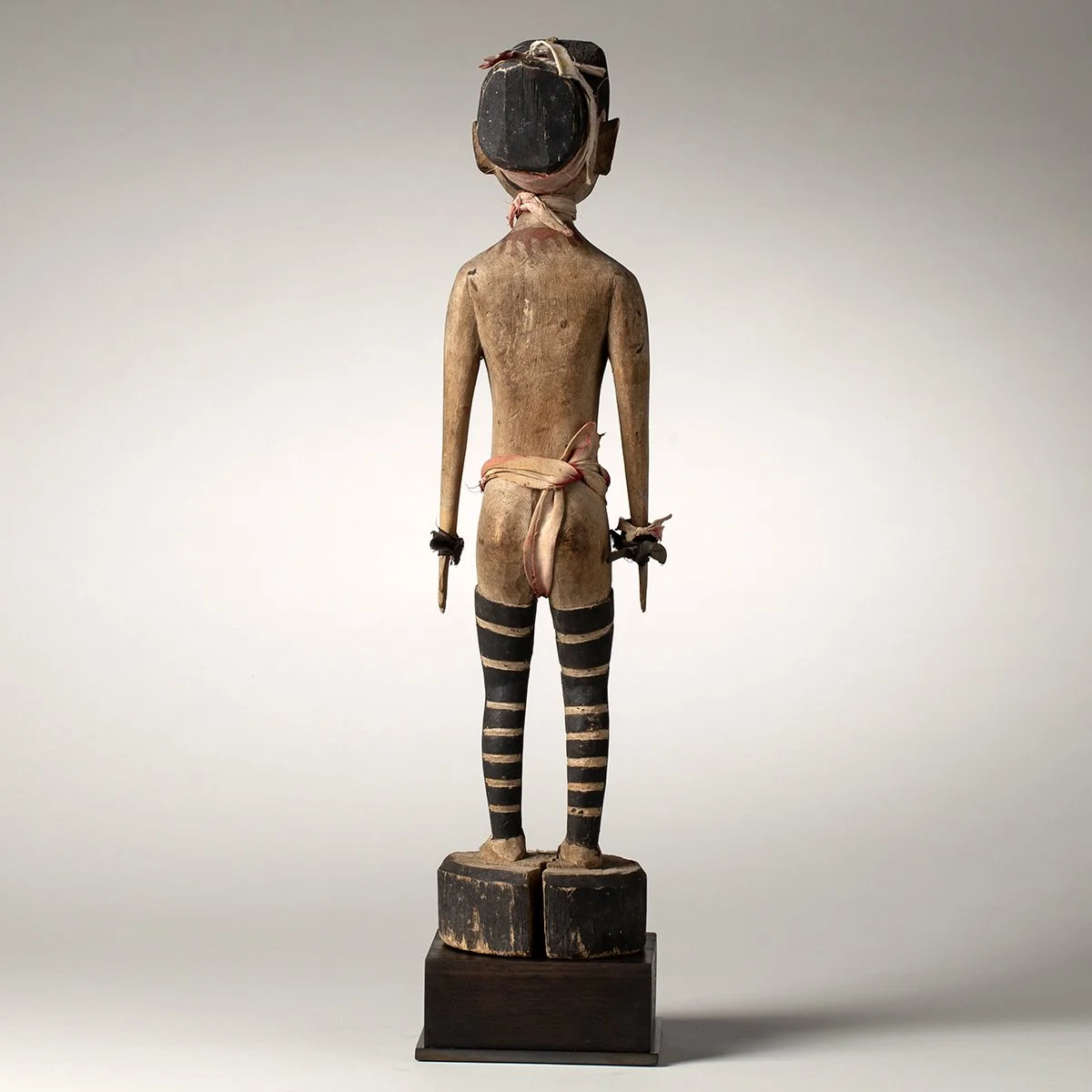 Image 5 of 8
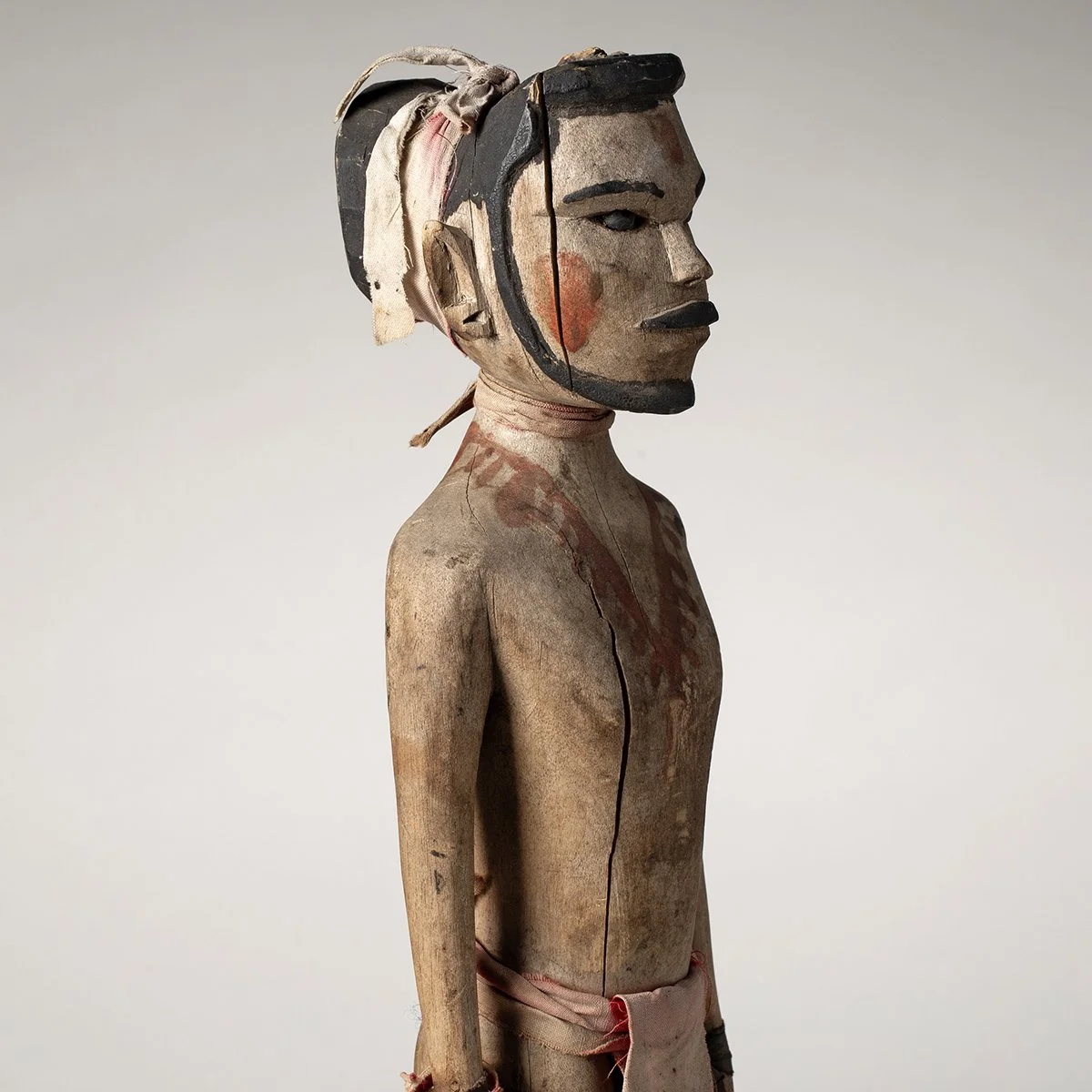 Image 6 of 8
 Image 7 of 8
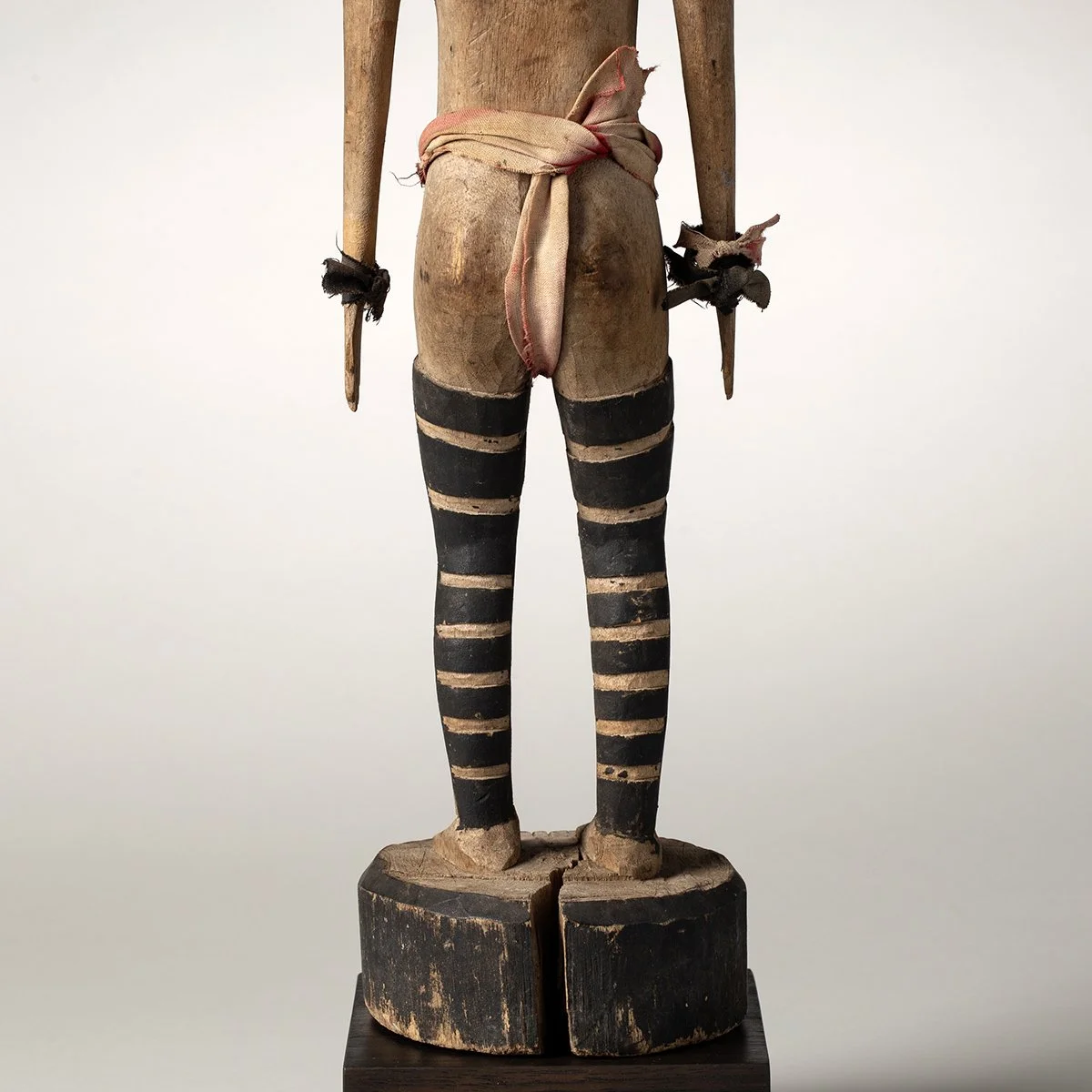 Image 8 of 8