

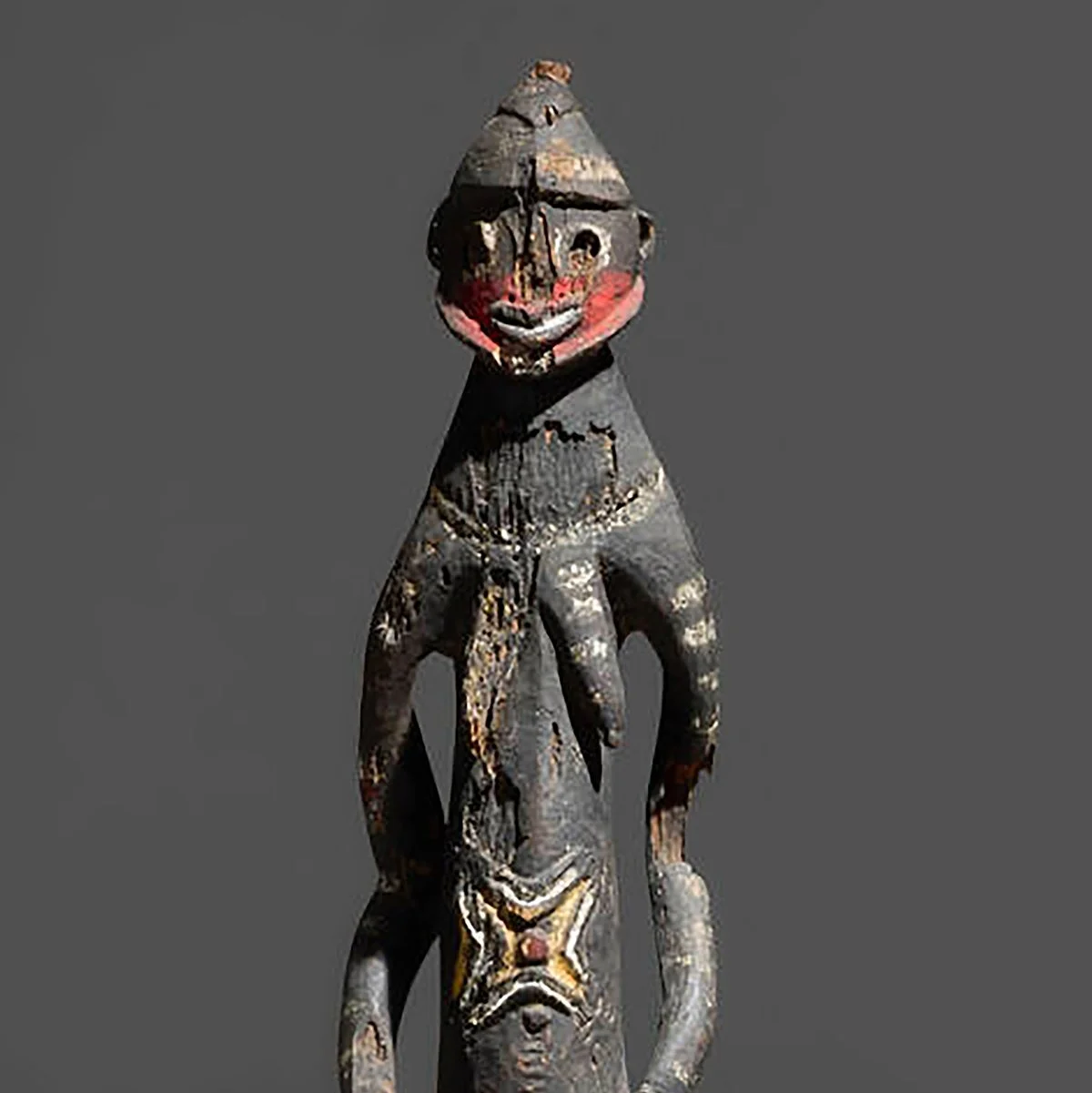
 Image 1 of 5
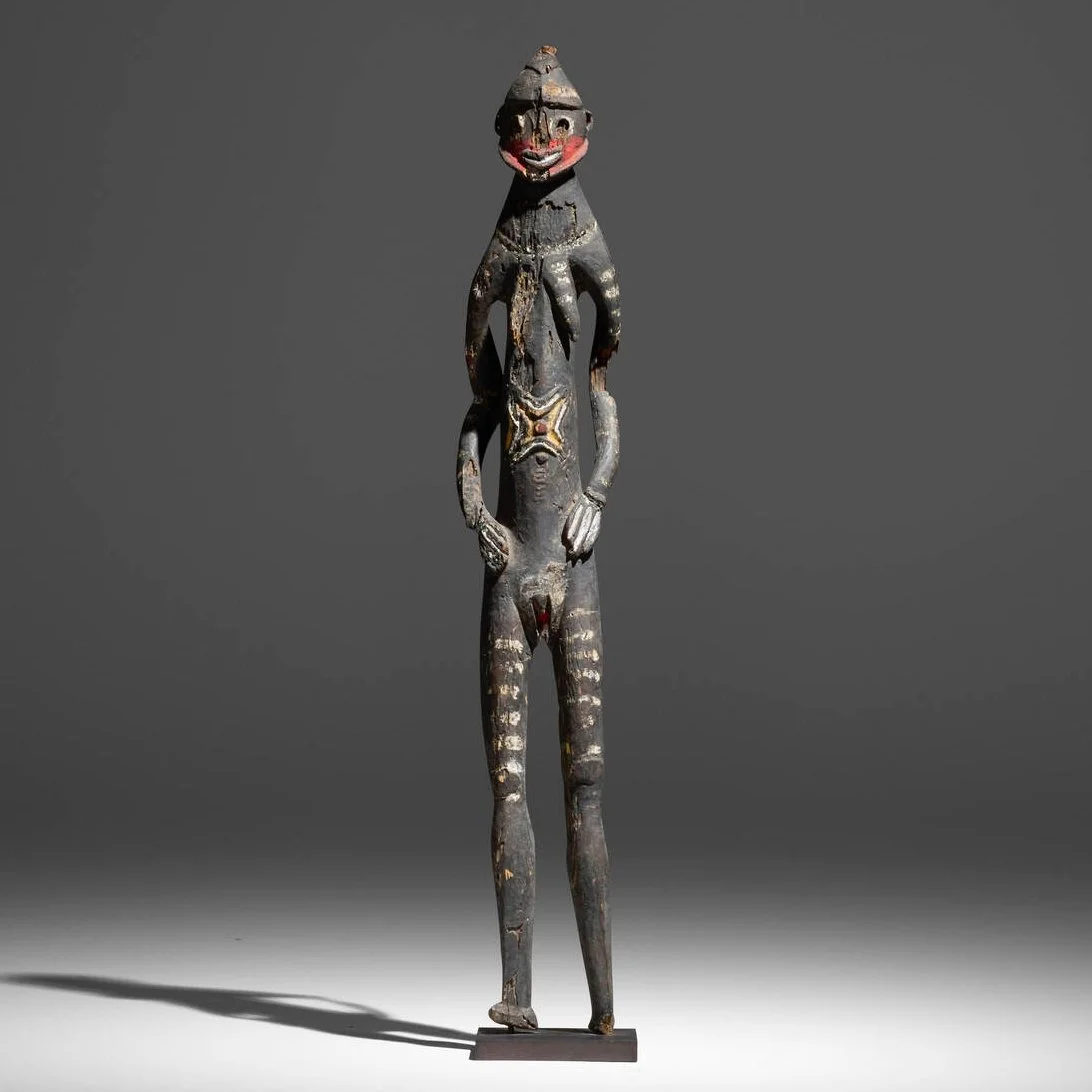 Image 2 of 5
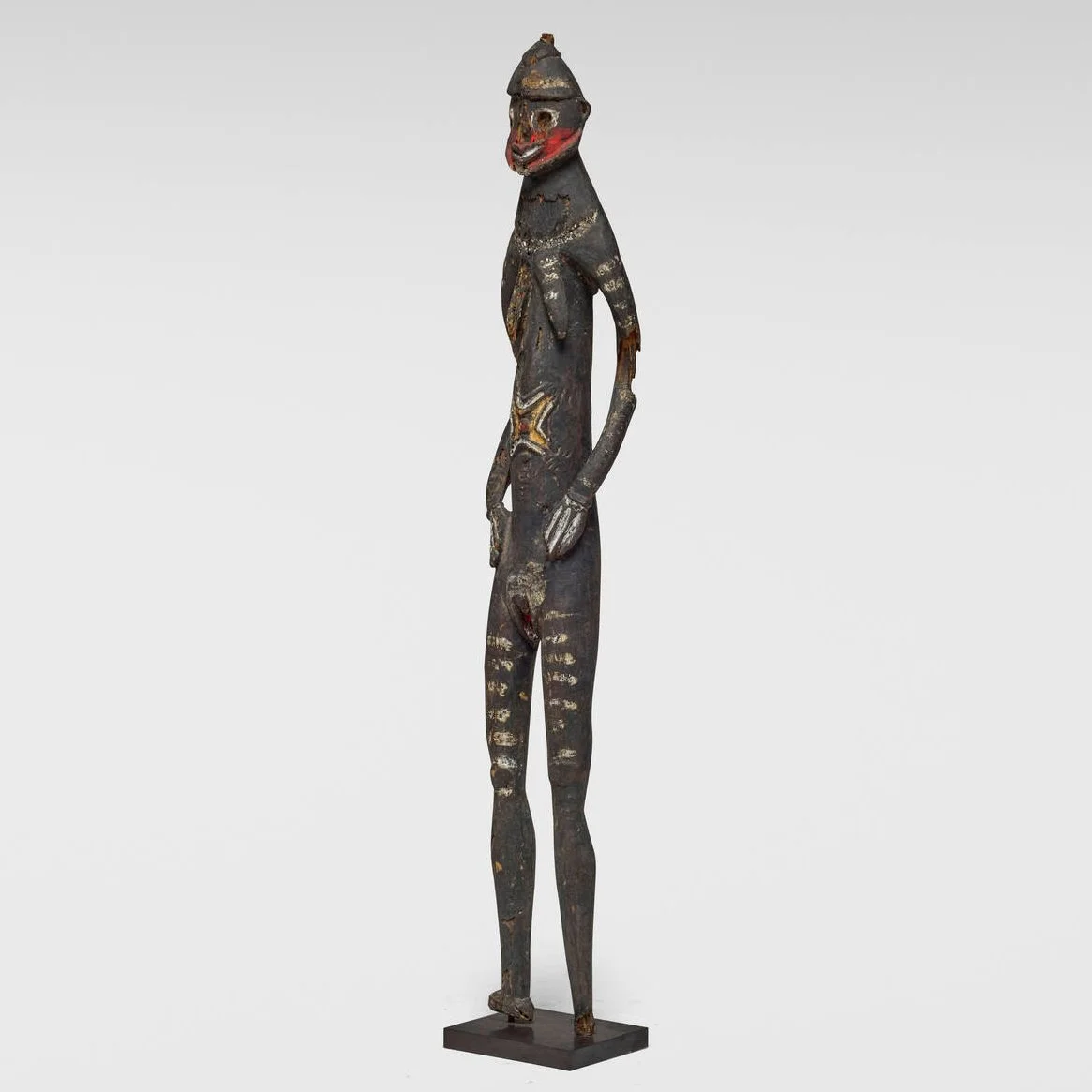 Image 3 of 5
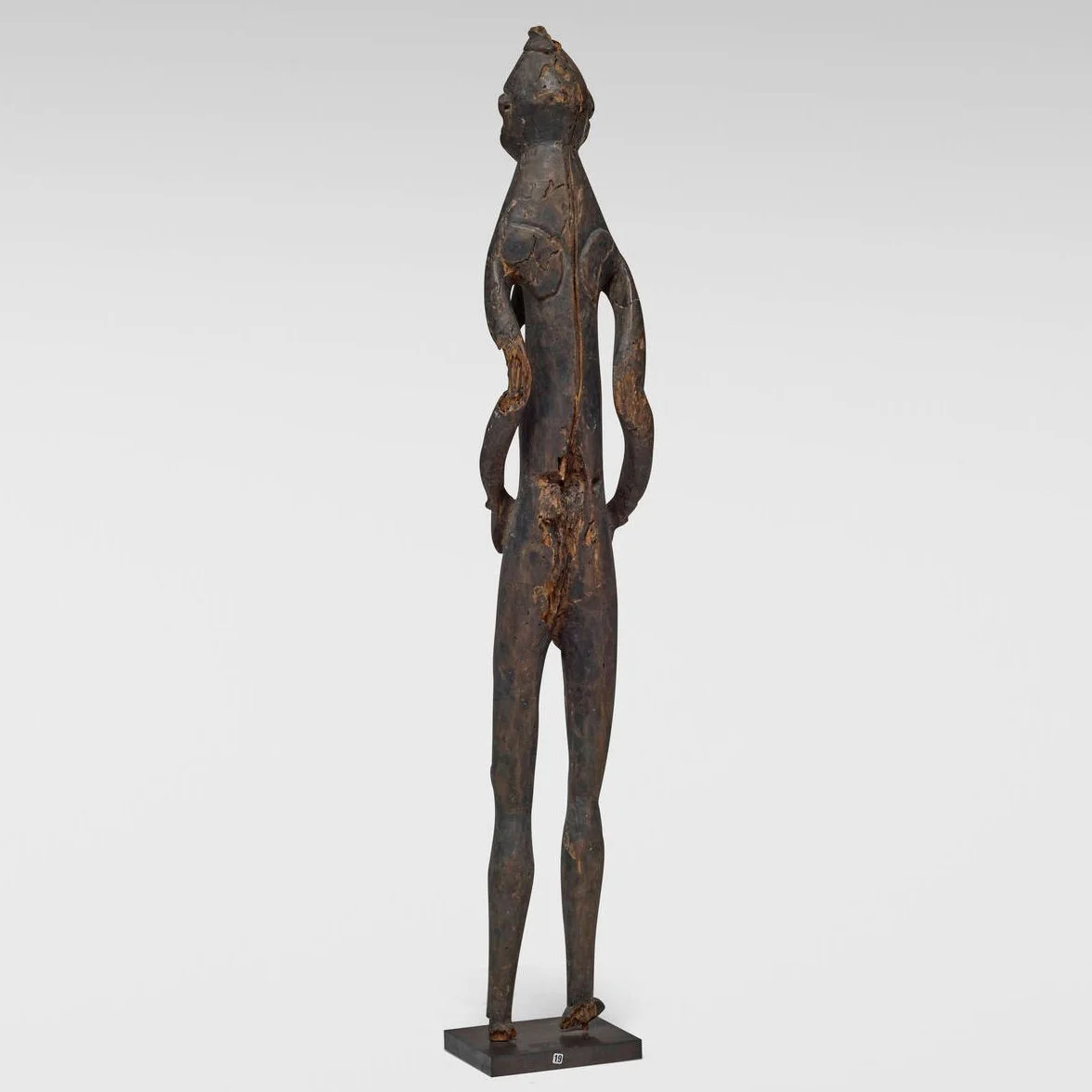 Image 4 of 5
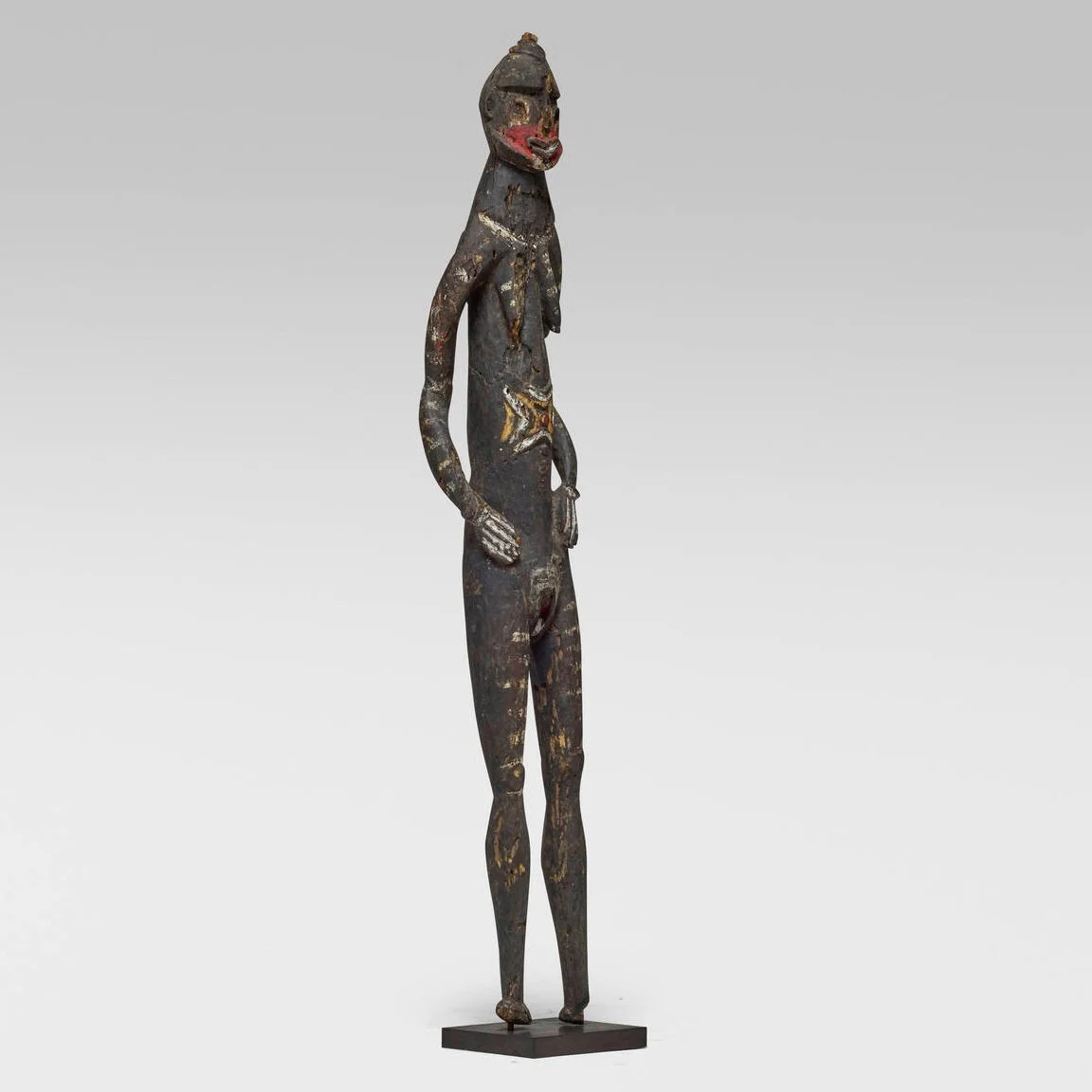 Image 5 of 5
East Sepik Province, Papua New Guinea
Circa 1950s or earlier
Light wood, black, white, yellow, and red pigments
Height: 50 in (127 cm)
Provenance: Phillip Goldman, field collected in the 1950s; Marcia and John Freide Collection, Rye, New York; Bonhams, Fine African and Oceanic Art, San Francisco, Lot 38, May 5–6, 2015
Among the Yessan-Mayo people of the Upper Sepik, the nogwi was the third and final yam harvest ceremony, attended exclusively by the most powerful men of the community. Two female spirit figures representing Hameiyau or Sanggriyau were erected on a platform before a basket of harvested yams, decorated with shell ornaments, clan members' hair, and headband bags containing nuts, fish, meat, and eggs. The ceremonies continued until dawn, at which point the food was distributed to women to ensure success in fishing.
The face is carved with a sharply angled jawline, upturned mouth, straight nose with pierced septum, and large circular eyes, the torso decorated with a central geometric motif in low relief. Facial features, breasts, navel, and vagina are rendered as geometric forms in high relief, consistent with Wardwell's observation that the other surface designs likely represent body painting. The arms and legs carry white banded decoration; the surface retains its original black, white, yellow, and red pigments, with the feet now missing.
We ship free anywhere in the world, fully insured, packed by hand.
East Sepik Province, Papua New Guinea
Circa 1950s or earlier
Light wood, black, white, yellow, and red pigments
Height: 50 in (127 cm)
Provenance: Phillip Goldman, field collected in the 1950s; Marcia and John Freide Collection, Rye, New York; Bonhams, Fine African and Oceanic Art, San Francisco, Lot 38, May 5–6, 2015
Among the Yessan-Mayo people of the Upper Sepik, the nogwi was the third and final yam harvest ceremony, attended exclusively by the most powerful men of the community. Two female spirit figures representing Hameiyau or Sanggriyau were erected on a platform before a basket of harvested yams, decorated with shell ornaments, clan members' hair, and headband bags containing nuts, fish, meat, and eggs. The ceremonies continued until dawn, at which point the food was distributed to women to ensure success in fishing.
The face is carved with a sharply angled jawline, upturned mouth, straight nose with pierced septum, and large circular eyes, the torso decorated with a central geometric motif in low relief. Facial features, breasts, navel, and vagina are rendered as geometric forms in high relief, consistent with Wardwell's observation that the other surface designs likely represent body painting. The arms and legs carry white banded decoration; the surface retains its original black, white, yellow, and red pigments, with the feet now missing.
We ship free anywhere in the world, fully insured, packed by hand.