Yoruba, Nigeria
19th century
Wood
Height 10 1/2" (26.7 cm); diameter 9 1/2" (24.1 cm)
Provenance: London trade
The agere ifa is a vessel used in Ifa divination practice to hold the palm nuts employed by the babalawo, or divination priest, during consultations. Bowls of this type are among the most formally significant objects in the Yoruba ceremonial repertoire, and the kneeling female figure, here supporting the deep bowl on her head with a second figure at her base, reflects the visual language of devotion, female support, and spiritual service that recurs across Yoruba figural sculpture. The two curved handles emerging from the underside of the bowl, with crosshatched outer surfaces, are a functional and decorative detail that allowed the bowl to be shifted without disturbing its contents.
The deep glossy patina, worn surface, and overall sculptural quality of the figure are consistent with sustained ritual use over an extended period. The coiffure, facial features, and posture are carved with the attention to formal elegance characteristic of accomplished Yoruba workshop production of the period. The combination of the kneeling caryatid form and the deep vessel above reflects a compositional type that recurs in high quality agere ifa and connects this example to a well documented tradition of Yoruba devotional carving.
Ifa divination is one of the most complex and widely practiced systems of spiritual consultation in West Africa, recognized by UNESCO as an Intangible Cultural Heritage of Humanity. The babalawo uses the palm nuts held in vessels such as this to generate patterns that are interpreted through an extensive corpus of oral literature encoding centuries of accumulated knowledge. Objects made for Ifa practice were among the most carefully produced in the Yoruba material world, their quality reflecting the prestige of the divination tradition they served.
We ship free anywhere in the world, fully insured, packed by hand.
Yoruba, Nigeria
19th century
Wood
Height 10 1/2" (26.7 cm); diameter 9 1/2" (24.1 cm)
Provenance: London trade
The agere ifa is a vessel used in Ifa divination practice to hold the palm nuts employed by the babalawo, or divination priest, during consultations. Bowls of this type are among the most formally significant objects in the Yoruba ceremonial repertoire, and the kneeling female figure, here supporting the deep bowl on her head with a second figure at her base, reflects the visual language of devotion, female support, and spiritual service that recurs across Yoruba figural sculpture. The two curved handles emerging from the underside of the bowl, with crosshatched outer surfaces, are a functional and decorative detail that allowed the bowl to be shifted without disturbing its contents.
The deep glossy patina, worn surface, and overall sculptural quality of the figure are consistent with sustained ritual use over an extended period. The coiffure, facial features, and posture are carved with the attention to formal elegance characteristic of accomplished Yoruba workshop production of the period. The combination of the kneeling caryatid form and the deep vessel above reflects a compositional type that recurs in high quality agere ifa and connects this example to a well documented tradition of Yoruba devotional carving.
Ifa divination is one of the most complex and widely practiced systems of spiritual consultation in West Africa, recognized by UNESCO as an Intangible Cultural Heritage of Humanity. The babalawo uses the palm nuts held in vessels such as this to generate patterns that are interpreted through an extensive corpus of oral literature encoding centuries of accumulated knowledge. Objects made for Ifa practice were among the most carefully produced in the Yoruba material world, their quality reflecting the prestige of the divination tradition they served.
We ship free anywhere in the world, fully insured, packed by hand.


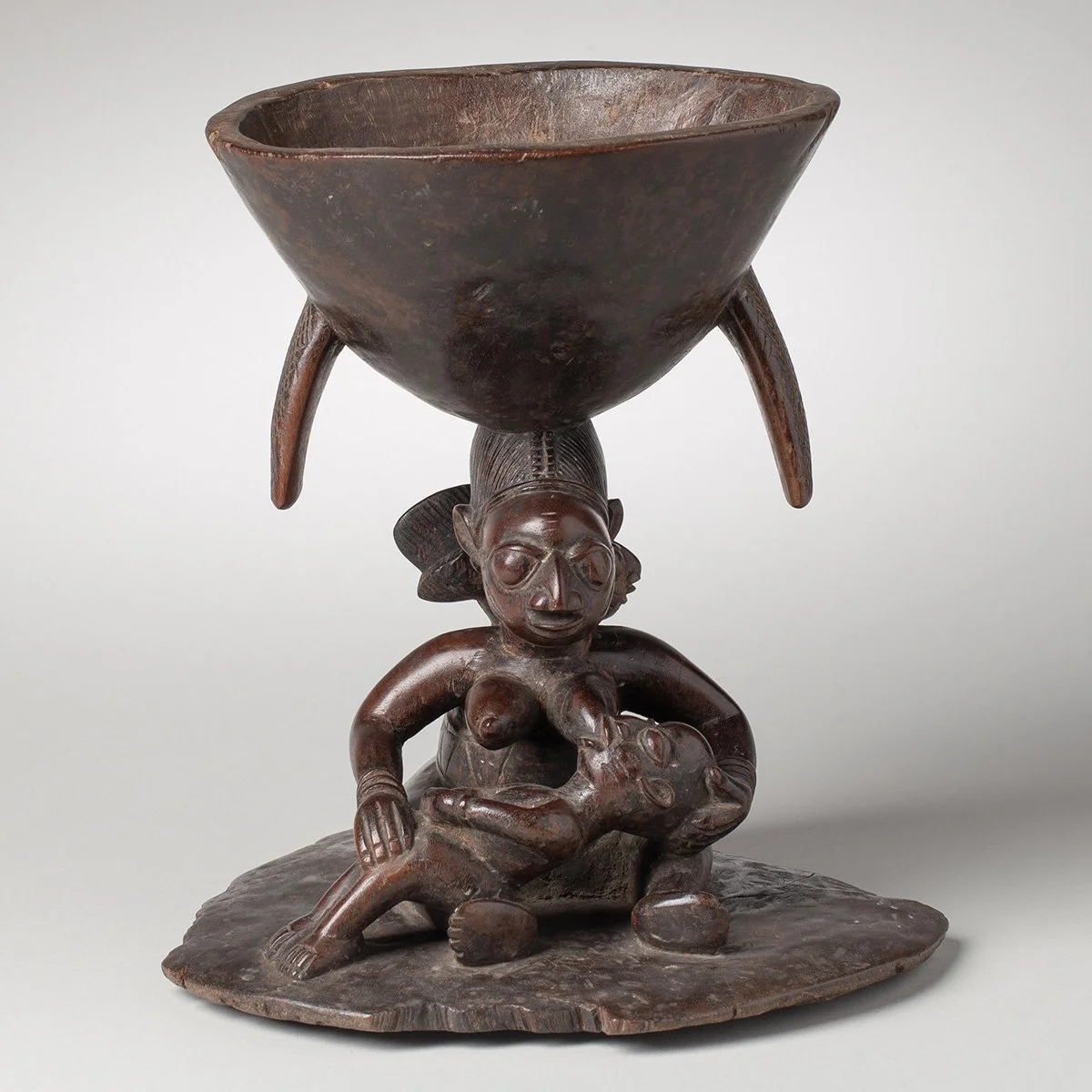 Image 1 of 10
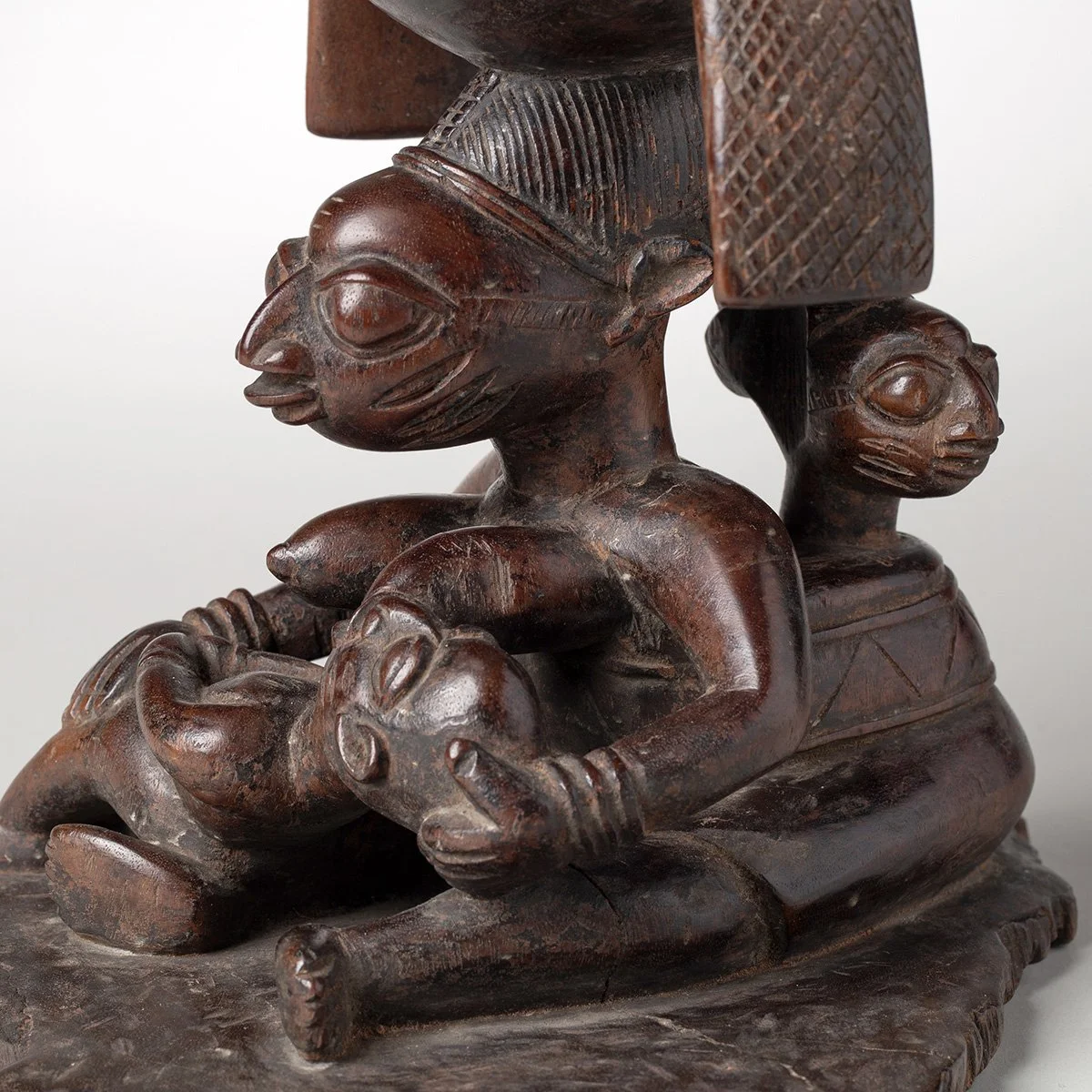 Image 2 of 10
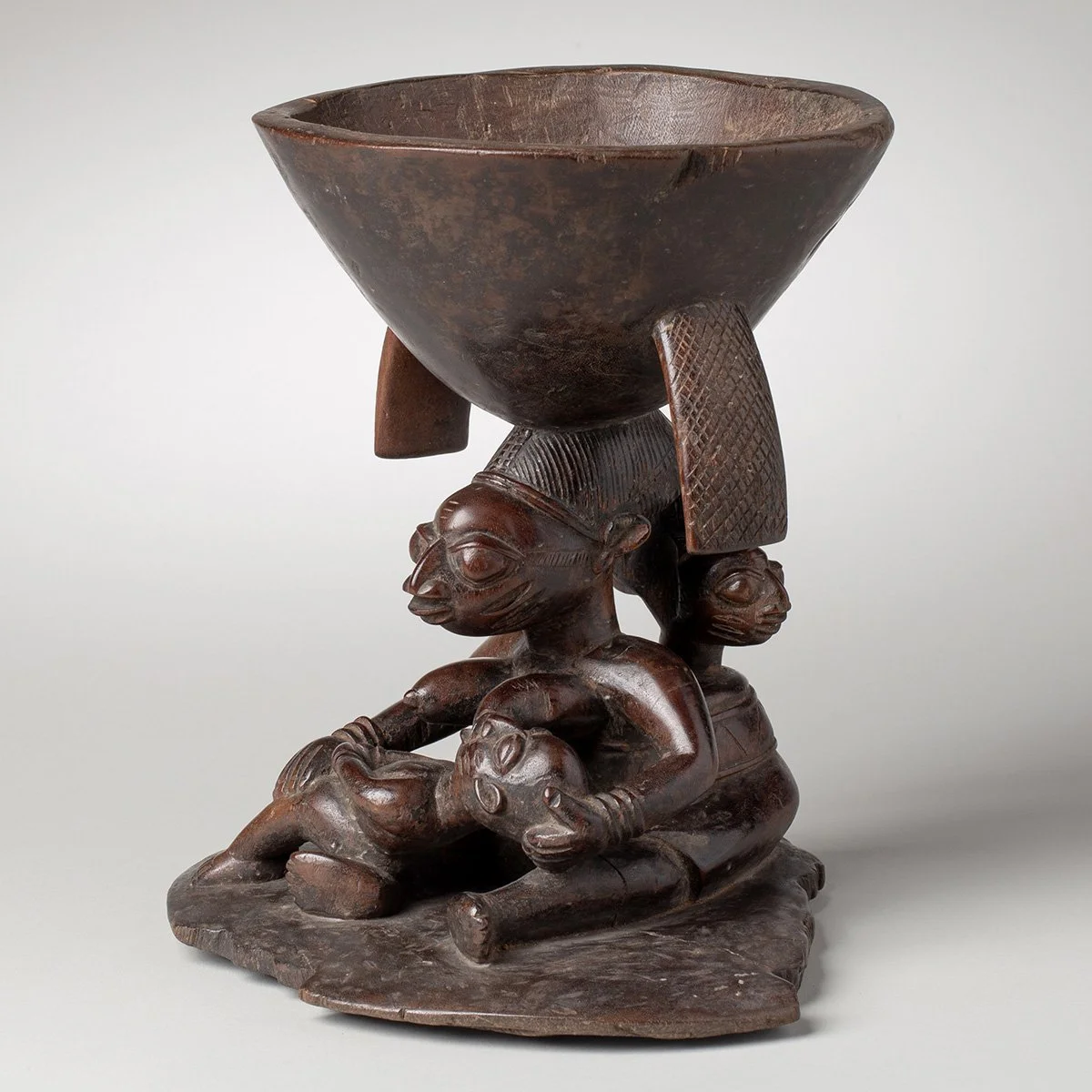 Image 3 of 10
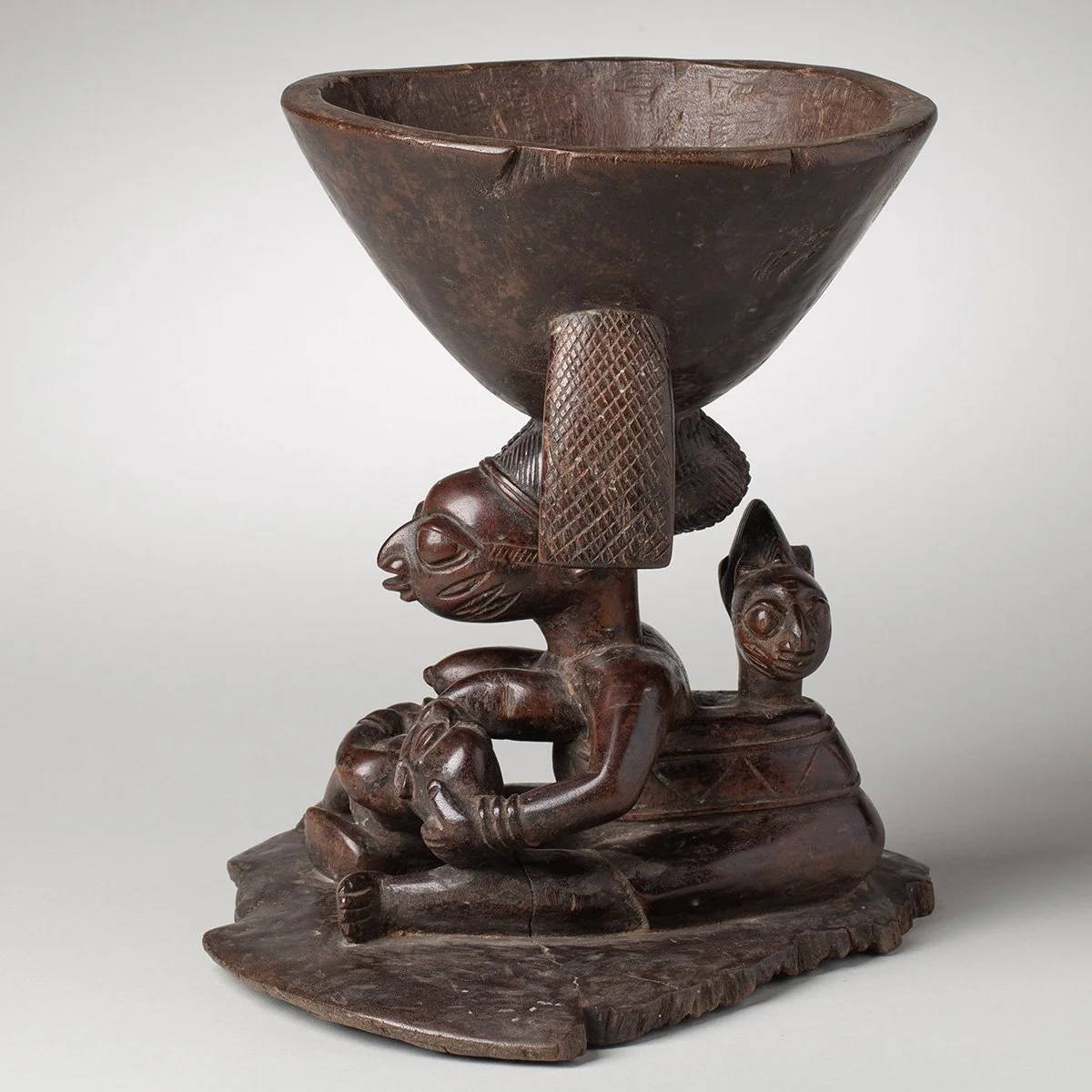 Image 4 of 10
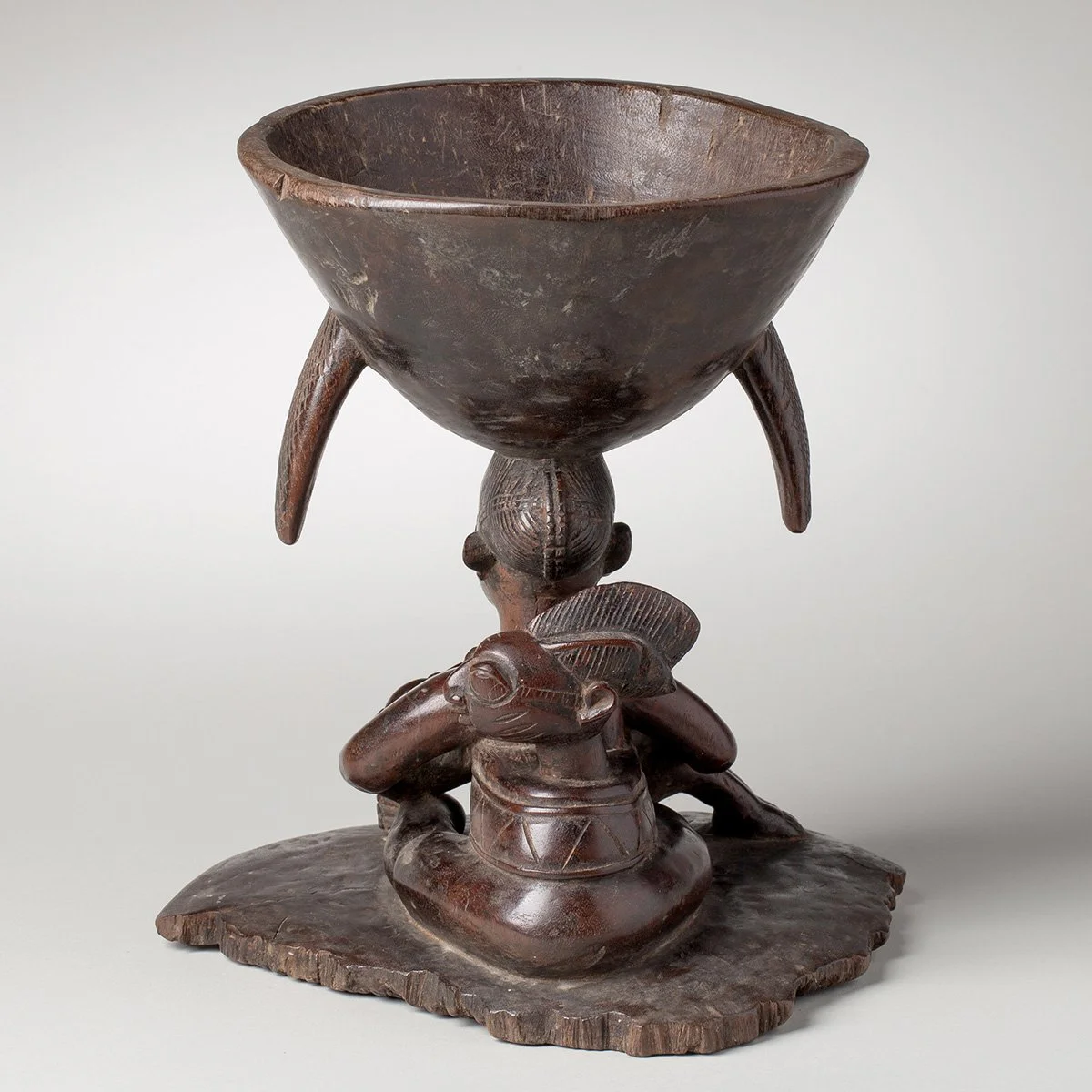 Image 5 of 10
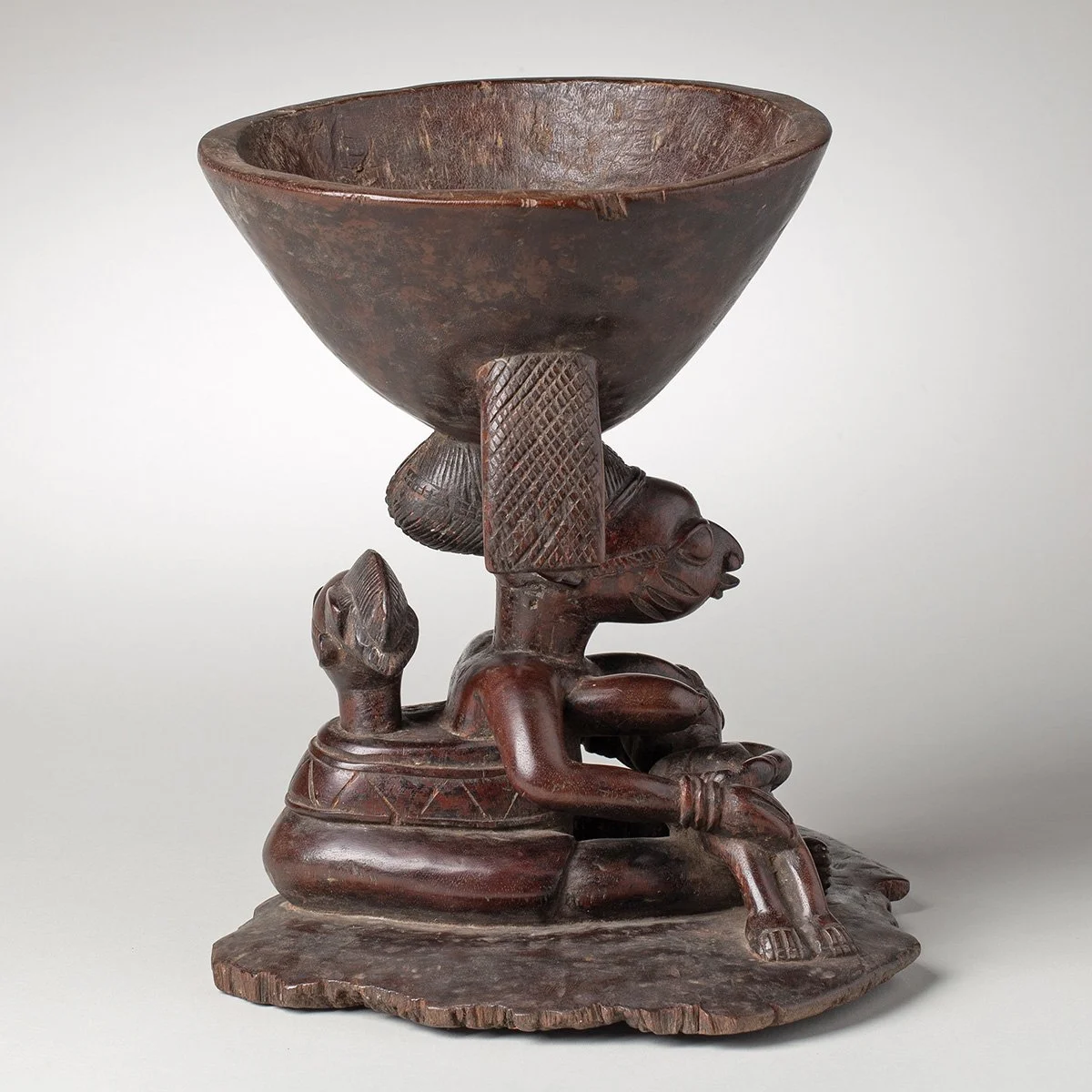 Image 6 of 10
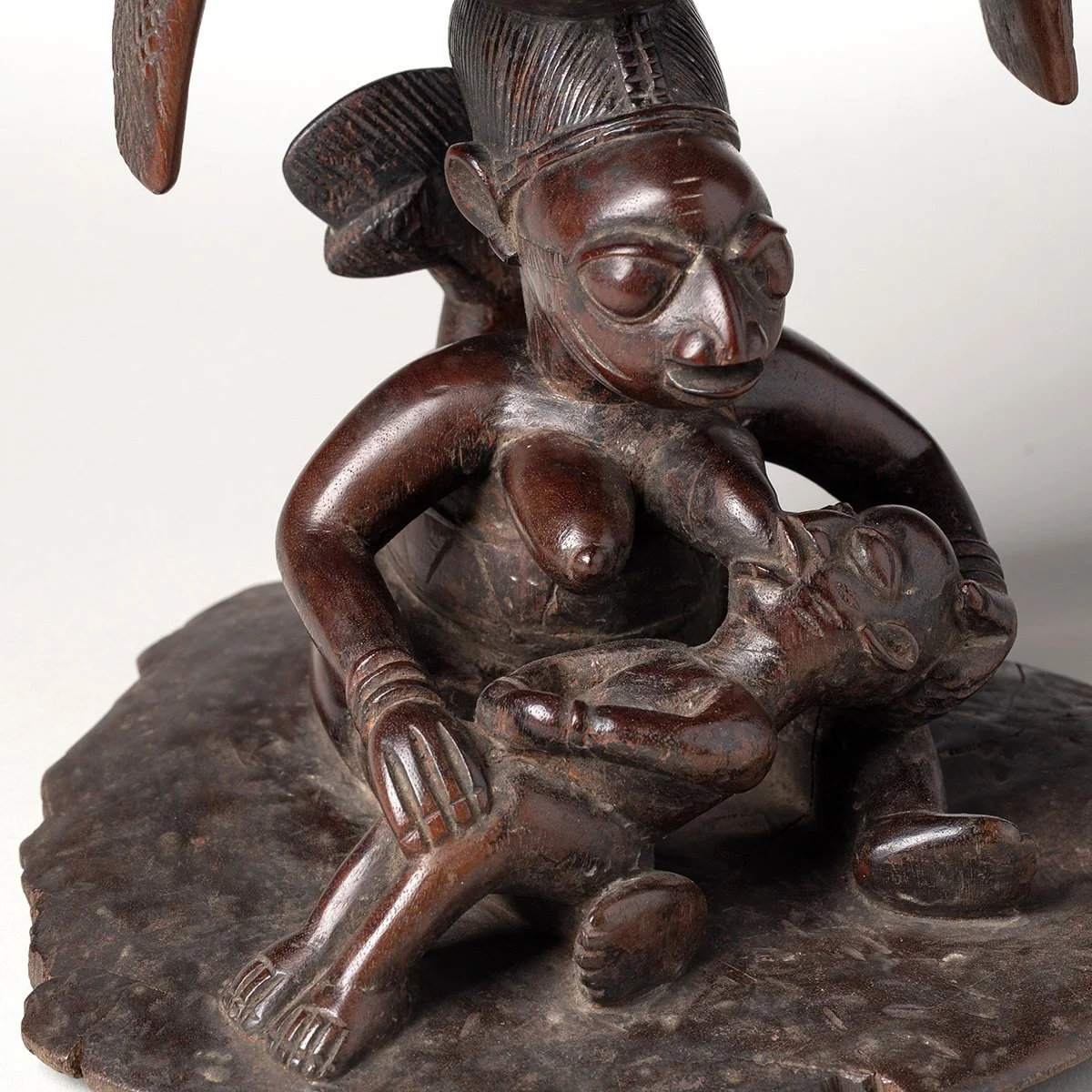 Image 7 of 10
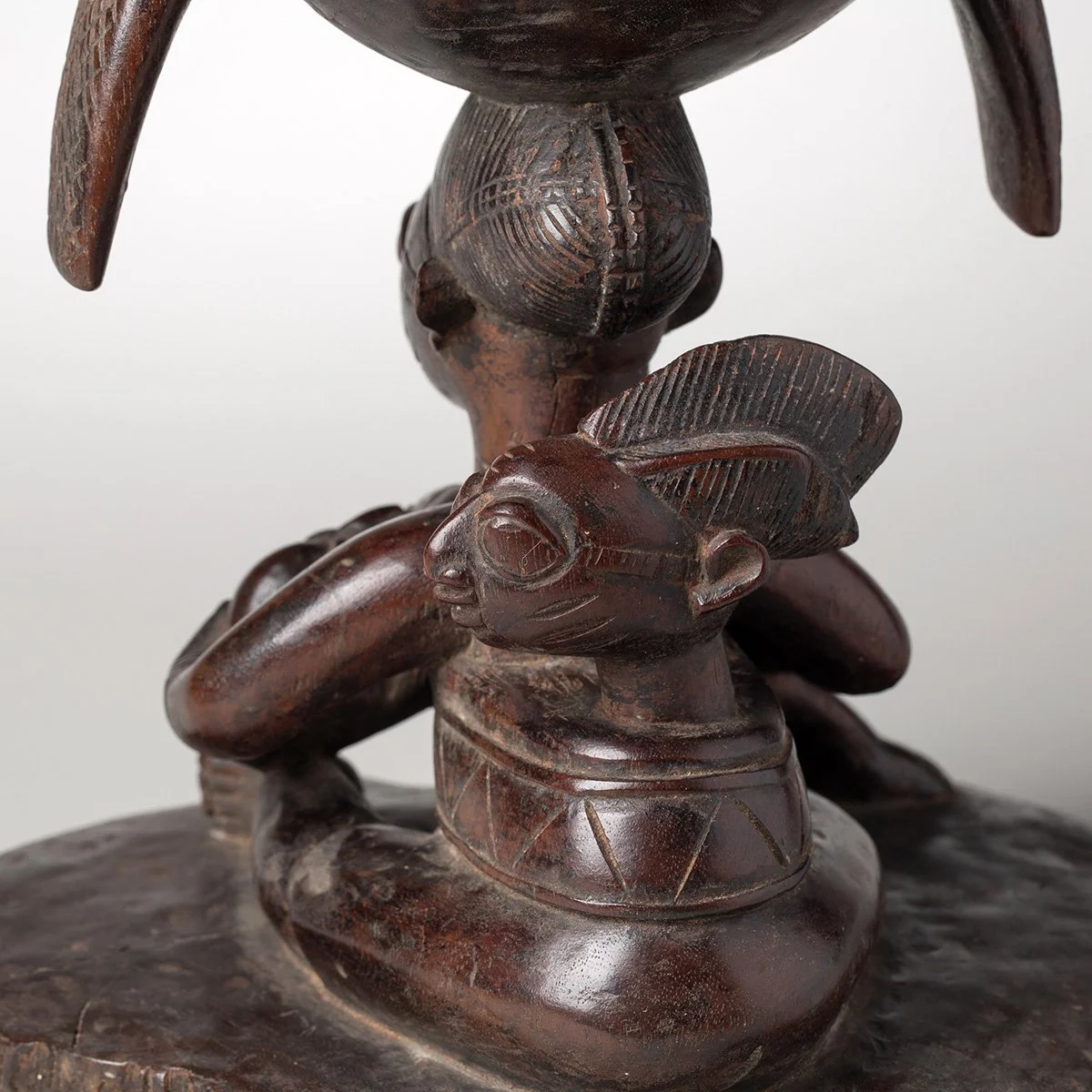 Image 8 of 10
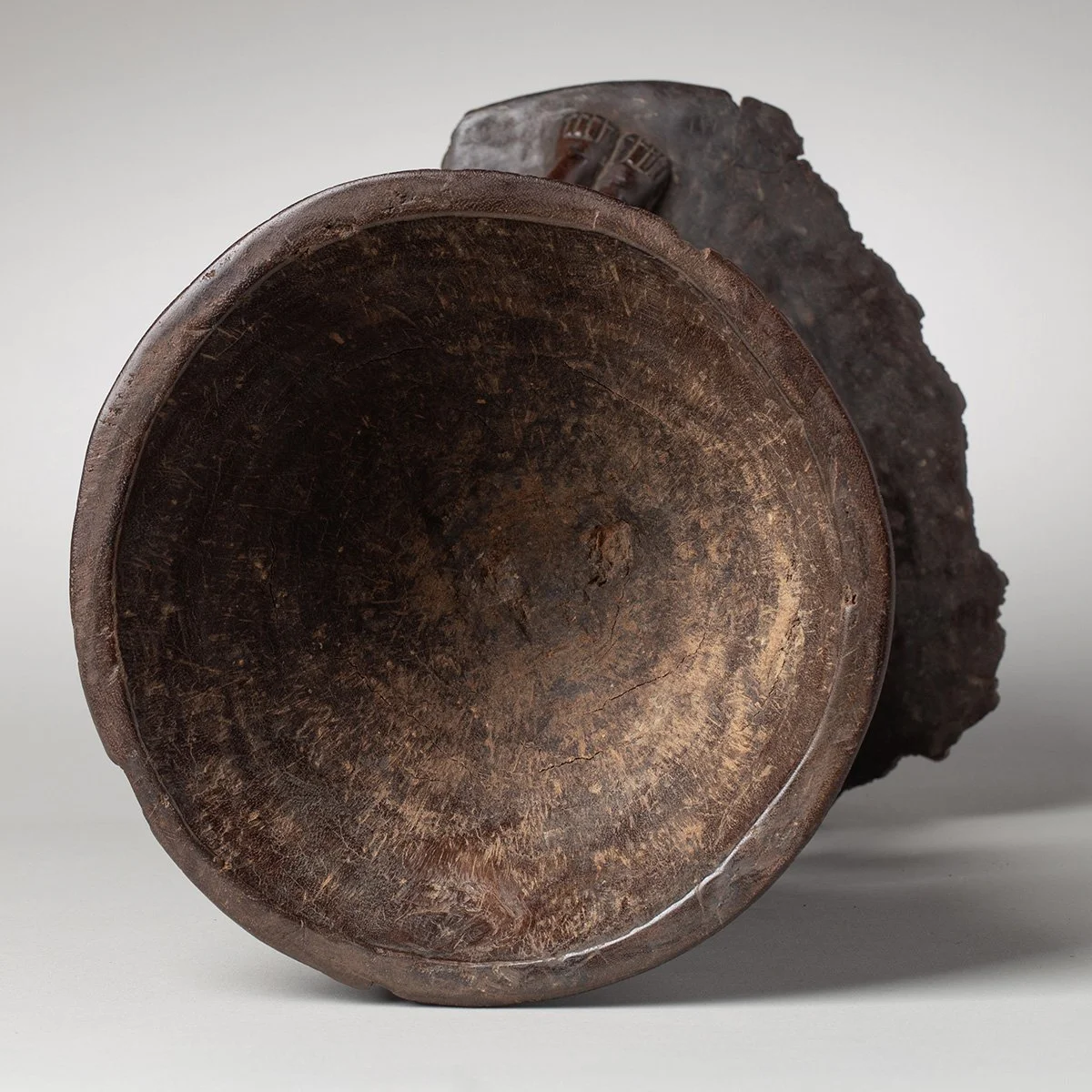 Image 9 of 10
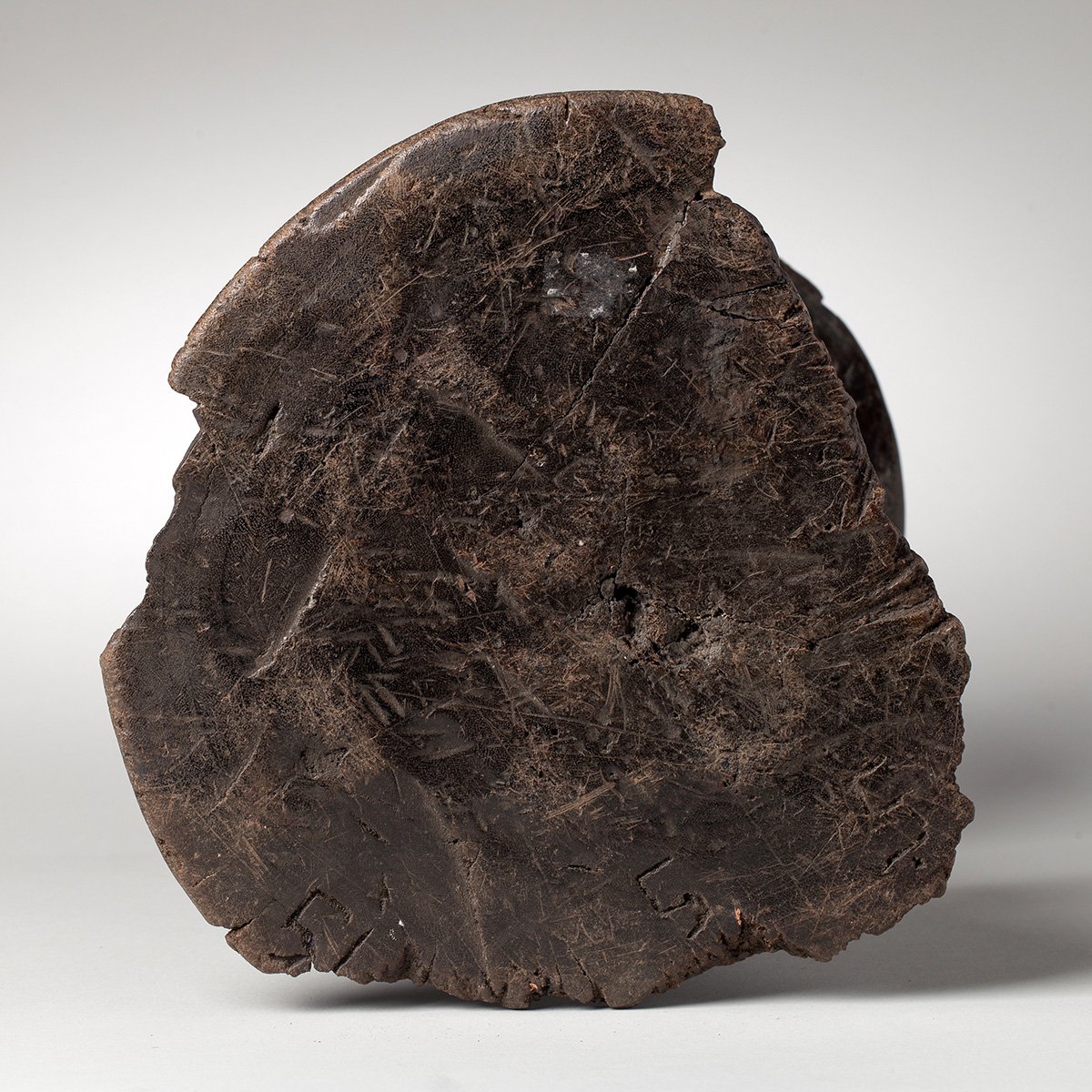 Image 10 of 10