Yoruba — Saki, Nigeria
1900–1920
Wood, metal rings, beads, pigment, and offering remains
Height: 11½ in (29.2 cm)
Provenance: Plocki collection, London
This ere ibeji figure from Saki is carved with a high blue-pigmented coiffure, rounded facial features, facial scarification, and a compact standing body reflective of Yoruba twin figure conventions. Ere ibeji were cared for as living presences — washed, fed, dressed, and adorned — serving as points of access to the spirit of the deceased twin, with the mother providing ongoing ritual attention throughout her lifetime. The figure retains metal rings, beads, pigment, and offering remains, with deep wear and patina across the body, base, and adornments consistent with that sustained devotional use.
The attached metal rings carry meaning beyond adornment. In Yoruba ritual practice, metal — particularly iron — is associated with Ògún, the orisha of iron, tools, and protective force, and rings of this kind may have been understood as adding spiritual charge and protection to the figure. Together with the beads and offering remains, they reflect a figure that was actively maintained as a family ritual object, honored with the care and ornament appropriate to a living child.
We ship free anywhere in the world, fully insured, packed by hand.
INQUIRE HERE
Yoruba — Saki, Nigeria
1900–1920
Wood, metal rings, beads, pigment, and offering remains
Height: 11½ in (29.2 cm)
Provenance: Plocki collection, London
This ere ibeji figure from Saki is carved with a high blue-pigmented coiffure, rounded facial features, facial scarification, and a compact standing body reflective of Yoruba twin figure conventions. Ere ibeji were cared for as living presences — washed, fed, dressed, and adorned — serving as points of access to the spirit of the deceased twin, with the mother providing ongoing ritual attention throughout her lifetime. The figure retains metal rings, beads, pigment, and offering remains, with deep wear and patina across the body, base, and adornments consistent with that sustained devotional use.
The attached metal rings carry meaning beyond adornment. In Yoruba ritual practice, metal — particularly iron — is associated with Ògún, the orisha of iron, tools, and protective force, and rings of this kind may have been understood as adding spiritual charge and protection to the figure. Together with the beads and offering remains, they reflect a figure that was actively maintained as a family ritual object, honored with the care and ornament appropriate to a living child.
We ship free anywhere in the world, fully insured, packed by hand.
INQUIRE HERE


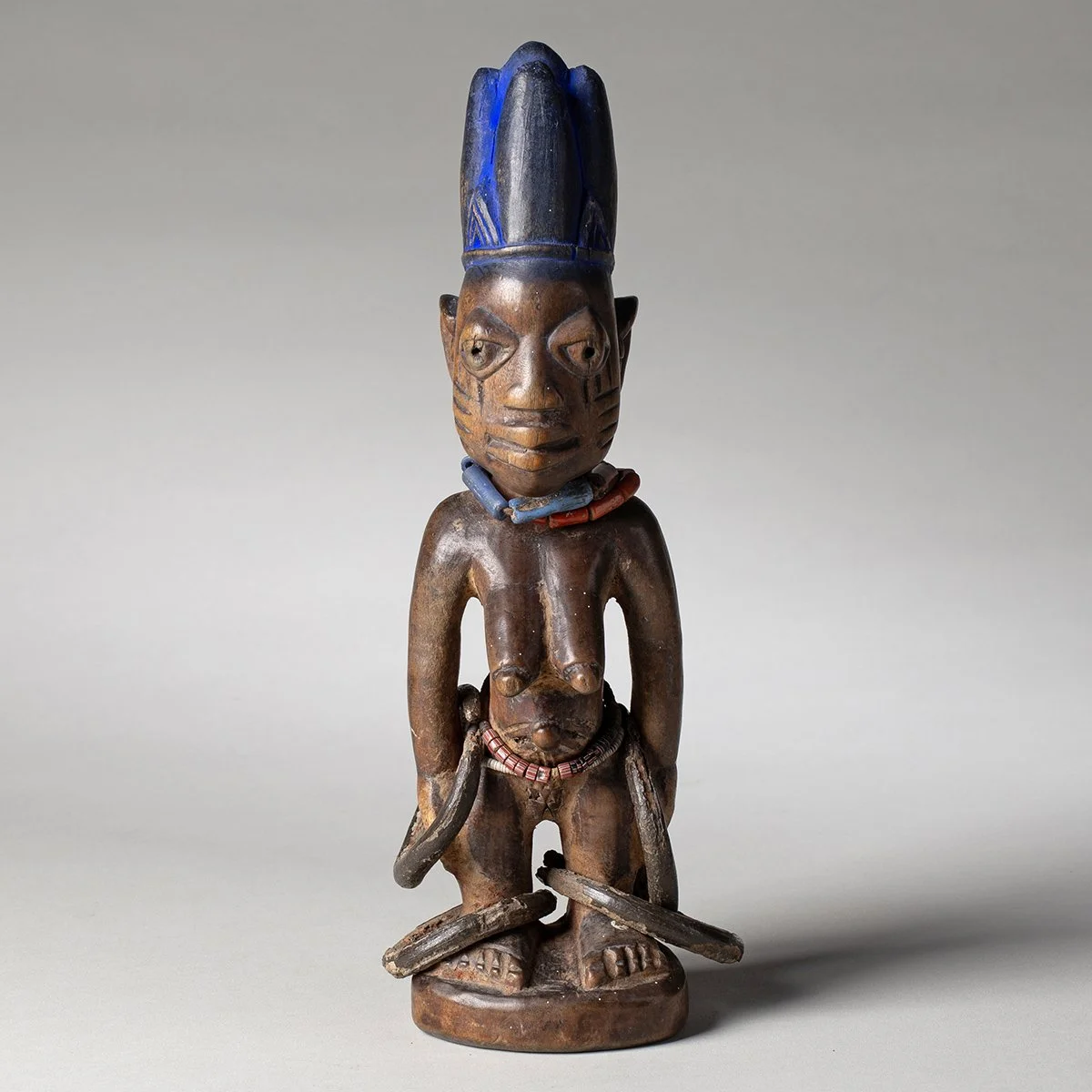 Image 1 of 7
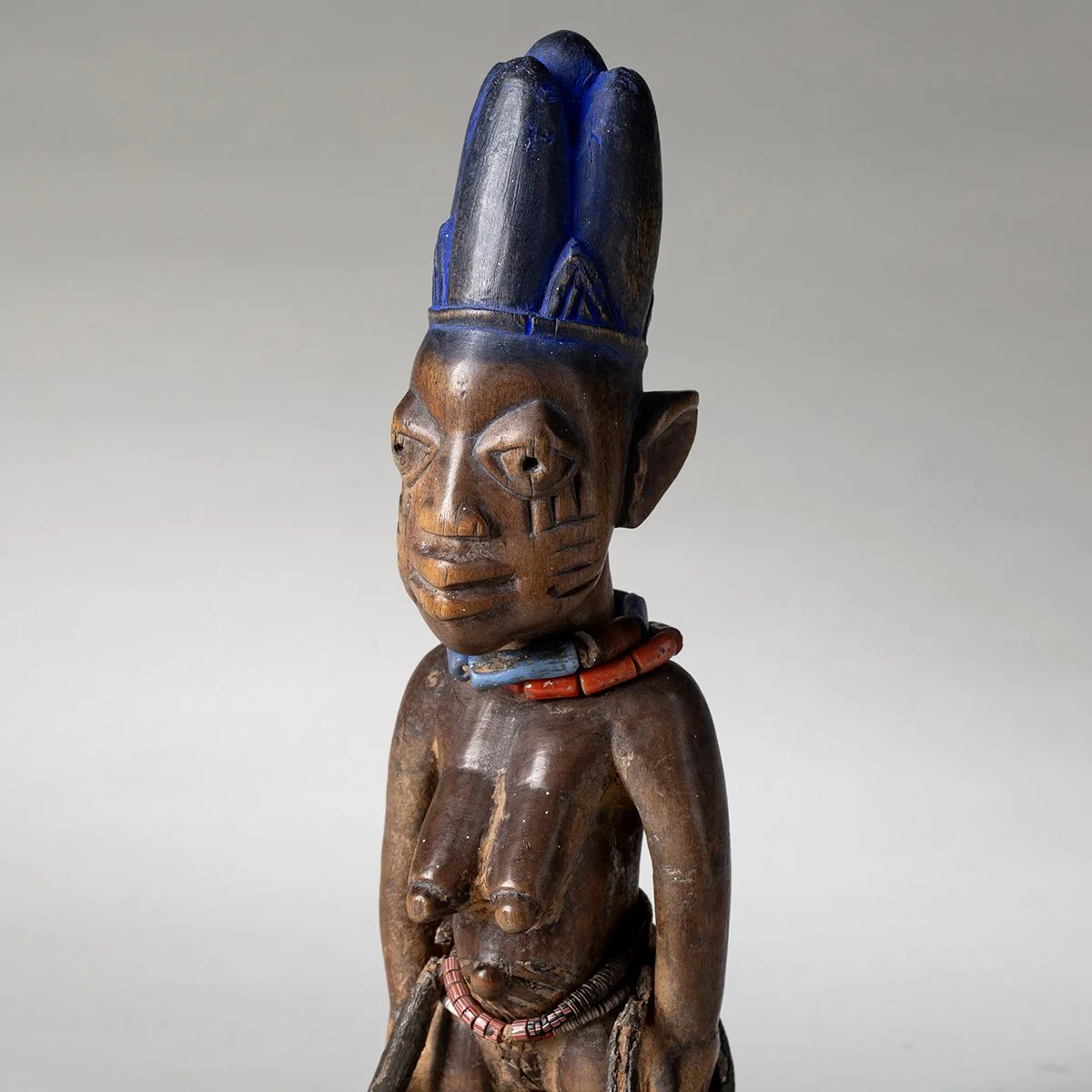 Image 2 of 7
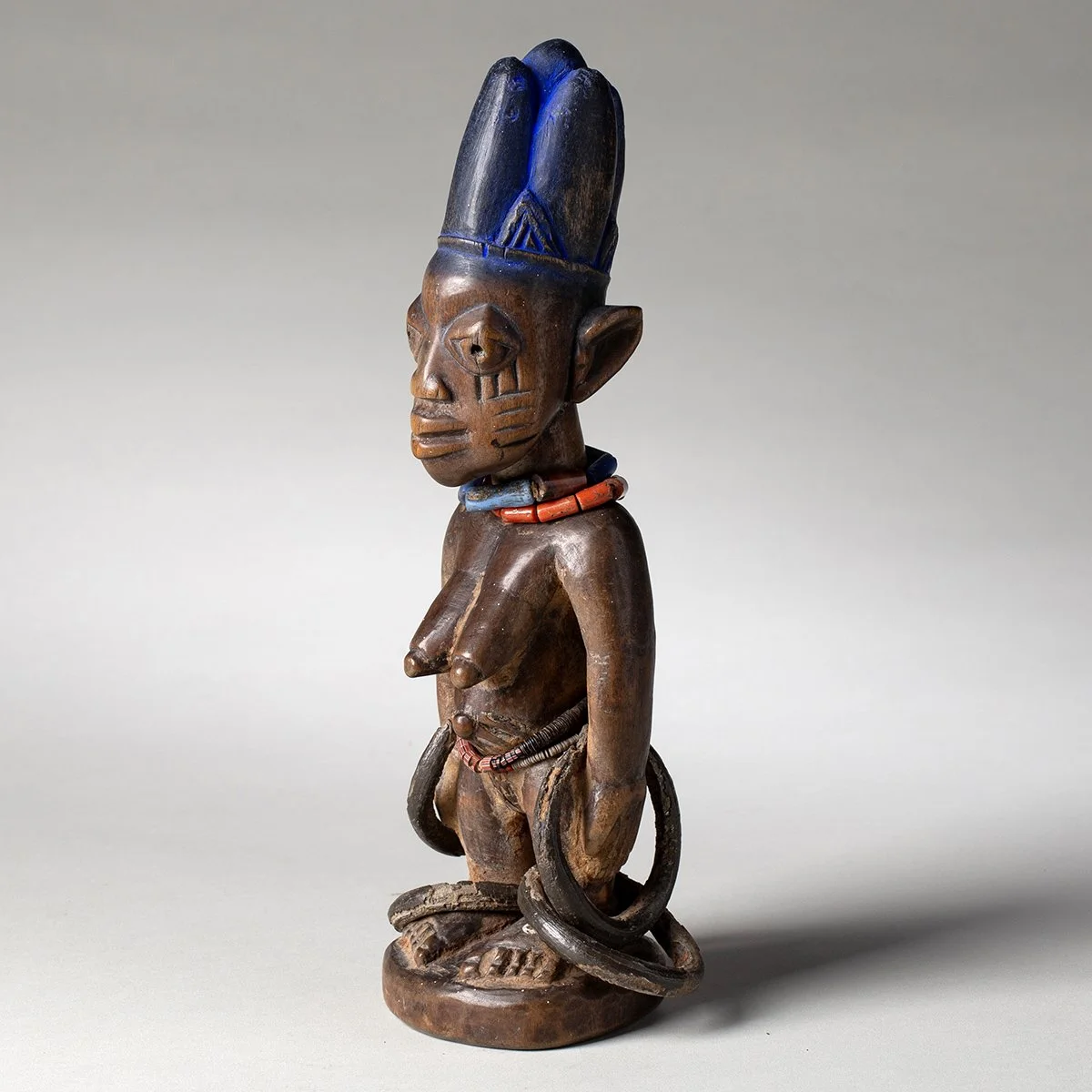 Image 3 of 7
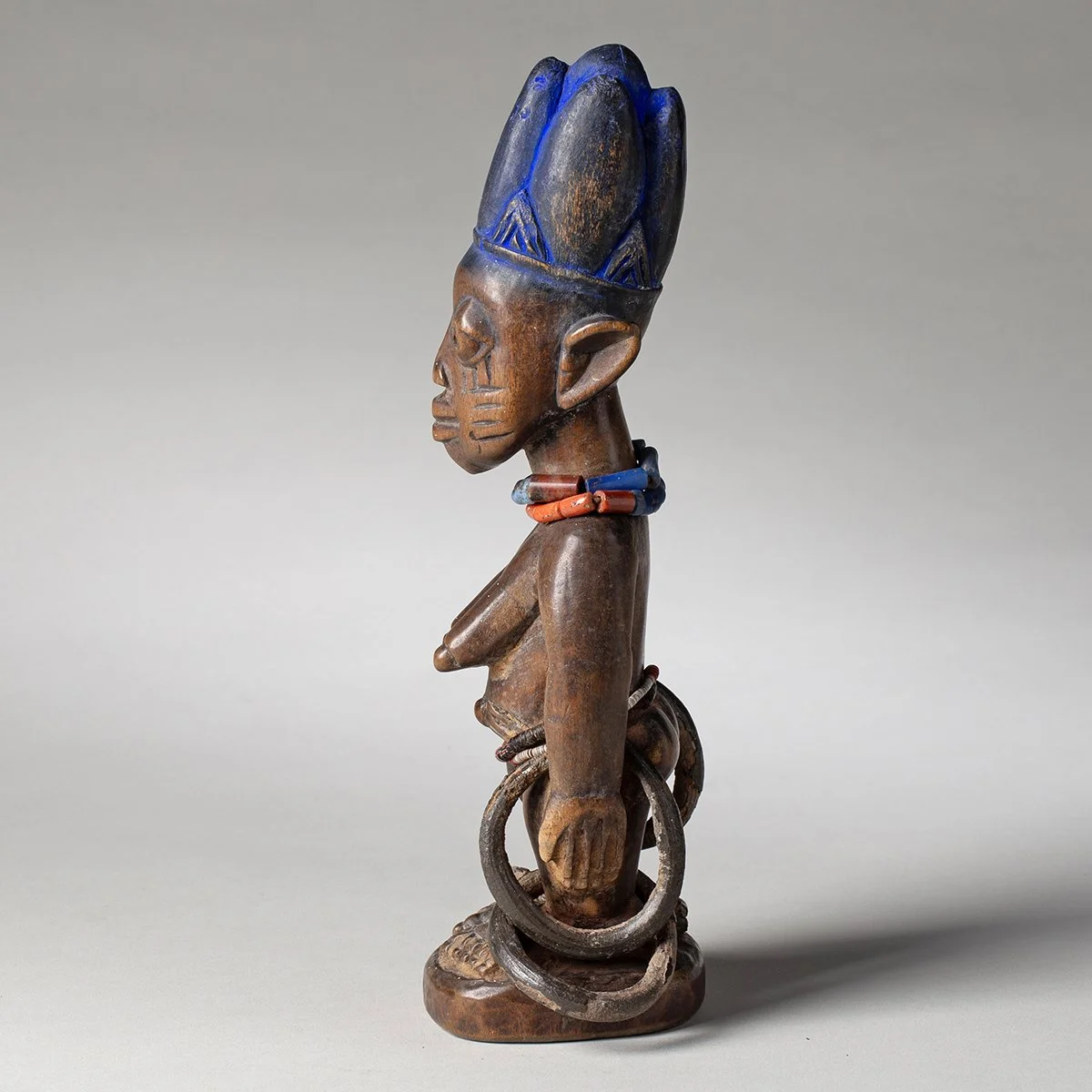 Image 4 of 7
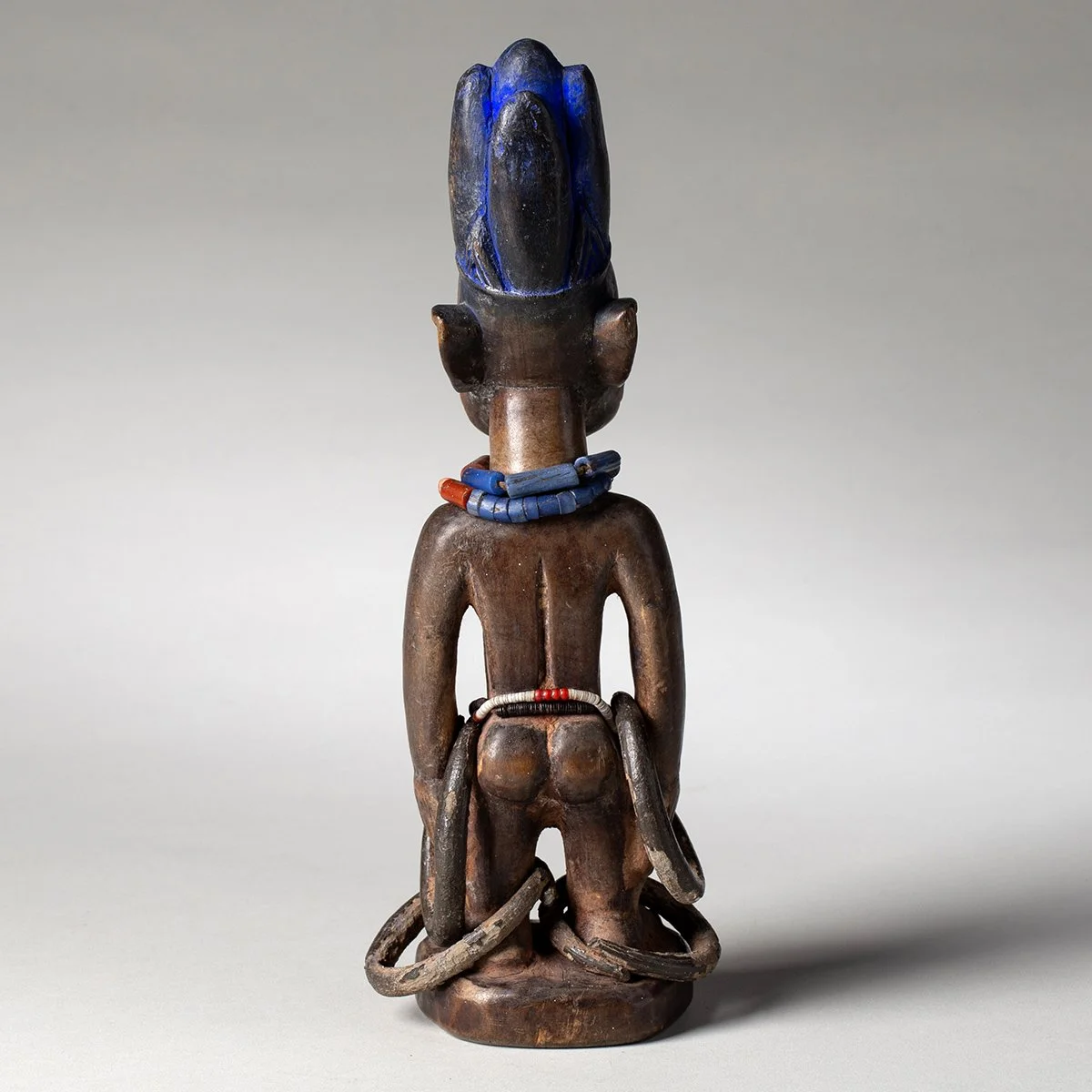 Image 5 of 7
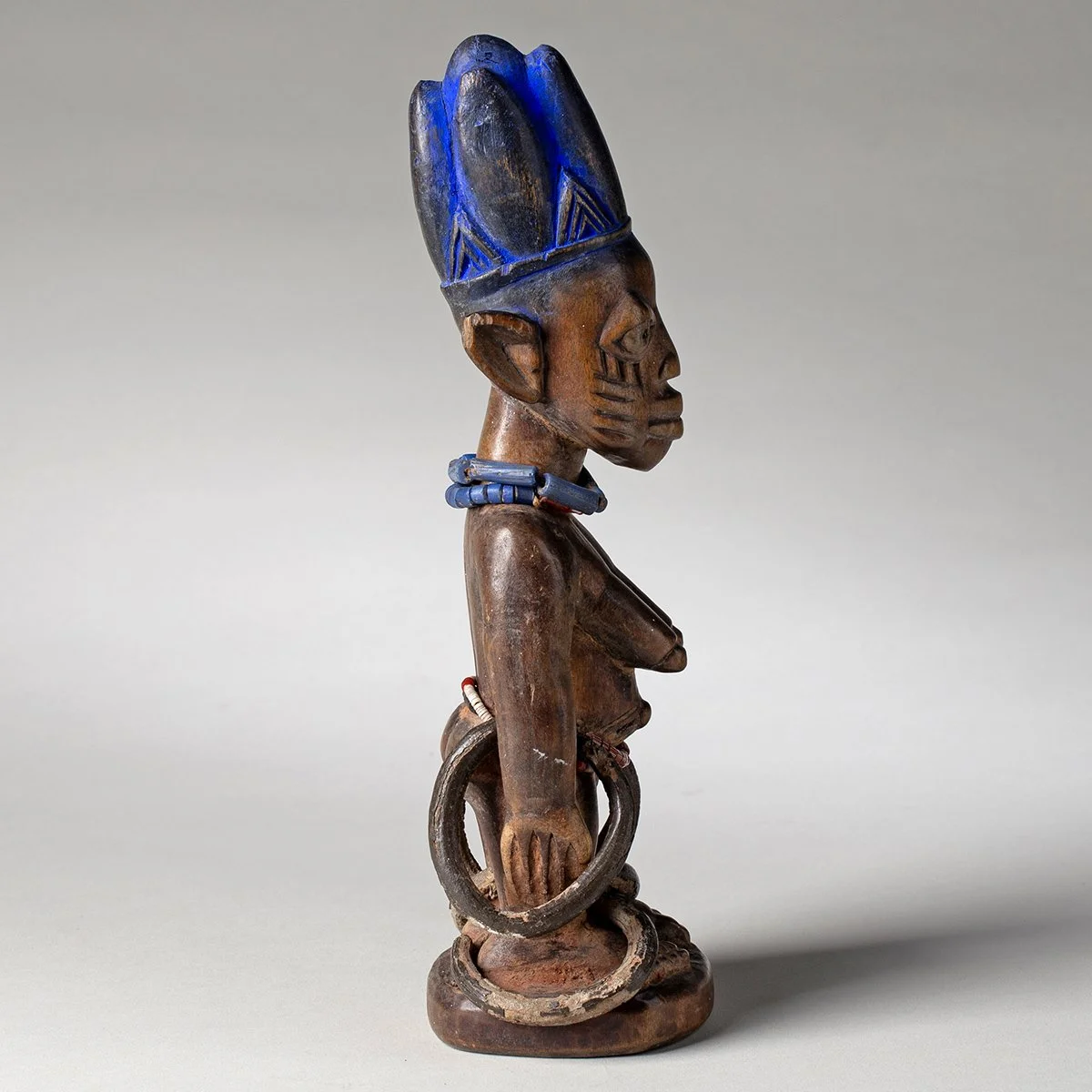 Image 6 of 7
 Image 7 of 7