Yup'ik, St. Lawrence Island, Alaska
Early 19th century
Walrus ivory, red trade beads
Height 2⅝" (6.7 cm)
Provenance: Private collection, Belgium
St. Lawrence Island figures occupy a distinct place within Arctic ivory carving, recognized for their formal accomplishment and the sustained tradition of human figure carving maintained by Yup'ik communities of the Bering Sea region. Standing male figures of this type are carved with arms held close to the body and hands meeting at the front, a posture compact and frontal in a manner consistent with St. Lawrence Island Yup'ik figural traditions. Objects of this type from the early 19th century represent some of the earliest documented examples of this carving tradition to enter outside collections.
This figure is modeled with defined facial features and set with red trade bead eyes, a detail reflecting the incorporation of European contact-era materials into indigenous carving practice during the early contact period. The surface carries a deep, well-worn patina across the entire form, consistent with sustained handling over a long period of use, giving the figure a strong physical presence well beyond its small scale. Provenance traces to a private collection in Belgium.
We ship free within the United States, fully insured, packed by hand.
Yup'ik, St. Lawrence Island, Alaska
Early 19th century
Walrus ivory, red trade beads
Height 2⅝" (6.7 cm)
Provenance: Private collection, Belgium
St. Lawrence Island figures occupy a distinct place within Arctic ivory carving, recognized for their formal accomplishment and the sustained tradition of human figure carving maintained by Yup'ik communities of the Bering Sea region. Standing male figures of this type are carved with arms held close to the body and hands meeting at the front, a posture compact and frontal in a manner consistent with St. Lawrence Island Yup'ik figural traditions. Objects of this type from the early 19th century represent some of the earliest documented examples of this carving tradition to enter outside collections.
This figure is modeled with defined facial features and set with red trade bead eyes, a detail reflecting the incorporation of European contact-era materials into indigenous carving practice during the early contact period. The surface carries a deep, well-worn patina across the entire form, consistent with sustained handling over a long period of use, giving the figure a strong physical presence well beyond its small scale. Provenance traces to a private collection in Belgium.
We ship free within the United States, fully insured, packed by hand.


 Image 1 of 7
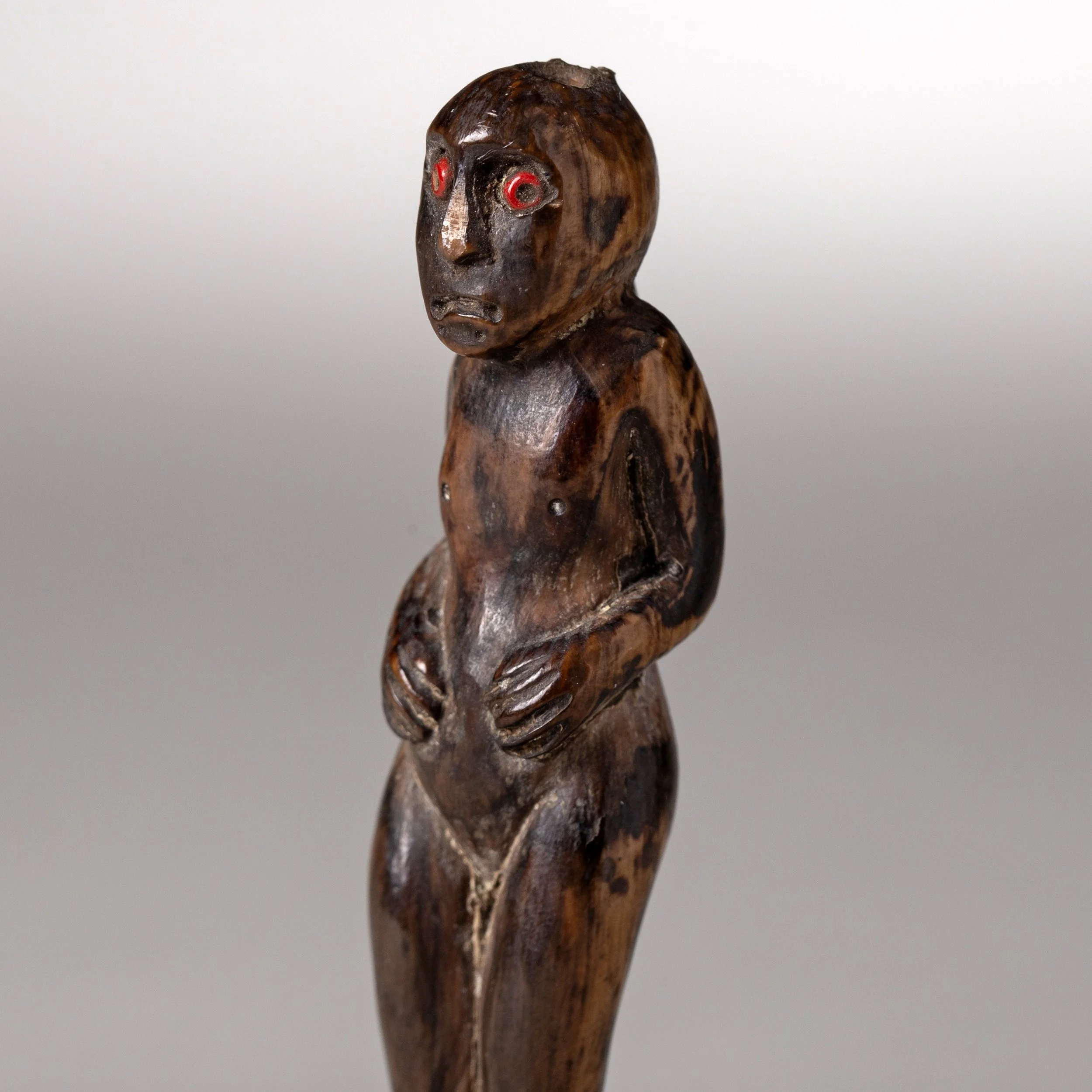 Image 2 of 7
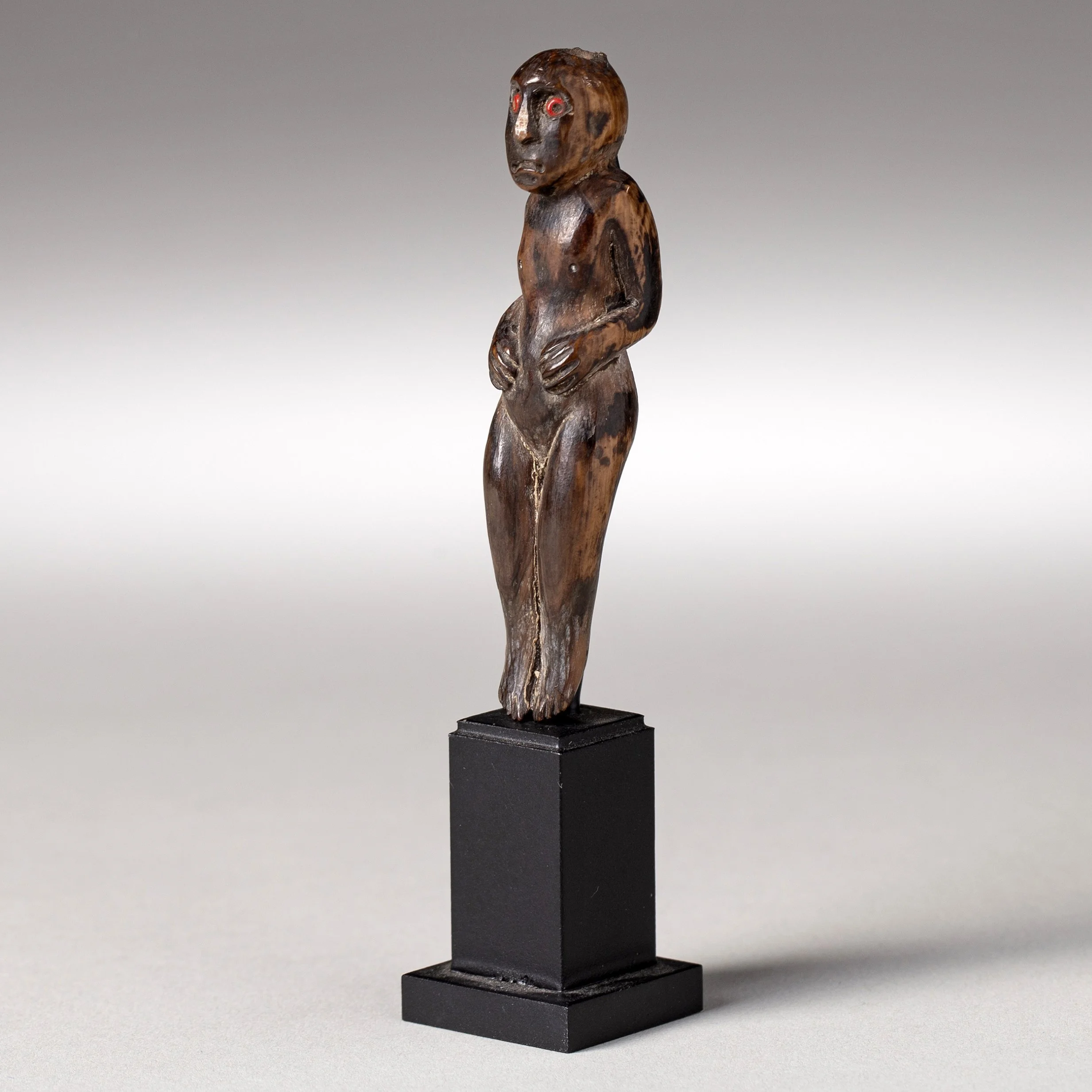 Image 3 of 7
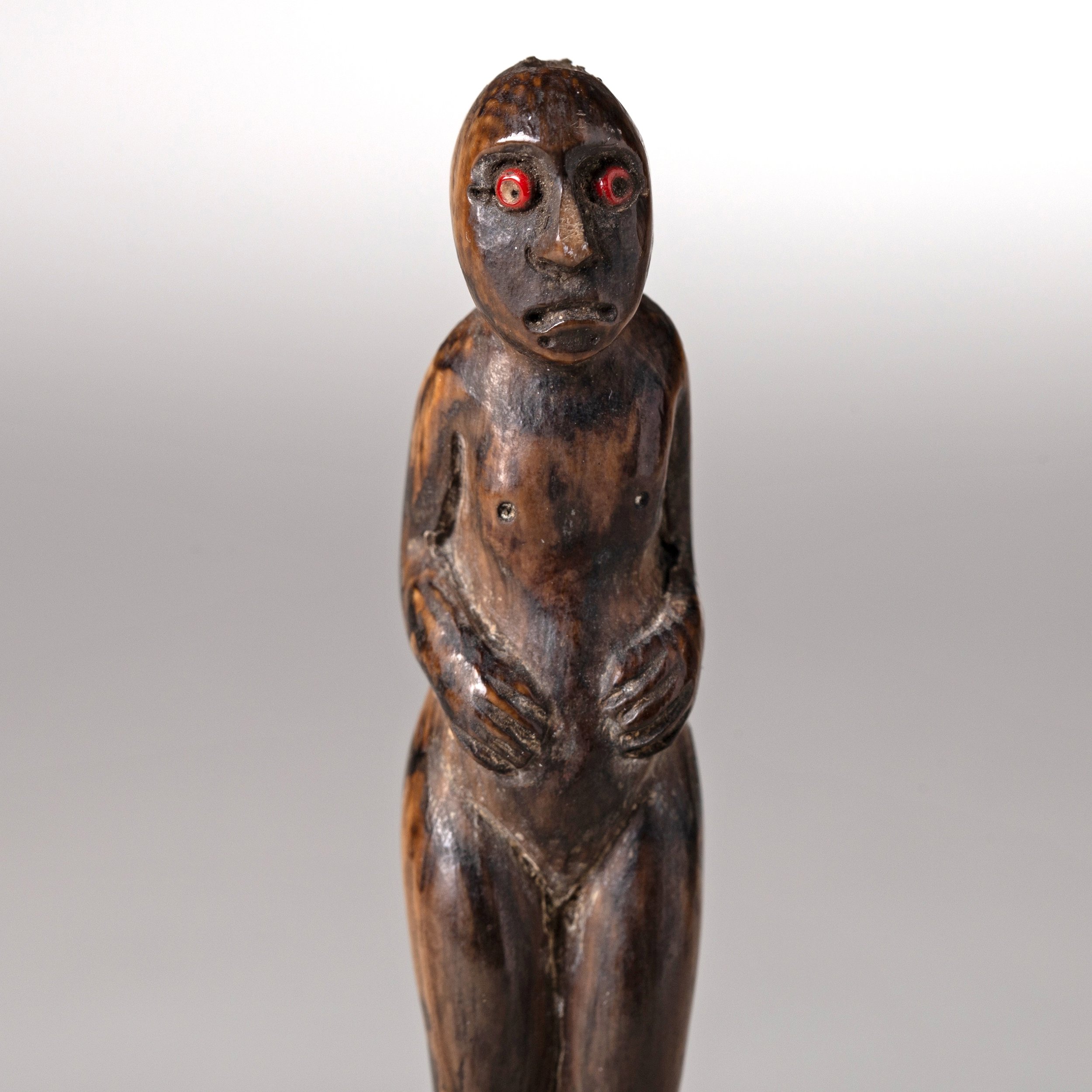 Image 4 of 7
 Image 5 of 7
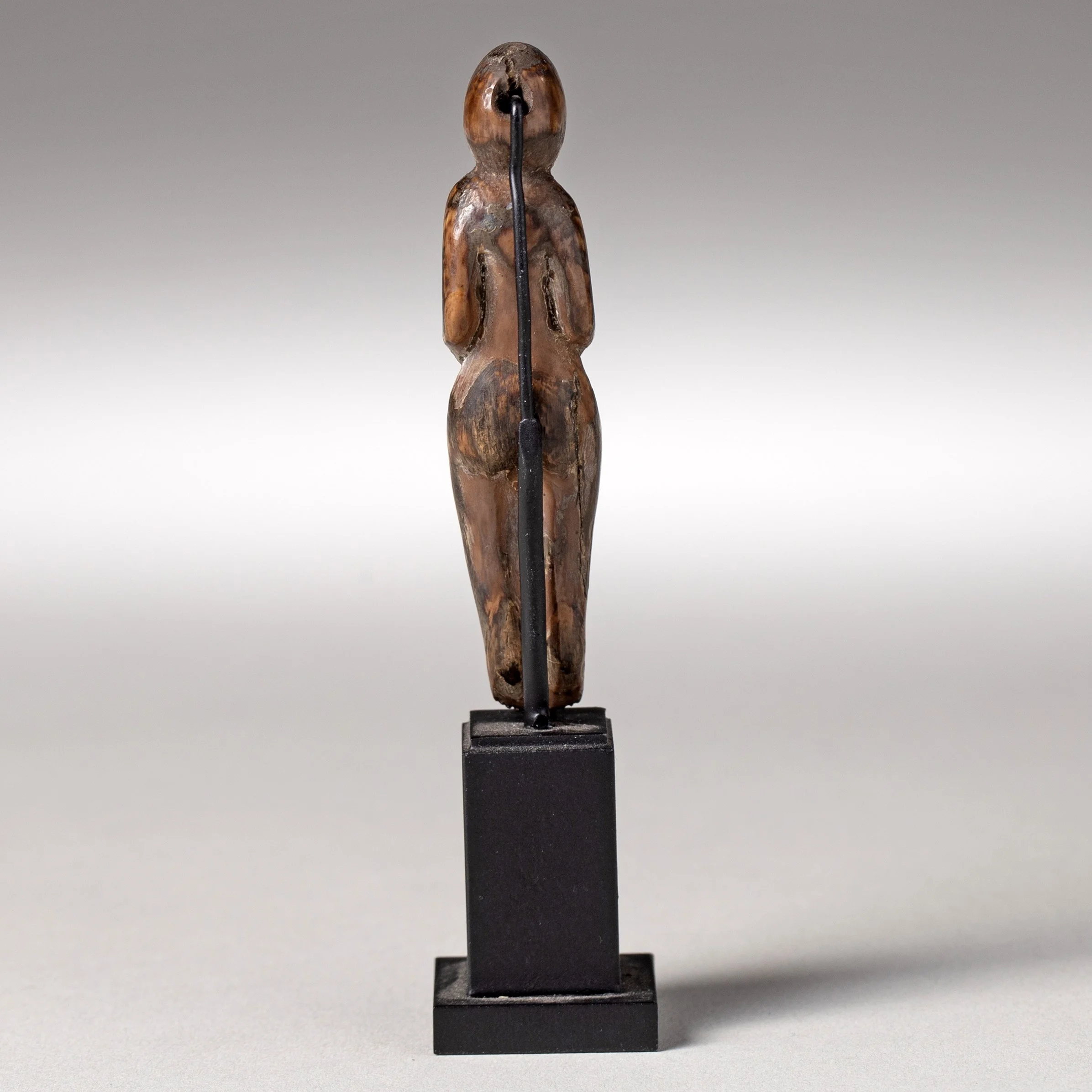 Image 6 of 7
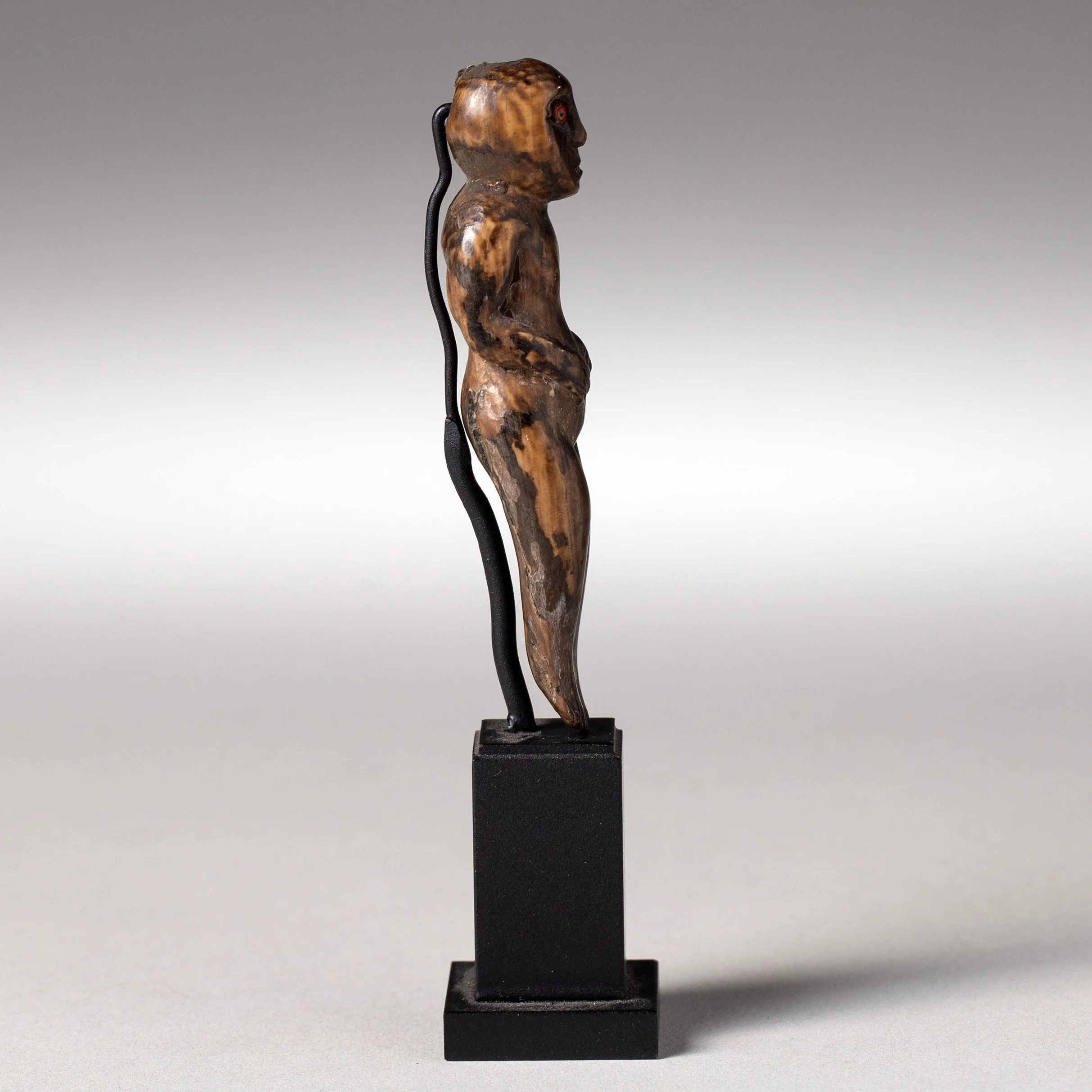 Image 7 of 7