Zuni Pueblo, New Mexico
1890
Ceramic, white slip, mineral pigment
Height 9 in (22.9 cm); diameter 9½ in (24.1 cm)
Provenance: Lancaster, PA trade
Zuni polychrome ollas of the late nineteenth century are among the most accomplished expressions of Pueblo ceramic painting, produced at a moment when the tradition was fully mature and outside collector interest was beginning to shape the market for Southwestern material. The decoration on this vessel is organized in broad sweeping diagonal bands of bold black geometric forms, large triangles, zigzag elements, and hatched zones, punctuated by red-orange accent triangles that provide chromatic contrast against the cream white slip ground. The composition is energetic and confidently executed, covering the body of the olla with the kind of dynamic visual structure that distinguishes the best Zuni work of this period.
The surface has developed a warm patina consistent with age and handling, and the original mineral pigment retains strong contrast and definition throughout. The hatched line work, a hallmark of Zuni ceramic painting in the 1880s and 1890s, is executed with precision and density, filling the geometric zones with layered visual texture. The Lancaster, Pennsylvania provenance reflects the movement of Southwestern material into East Coast collections during the late nineteenth and early twentieth centuries through trade and estate dispersal.
We ship free anywhere in the world, fully insured, packed by hand.
Zuni Pueblo, New Mexico
1890
Ceramic, white slip, mineral pigment
Height 9 in (22.9 cm); diameter 9½ in (24.1 cm)
Provenance: Lancaster, PA trade
Zuni polychrome ollas of the late nineteenth century are among the most accomplished expressions of Pueblo ceramic painting, produced at a moment when the tradition was fully mature and outside collector interest was beginning to shape the market for Southwestern material. The decoration on this vessel is organized in broad sweeping diagonal bands of bold black geometric forms, large triangles, zigzag elements, and hatched zones, punctuated by red-orange accent triangles that provide chromatic contrast against the cream white slip ground. The composition is energetic and confidently executed, covering the body of the olla with the kind of dynamic visual structure that distinguishes the best Zuni work of this period.
The surface has developed a warm patina consistent with age and handling, and the original mineral pigment retains strong contrast and definition throughout. The hatched line work, a hallmark of Zuni ceramic painting in the 1880s and 1890s, is executed with precision and density, filling the geometric zones with layered visual texture. The Lancaster, Pennsylvania provenance reflects the movement of Southwestern material into East Coast collections during the late nineteenth and early twentieth centuries through trade and estate dispersal.
We ship free anywhere in the world, fully insured, packed by hand.


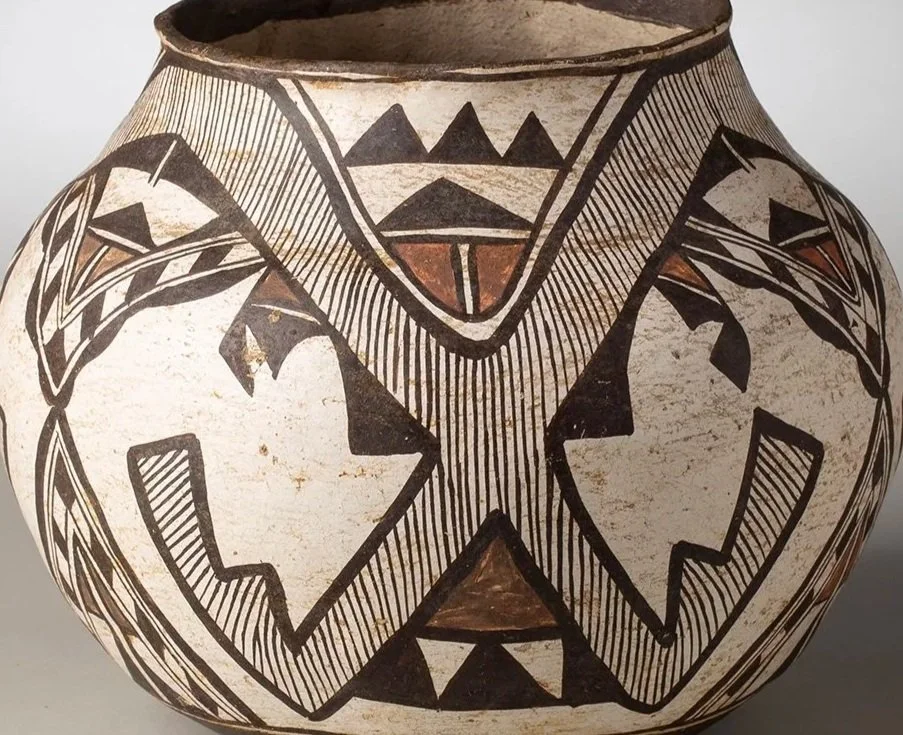 Image 1 of 7
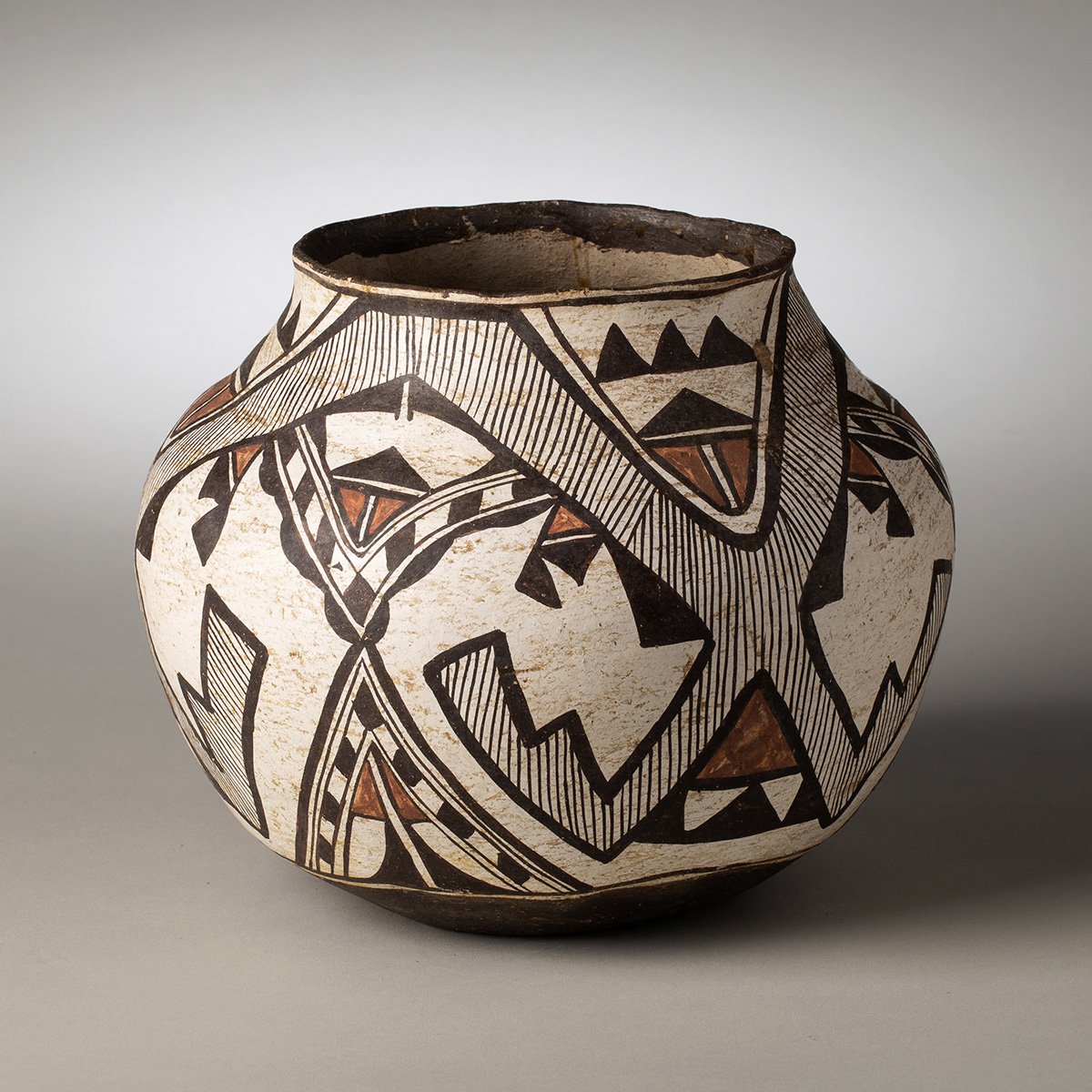 Image 2 of 7
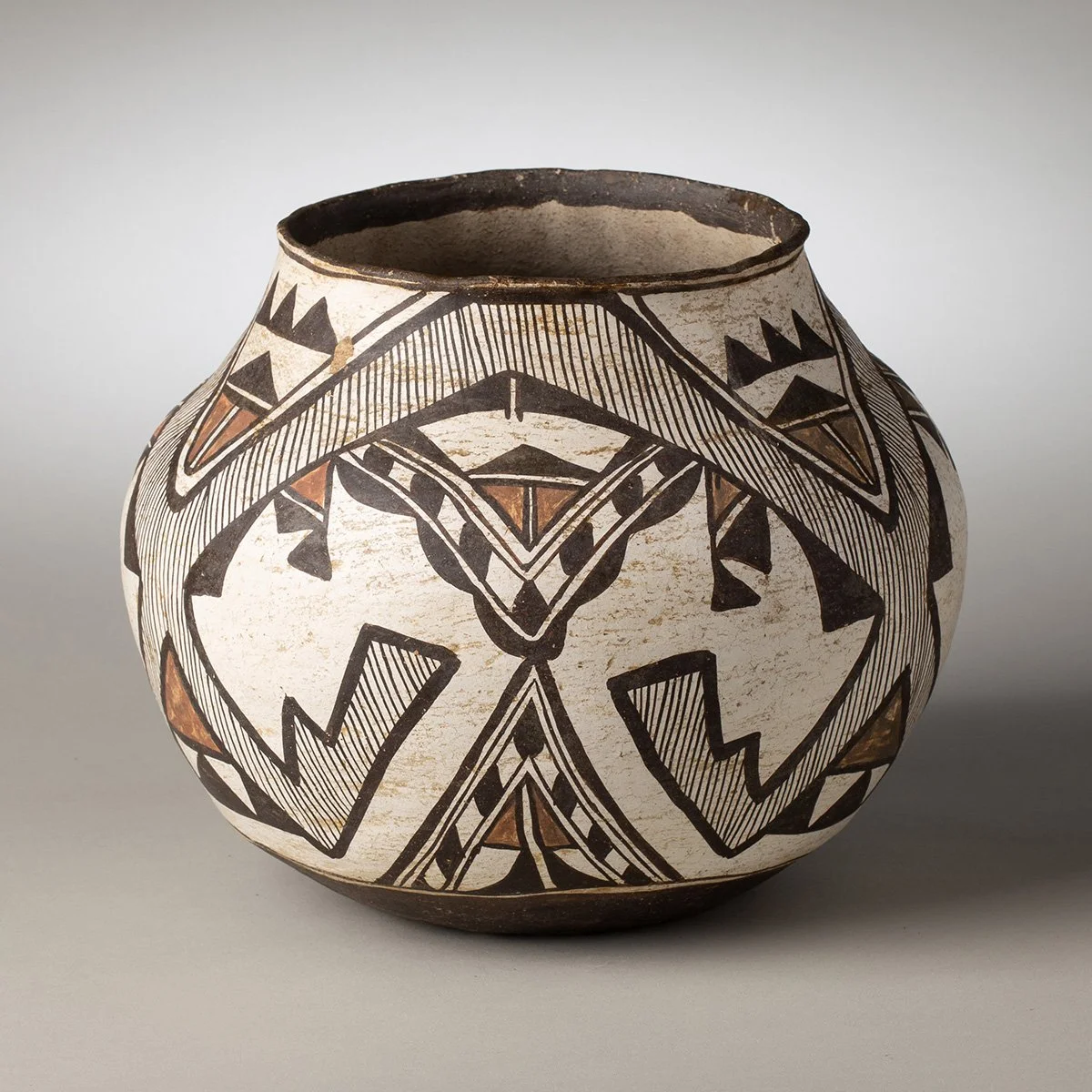 Image 3 of 7
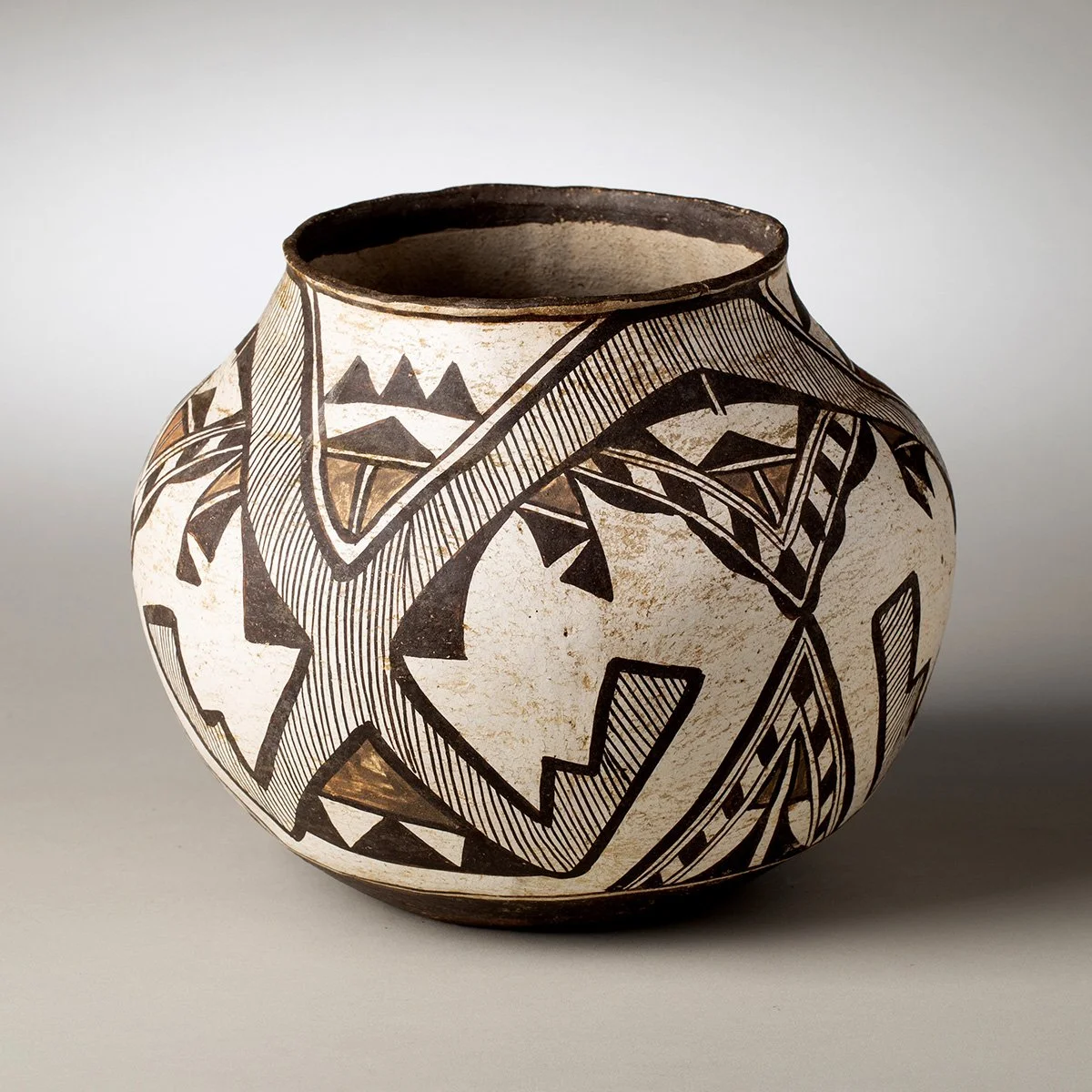 Image 4 of 7
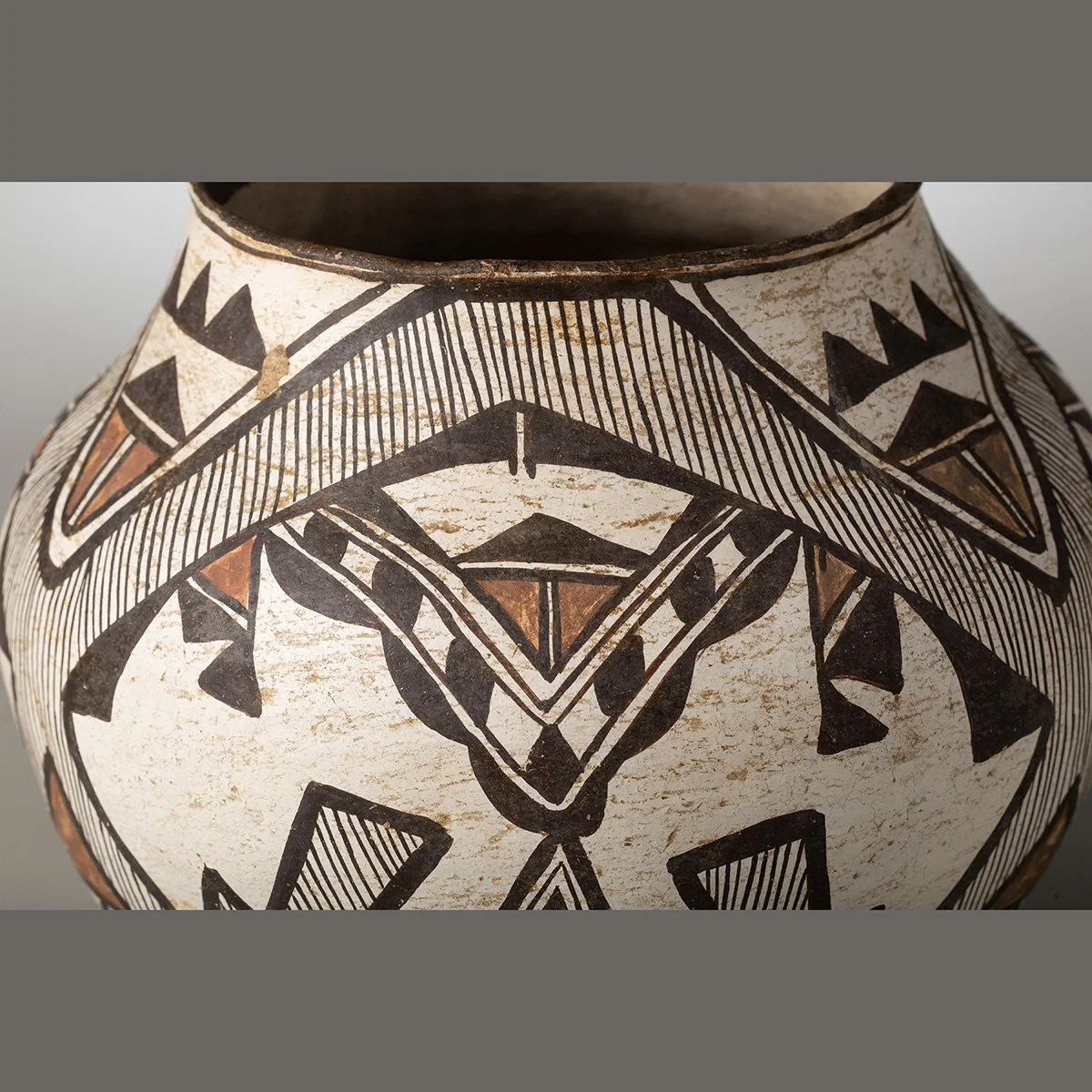 Image 5 of 7
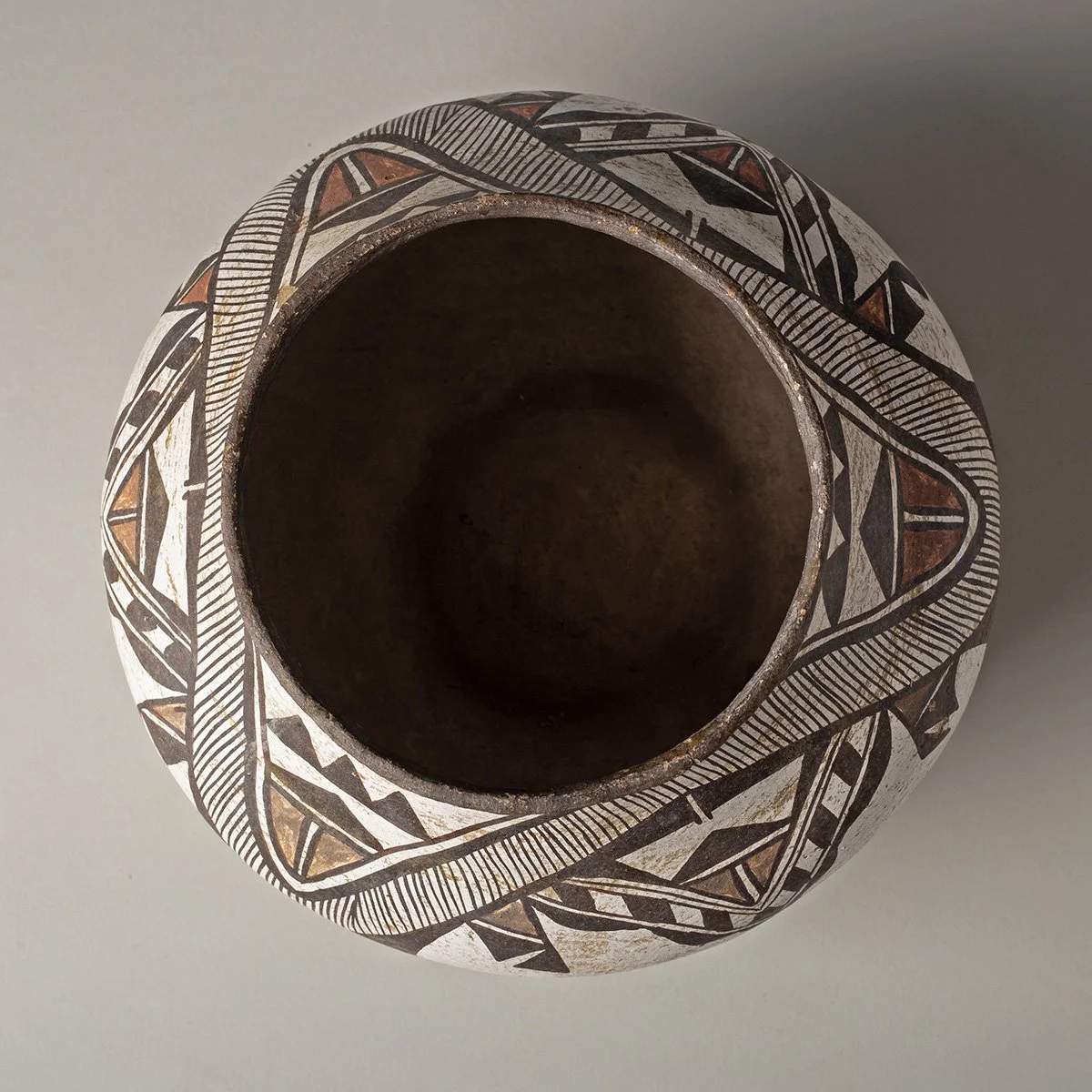 Image 6 of 7
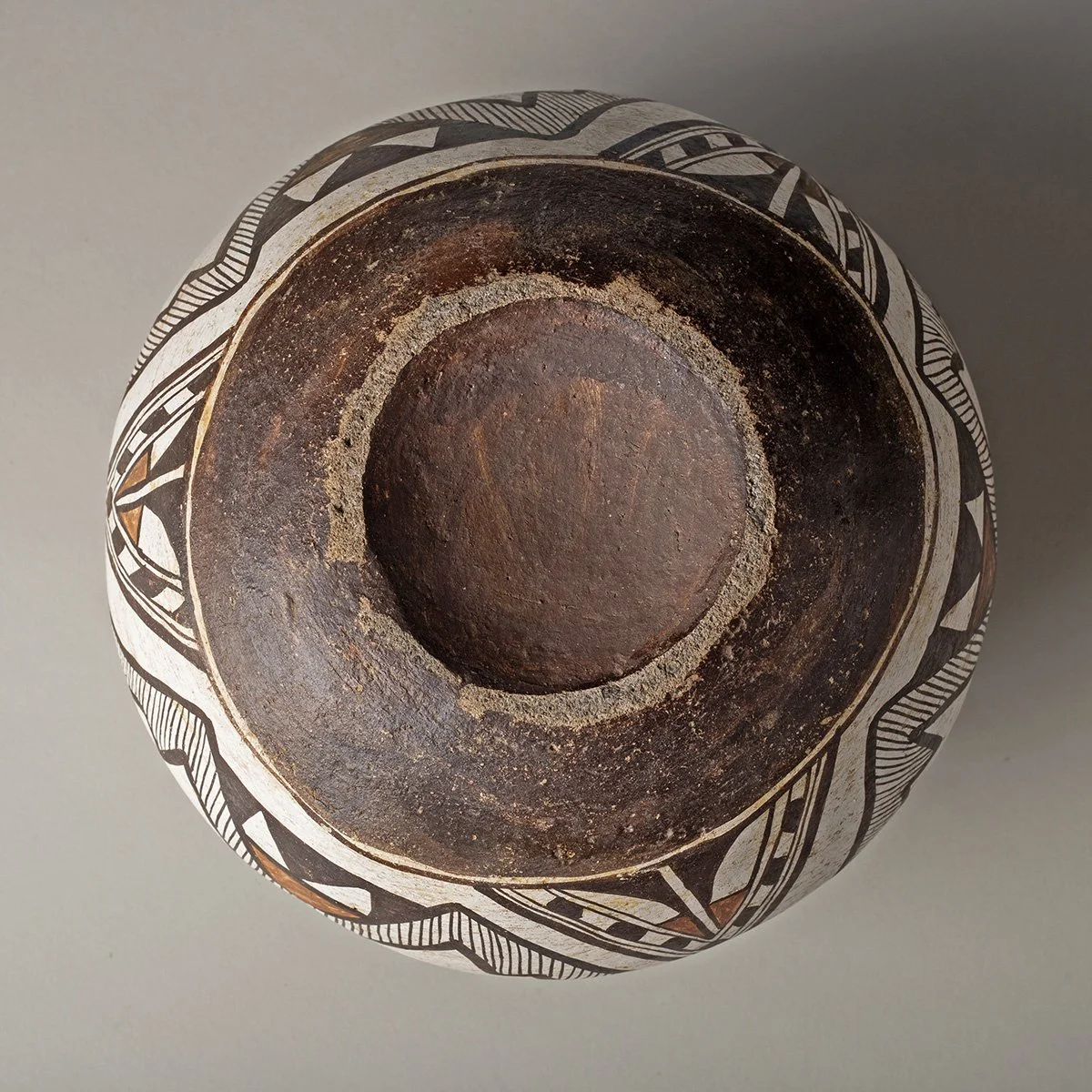 Image 7 of 7