

 Image 1 of 2
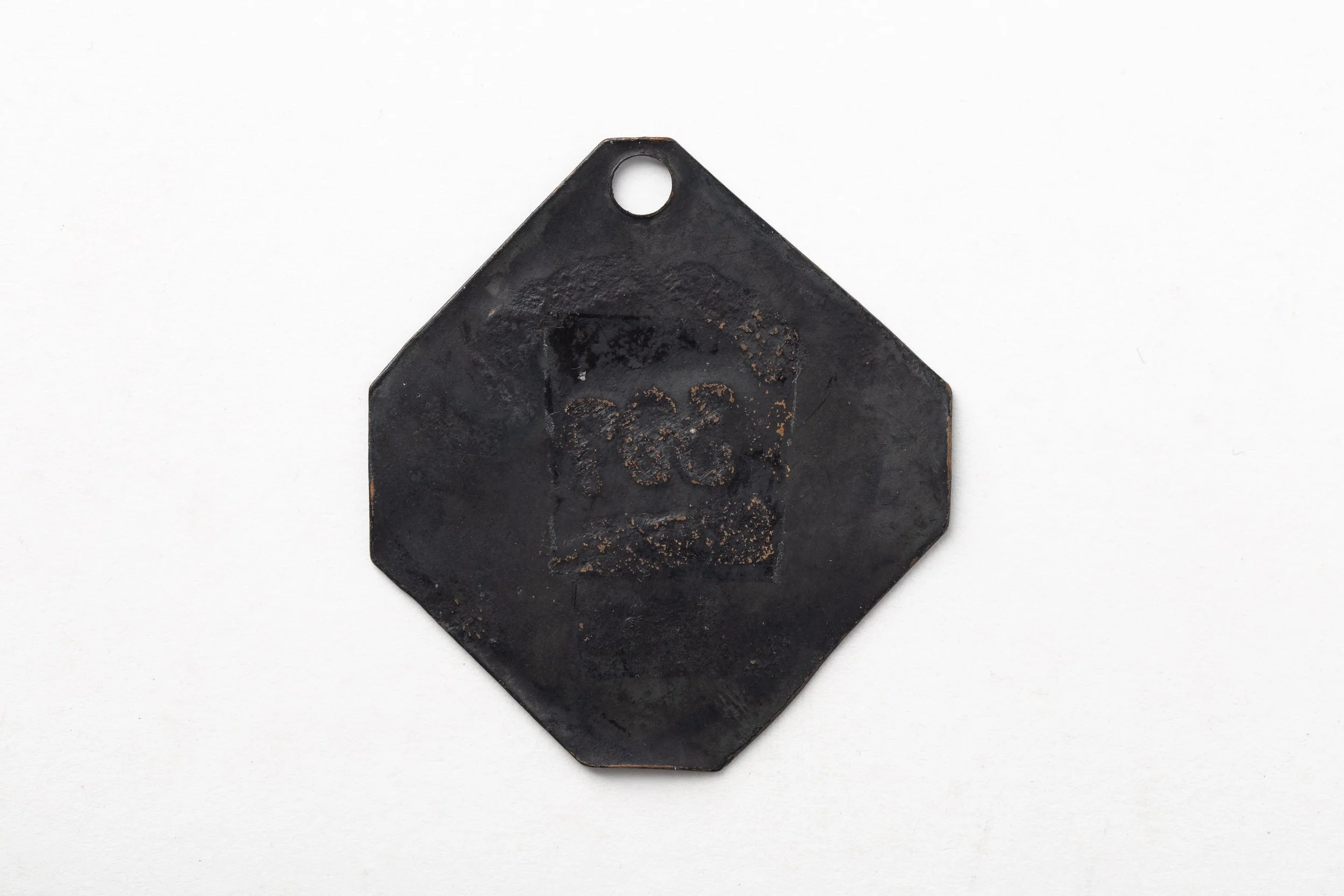 Image 2 of 2
Material: Copper or brass
Date: 1841
Measurements: 1½" x 1⅝"
Provenance: Stanley and Jackie Levin, Savannah, GA; purchased 1987
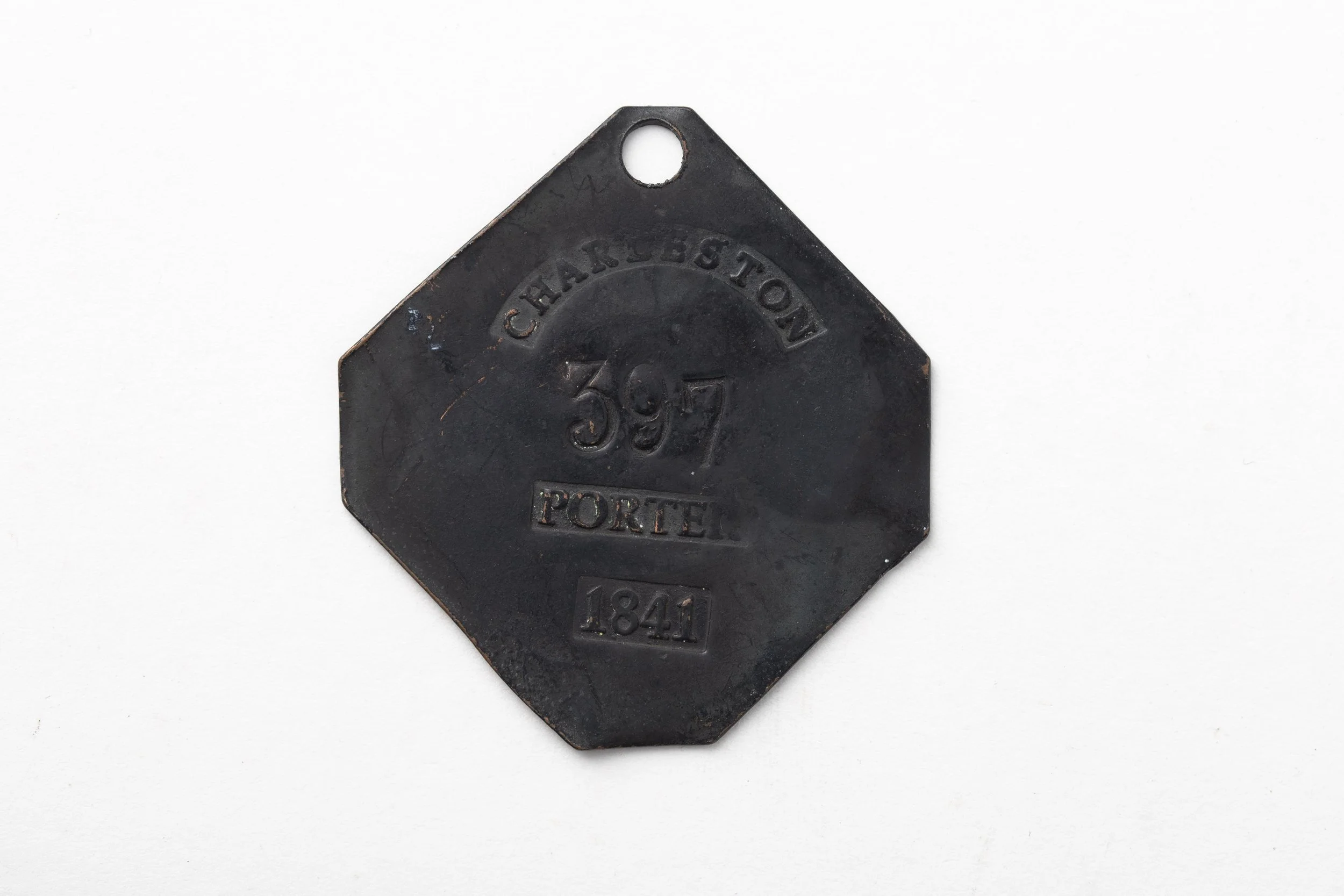
Charleston municipal slave hire badge, stamped "CHARLESTON / 1841 / PORTER" with a tracking number. Charleston, South Carolina operated one of the most formally regulated slave hire systems in the antebellum South. Municipal ordinances required enslavers to purchase annual badges for enslaved people hired out to work outside the household, functioning as both a tax mechanism and a system of movement control. Badges were typically produced by local blacksmiths or silversmiths in copper or brass, stamped with the city name, year, occupation (such as PORTER, SERVANT, MECHANIC, or FISHER), and an individual number. They were worn around the neck or affixed to clothing.
The badge system was significantly tightened following the Denmark Vesey conspiracy of 1822, which heightened municipal concern over the movement of enslaved people within the city. Charleston slave hire badges are among the most documented material artifacts of the urban slave economy in the American South and are held in major museum and institutional collections. Porter-designated badges from the 1841 series are infrequently encountered on the market.
We ship free anywhere in the world, fully insured, packed by hand
Material: Copper or brass
Date: 1841
Measurements: 1½" x 1⅝"
Provenance: Stanley and Jackie Levin, Savannah, GA; purchased 1987
Charleston municipal slave hire badge, stamped "CHARLESTON / 1841 / PORTER" with a tracking number. Charleston, South Carolina operated one of the most formally regulated slave hire systems in the antebellum South. Municipal ordinances required enslavers to purchase annual badges for enslaved people hired out to work outside the household, functioning as both a tax mechanism and a system of movement control. Badges were typically produced by local blacksmiths or silversmiths in copper or brass, stamped with the city name, year, occupation (such as PORTER, SERVANT, MECHANIC, or FISHER), and an individual number. They were worn around the neck or affixed to clothing.
The badge system was significantly tightened following the Denmark Vesey conspiracy of 1822, which heightened municipal concern over the movement of enslaved people within the city. Charleston slave hire badges are among the most documented material artifacts of the urban slave economy in the American South and are held in major museum and institutional collections. Porter-designated badges from the 1841 series are infrequently encountered on the market.
We ship free anywhere in the world, fully insured, packed by hand