

 Image 1 of 3
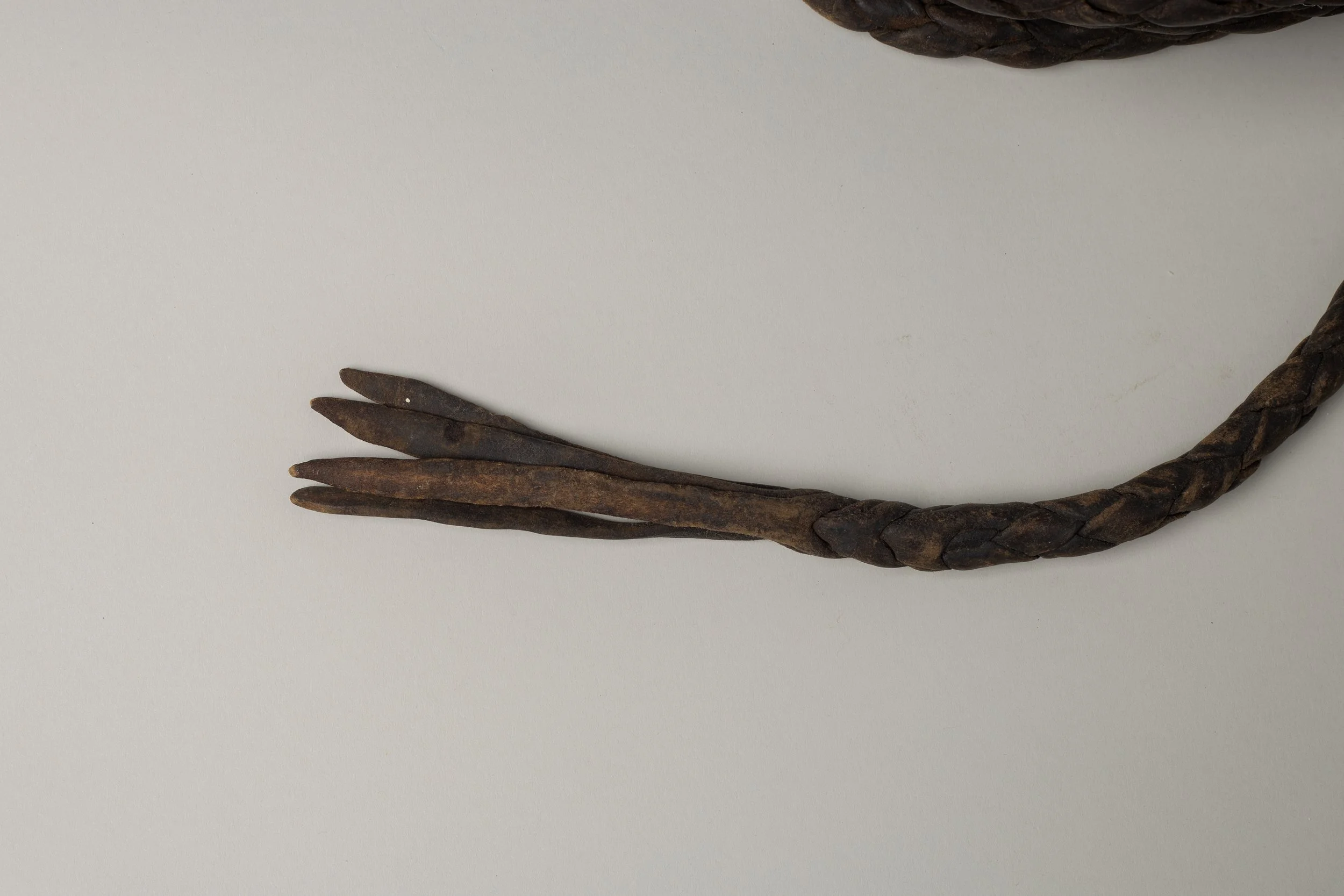 Image 2 of 3
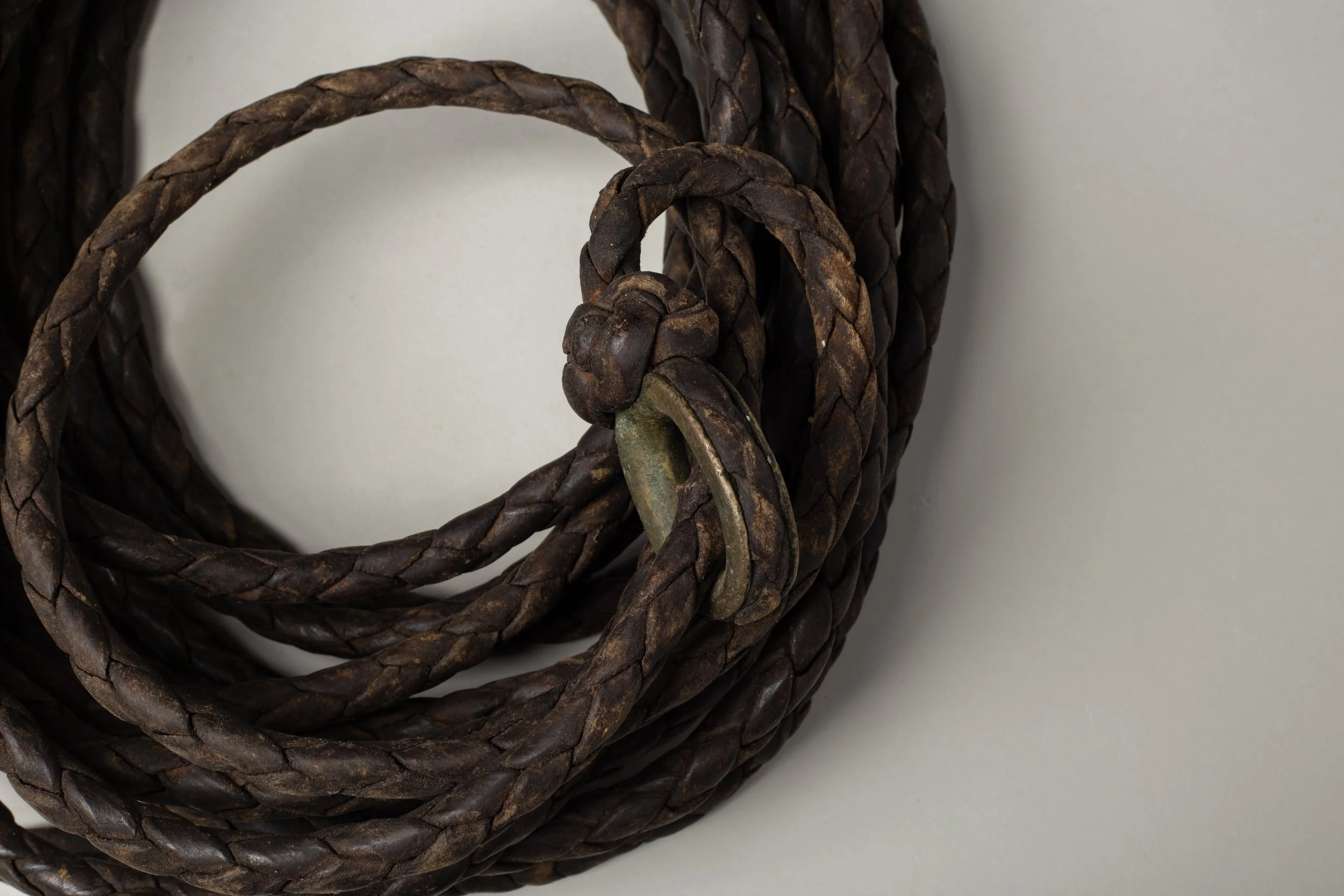 Image 3 of 3
Material: Braided leather, metal hardware
Date: 19th century
Measurements: Not recorded
Provenance: Private collection, Kailua Kona, HI
Note: Parker Ranch provenance
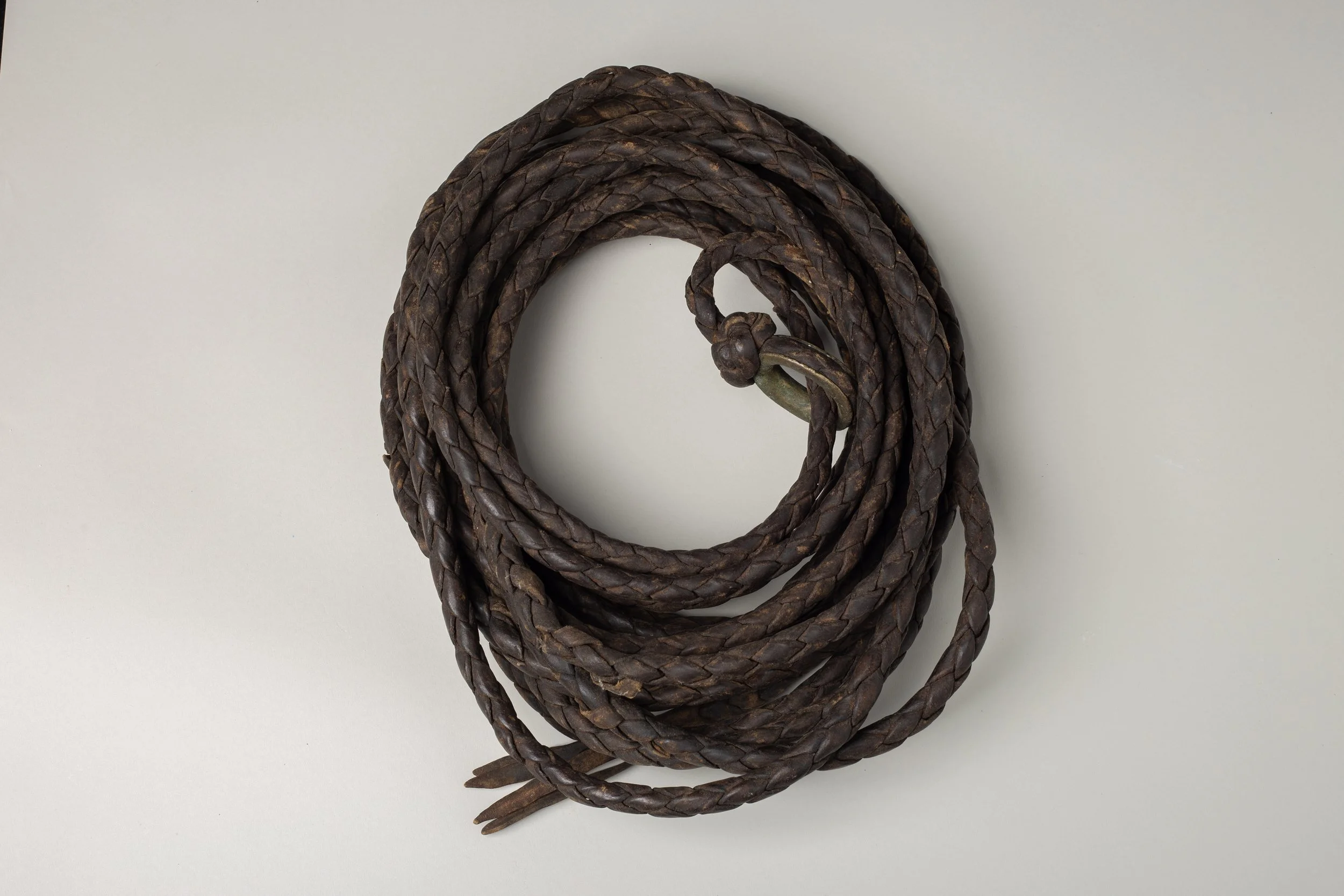
A braided leather lariat associated with the paniolo (Hawaiian cowboy) tradition of Parker Ranch on the Big Island of Hawaii. The paniolo culture developed in the early 19th century after King Kamehameha III invited Mexican vaqueros to Hawaii in 1832 to teach cattle management on the vast ranch lands, most notably Parker Ranch, which was one of the largest cattle ranches in the United States. The paniolo adapted and refined these skills, developing their own distinct roping and riding traditions. Working lariats of this type were essential tools of the trade, braided for strength and suppleness. This example, from a private Kailua-Kona collection, reflects the working material culture of 19th-century Hawaiian ranching life.
We ship free anywhere in the world, fully insured, packed by hand
Material: Braided leather, metal hardware
Date: 19th century
Measurements: Not recorded
Provenance: Private collection, Kailua Kona, HI
Note: Parker Ranch provenance
A braided leather lariat associated with the paniolo (Hawaiian cowboy) tradition of Parker Ranch on the Big Island of Hawaii. The paniolo culture developed in the early 19th century after King Kamehameha III invited Mexican vaqueros to Hawaii in 1832 to teach cattle management on the vast ranch lands, most notably Parker Ranch, which was one of the largest cattle ranches in the United States. The paniolo adapted and refined these skills, developing their own distinct roping and riding traditions. Working lariats of this type were essential tools of the trade, braided for strength and suppleness. This example, from a private Kailua-Kona collection, reflects the working material culture of 19th-century Hawaiian ranching life.
We ship free anywhere in the world, fully insured, packed by hand