

 Image 1 of 5
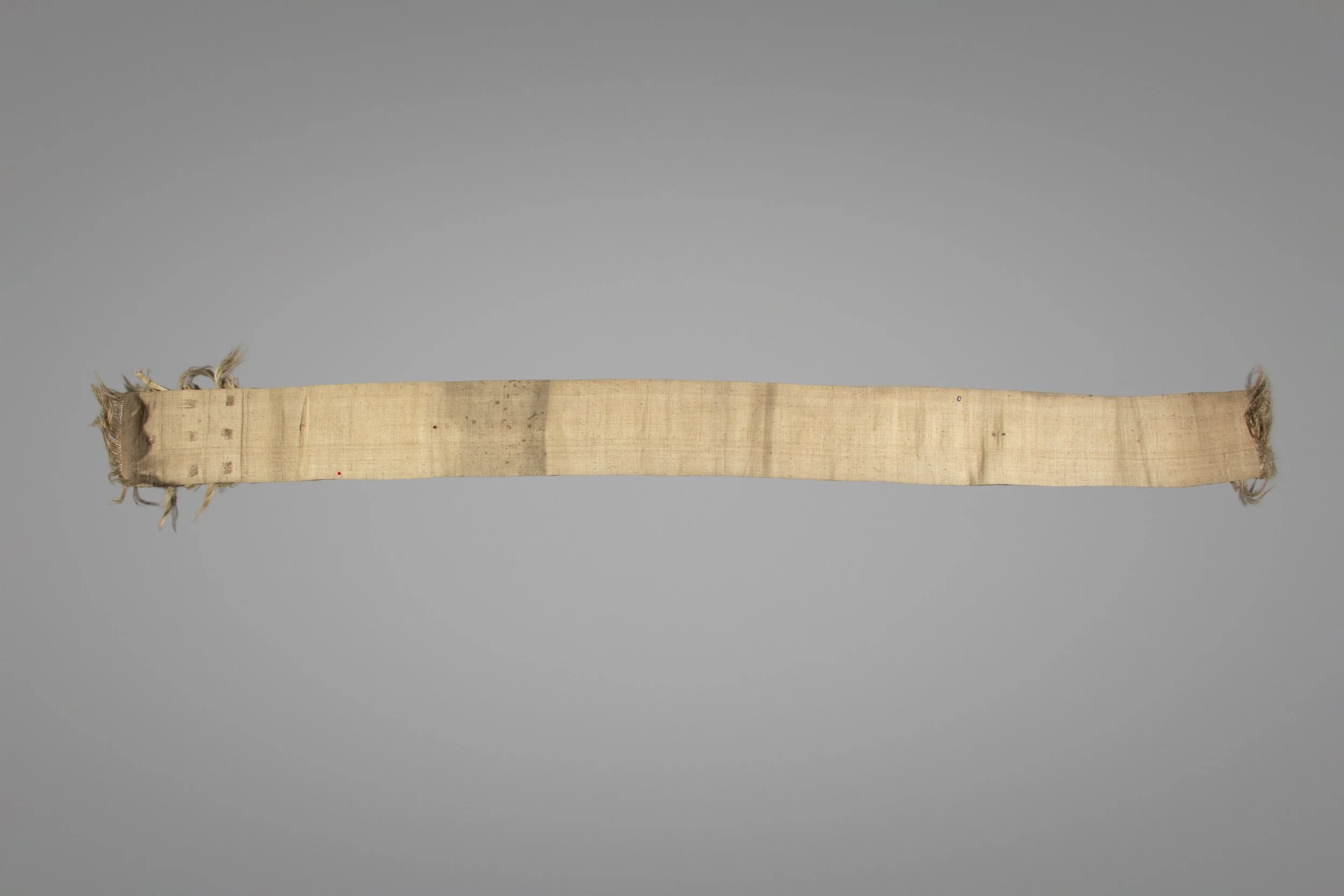 Image 2 of 5
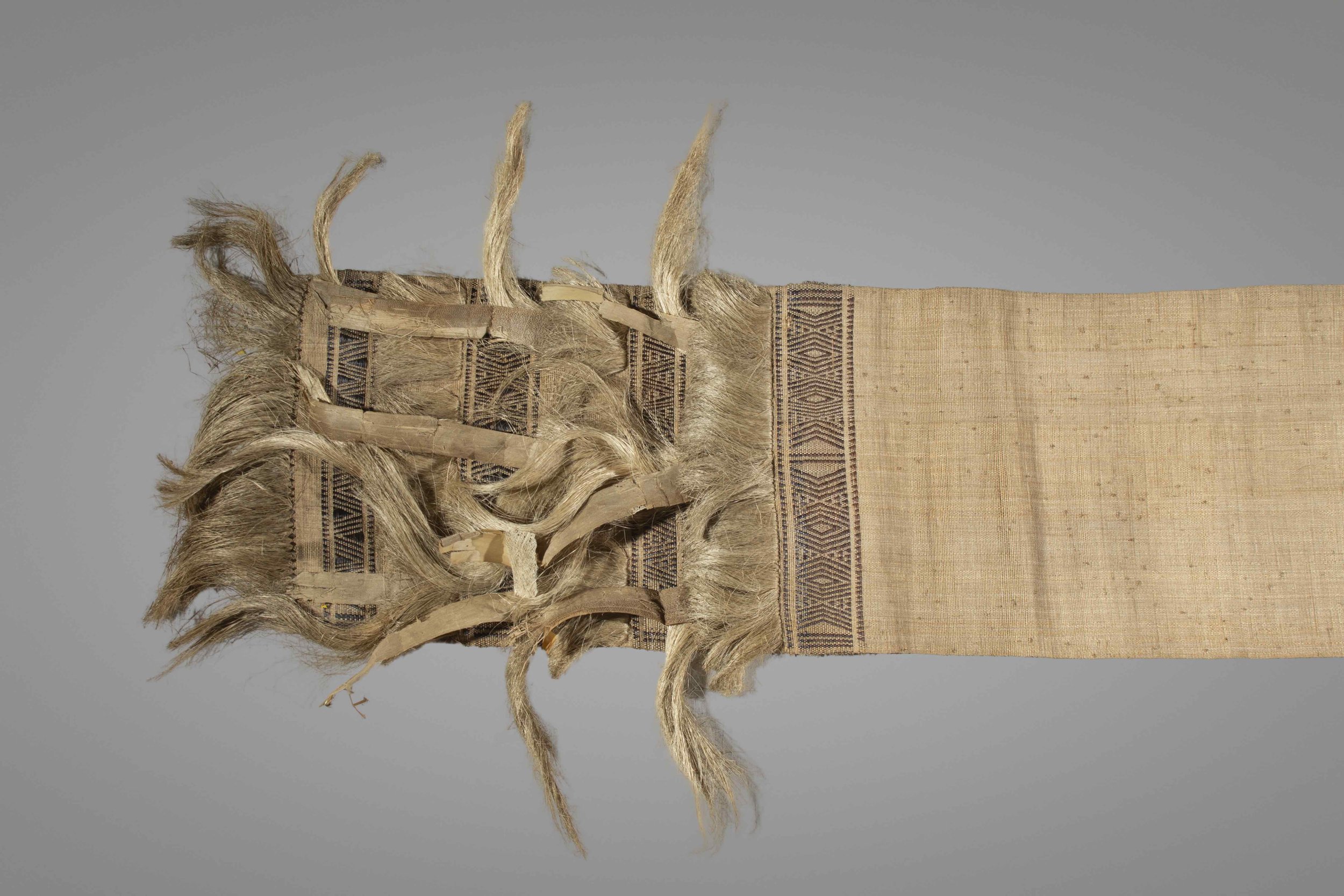 Image 3 of 5
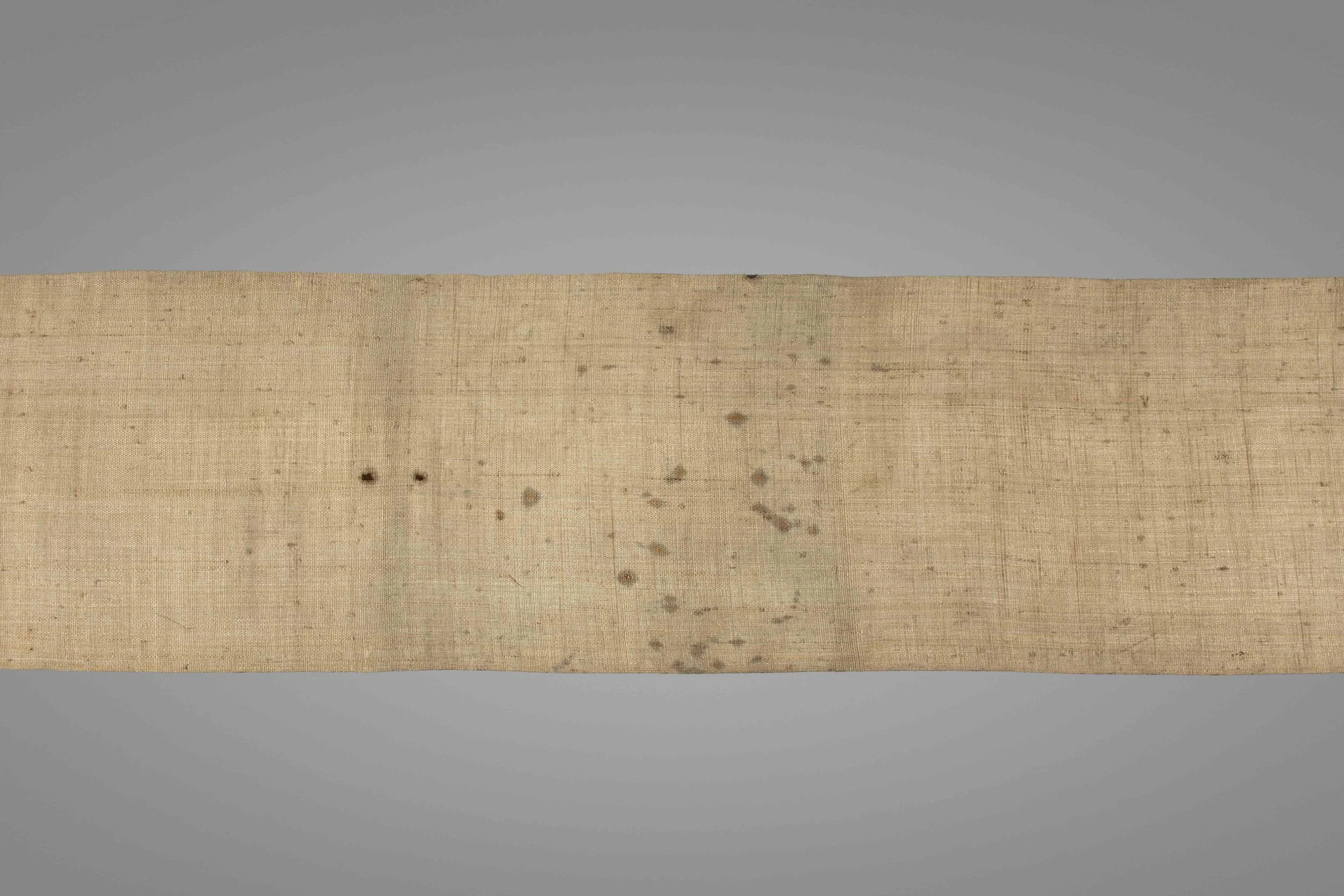 Image 4 of 5
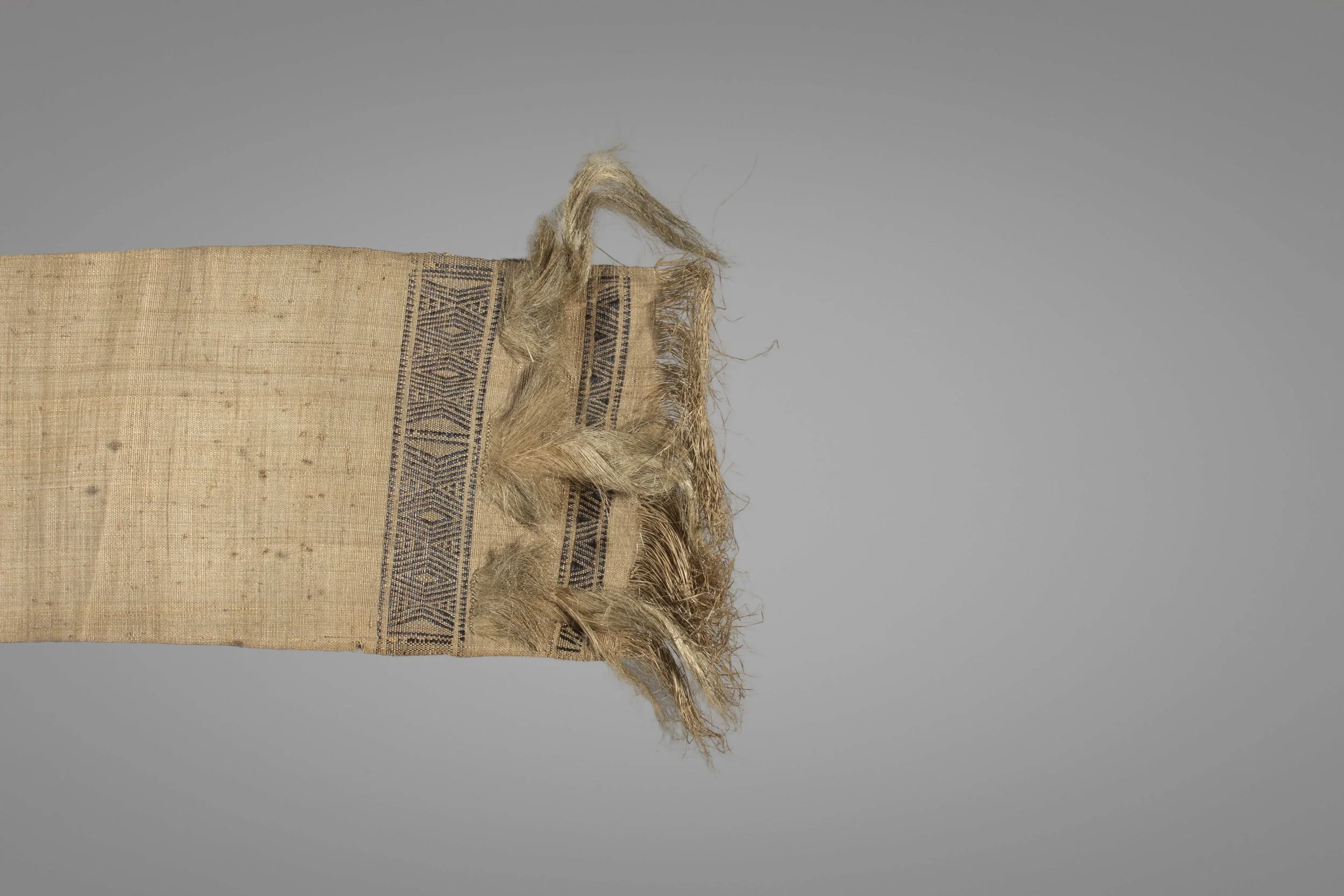 Image 5 of 5
Solomon Islands
19th century
Measurements: 113 in long x 9 1/4 in wide
Materials: Woven banana tree bark fiber with pandanus leaf
Provenance: Sacred Heart Mission, SVD Hiltrup, Germany
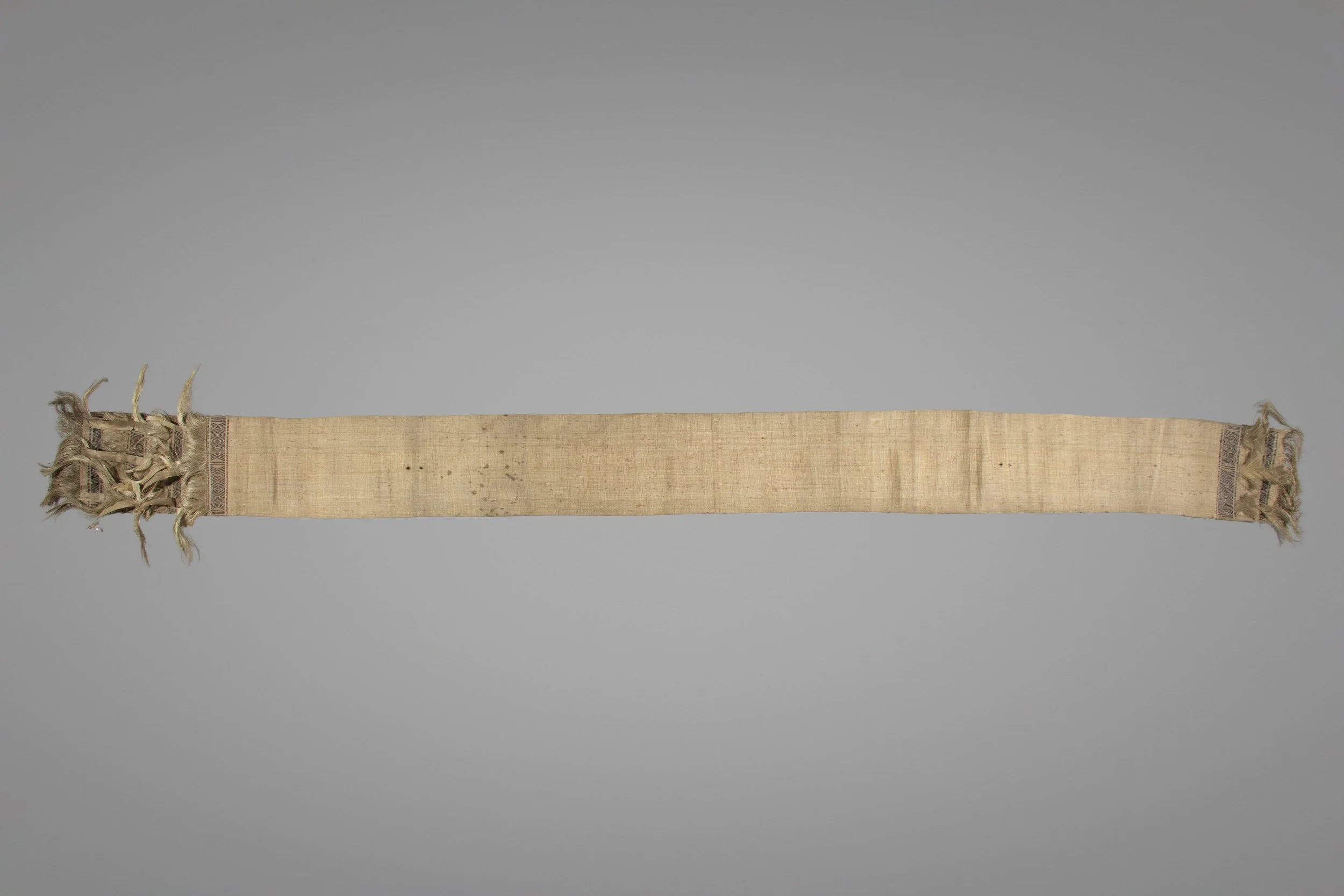
A ceremonial woven sash from Ndende or the eastern Reef Islands, Solomon Islands, made of banana tree bark fiber and pandanus leaf and dating to the 19th century. Measuring 113 in long and 9 1/4 in wide, it is notable for its length and refined execution. The weaving is controlled and even, reflecting the technical skill associated with textile traditions of Santa Cruz and the surrounding island groups. Its elongated format gives it a strong visual presence while preserving the directness of an object made for ceremonial use.
Such cloths were worn on ceremonial occasions, including the napa dance and the nelanga nelo, or dance of the nose ornament. They were worn folded up, with the end hanging down in front, forming part of a specific mode of ceremonial dress and performance. Comparable examples are discussed in G. Koch, Materielle Kultur der Santa Cruz-Inseln (Berlin: Museum für Völkerkunde, 1971), where the textile traditions of the region are documented in detail.
We ship free anywhere in the world, fully insured, packed by hand.
Solomon Islands
19th century
Measurements: 113 in long x 9 1/4 in wide
Materials: Woven banana tree bark fiber with pandanus leaf
Provenance: Sacred Heart Mission, SVD Hiltrup, Germany
A ceremonial woven sash from Ndende or the eastern Reef Islands, Solomon Islands, made of banana tree bark fiber and pandanus leaf and dating to the 19th century. Measuring 113 in long and 9 1/4 in wide, it is notable for its length and refined execution. The weaving is controlled and even, reflecting the technical skill associated with textile traditions of Santa Cruz and the surrounding island groups. Its elongated format gives it a strong visual presence while preserving the directness of an object made for ceremonial use.
Such cloths were worn on ceremonial occasions, including the napa dance and the nelanga nelo, or dance of the nose ornament. They were worn folded up, with the end hanging down in front, forming part of a specific mode of ceremonial dress and performance. Comparable examples are discussed in G. Koch, Materielle Kultur der Santa Cruz-Inseln (Berlin: Museum für Völkerkunde, 1971), where the textile traditions of the region are documented in detail.
We ship free anywhere in the world, fully insured, packed by hand.