

 Image 1 of 1
Material: Photogravure on Dutch Van Gelder paper
Date: 1907
Measurements: Image 11⁷⁄₁₆ × 15⁹⁄₁₆ inches; sheet 17¹⁵⁄₁₆ × 21⁷⁄₈ inches
Provenance: Private collection, Tucson, AZ
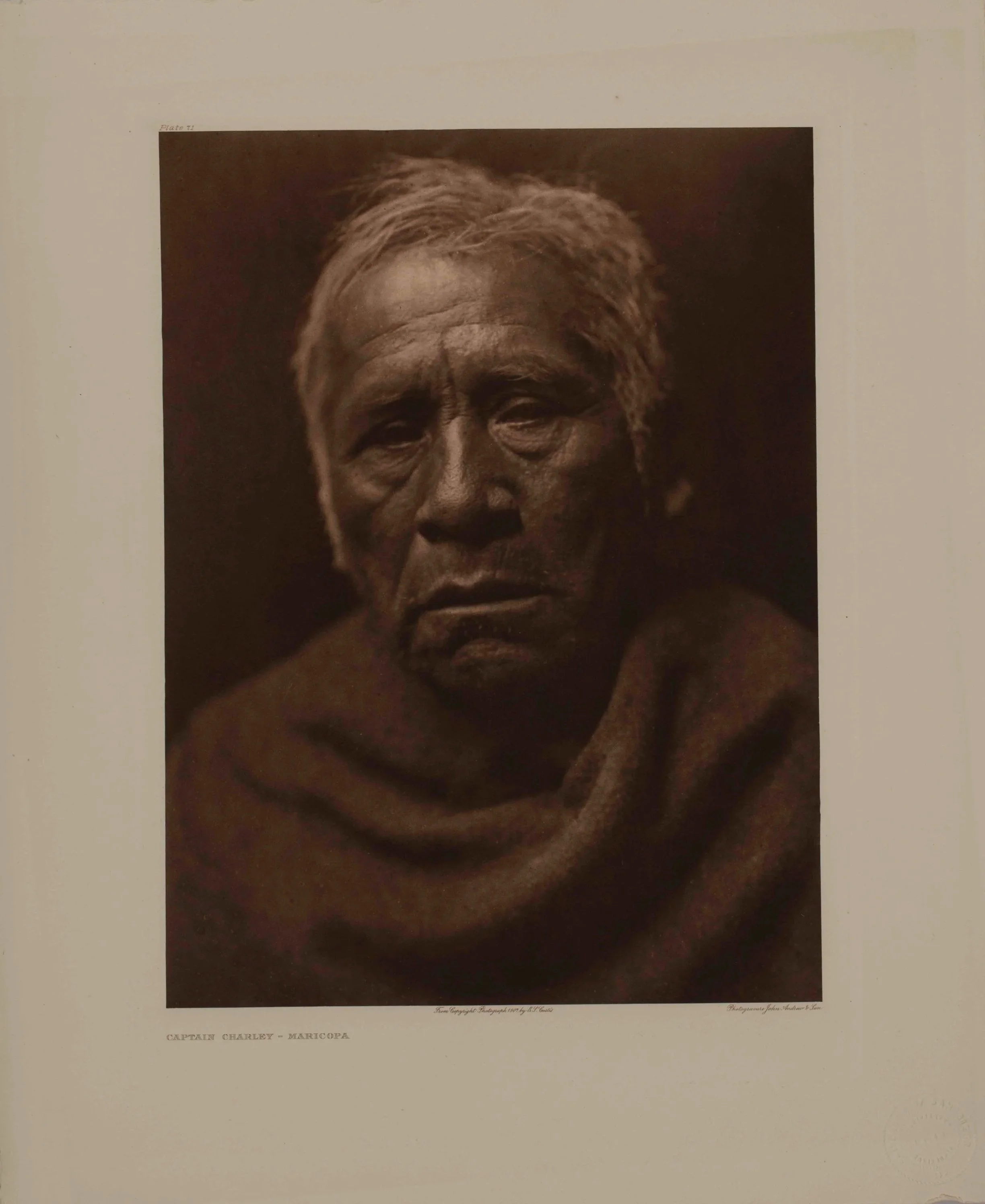
Photogravure titled Captain Charley, Maricopa by Edward S. Curtis, printed in 1907 on Dutch Van Gelder paper — from the inaugural year of The North American Indian (1907–1930). The Maricopa, or Piipaash, are a Yuman-speaking people of the Gila and lower Colorado River valleys of present-day Arizona. Captain Charley's identification as a named individual of evident standing within his community lends this portrait a documentary significance extending beyond its artistic merit. Curtis's 1907 documentation of Maricopa subjects along the Gila River produced some of the most quietly powerful portraits in the entire run of The North American Indian, capturing individuals whose communities had already weathered profound disruption while maintaining deep roots in the Sonoran Desert landscape. Named Maricopa portraits from this first year of the project are genuinely uncommon. From a private collection in Tucson, Arizona.
Material: Photogravure on Dutch Van Gelder paper
Date: 1907
Measurements: Image 11⁷⁄₁₆ × 15⁹⁄₁₆ inches; sheet 17¹⁵⁄₁₆ × 21⁷⁄₈ inches
Provenance: Private collection, Tucson, AZ
Photogravure titled Captain Charley, Maricopa by Edward S. Curtis, printed in 1907 on Dutch Van Gelder paper — from the inaugural year of The North American Indian (1907–1930). The Maricopa, or Piipaash, are a Yuman-speaking people of the Gila and lower Colorado River valleys of present-day Arizona. Captain Charley's identification as a named individual of evident standing within his community lends this portrait a documentary significance extending beyond its artistic merit. Curtis's 1907 documentation of Maricopa subjects along the Gila River produced some of the most quietly powerful portraits in the entire run of The North American Indian, capturing individuals whose communities had already weathered profound disruption while maintaining deep roots in the Sonoran Desert landscape. Named Maricopa portraits from this first year of the project are genuinely uncommon. From a private collection in Tucson, Arizona.