

 Image 1 of 9
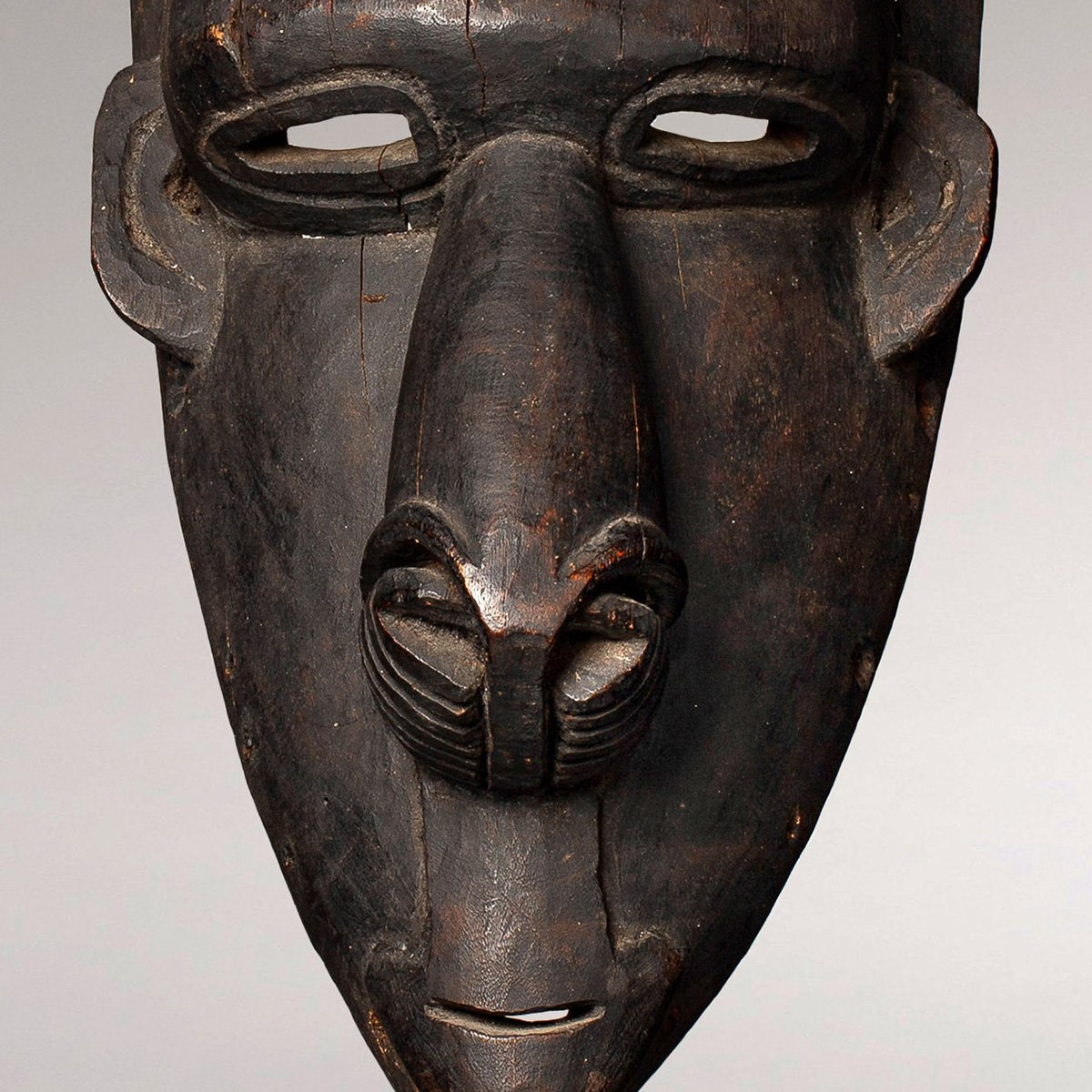 Image 2 of 9
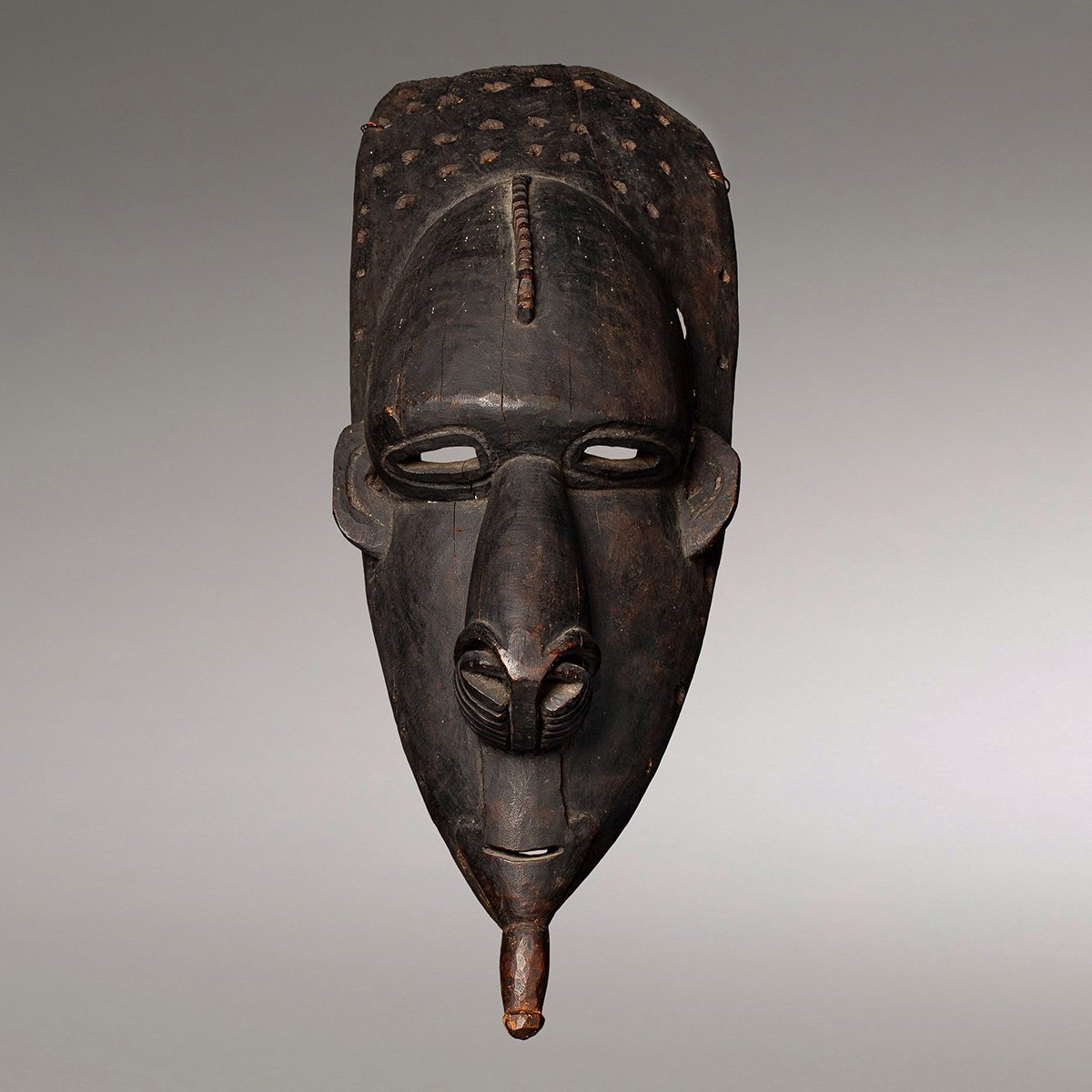 Image 3 of 9
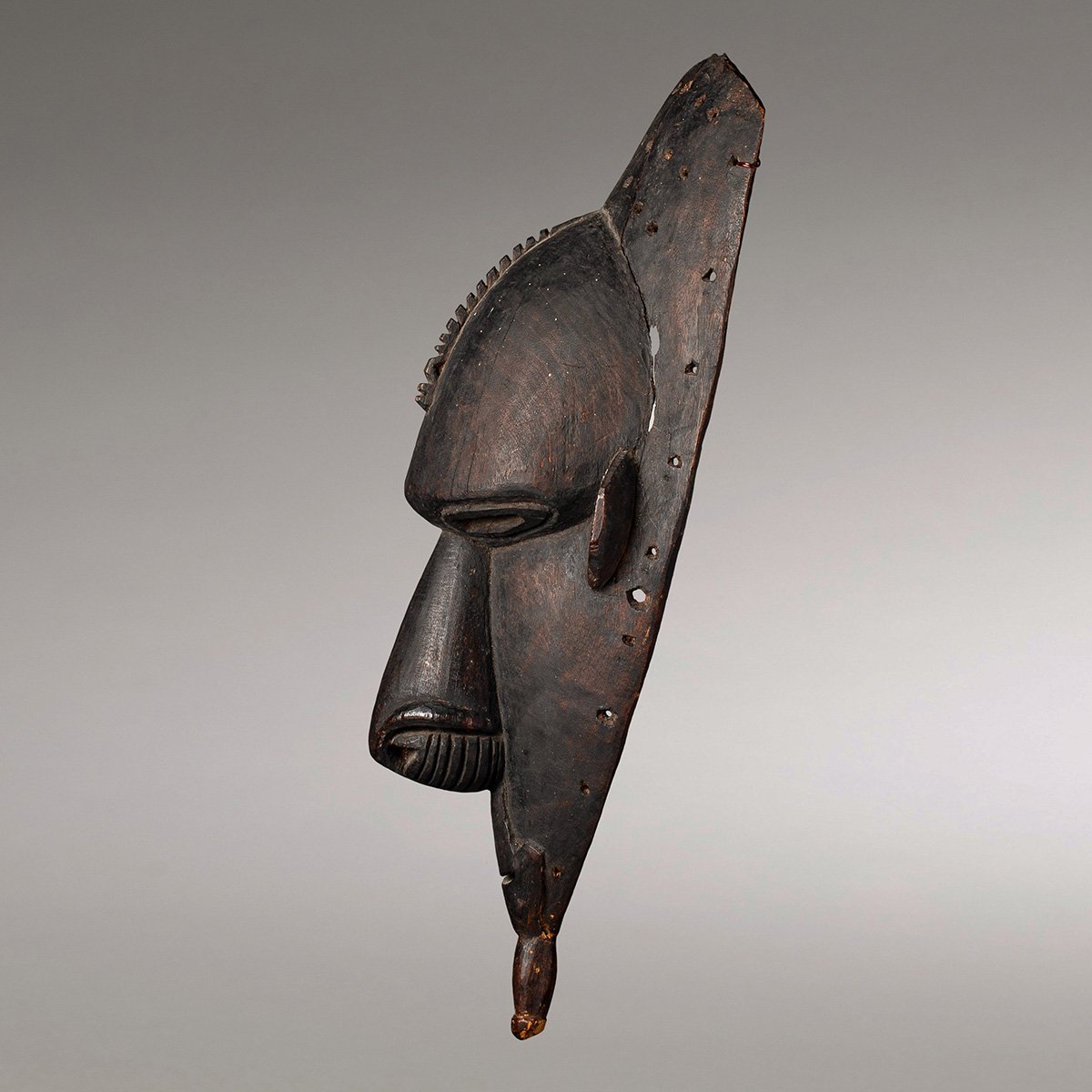 Image 4 of 9
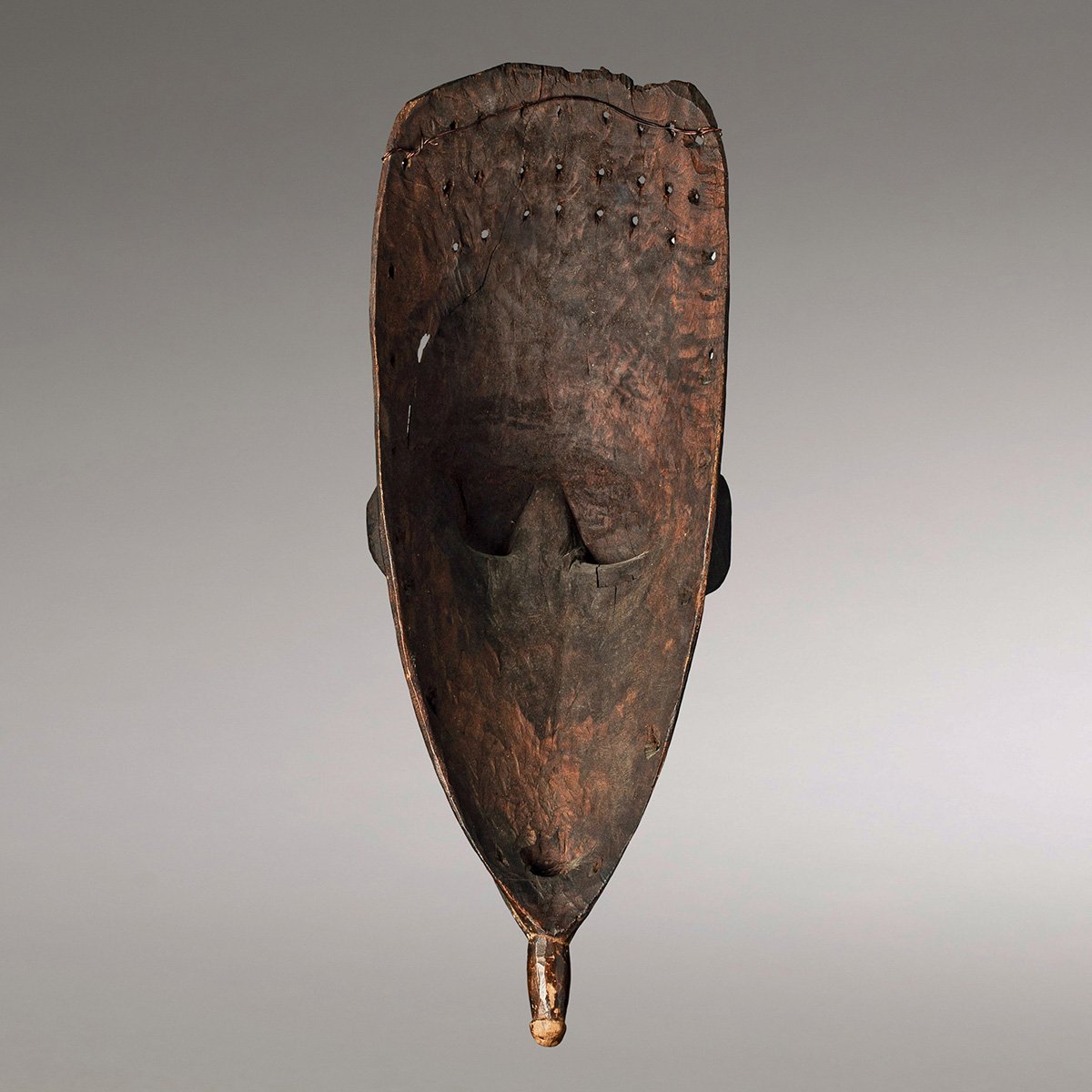 Image 5 of 9
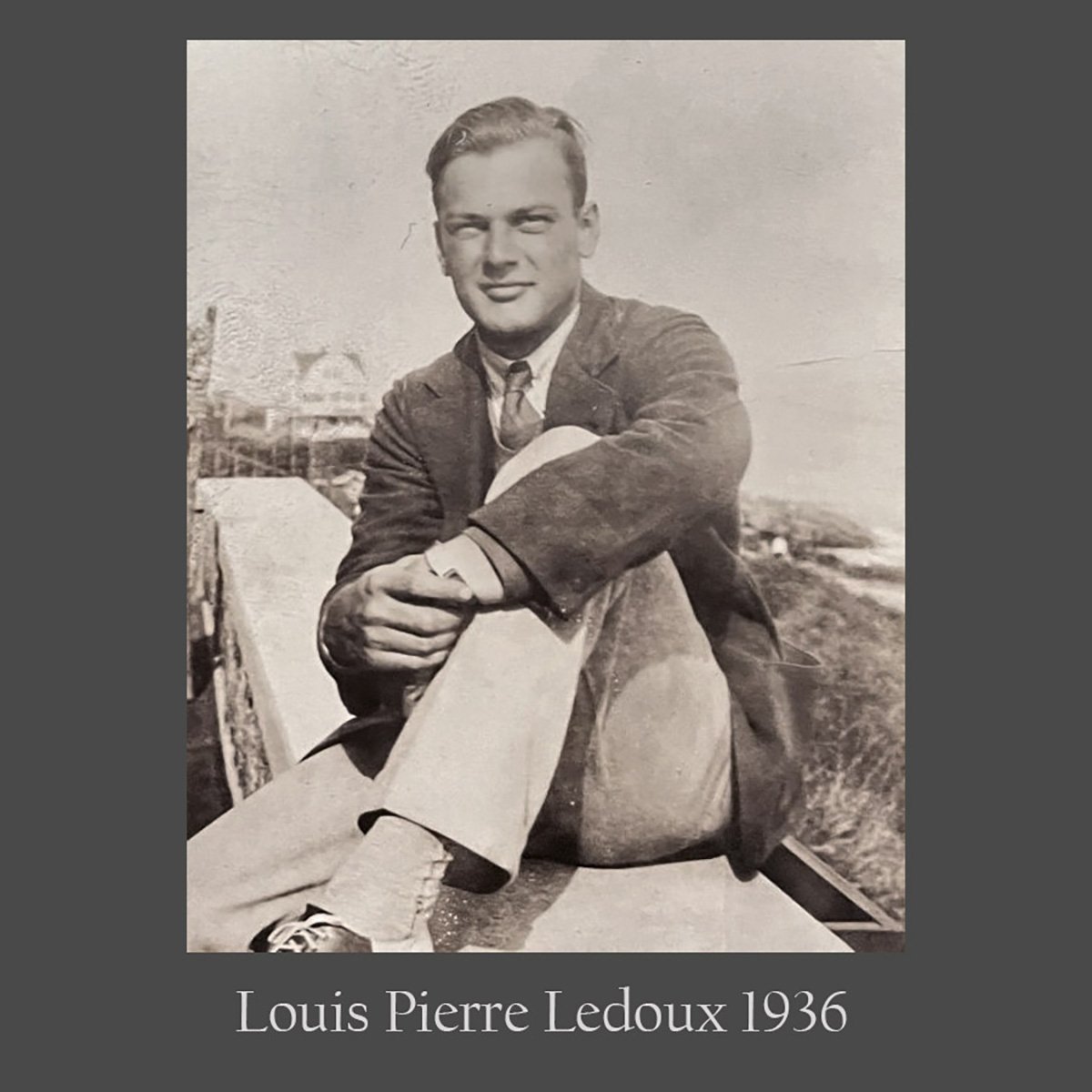 Image 6 of 9
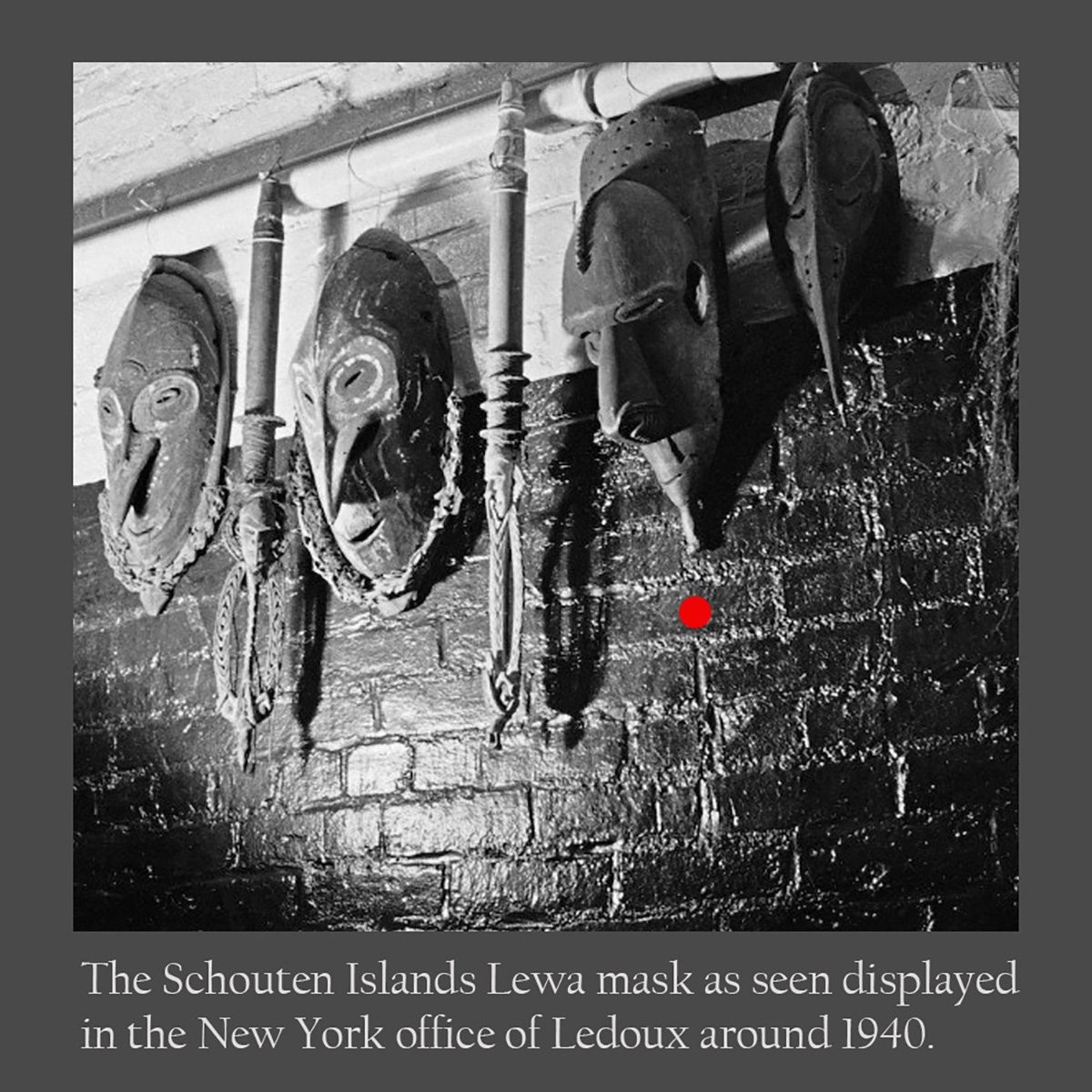 Image 7 of 9
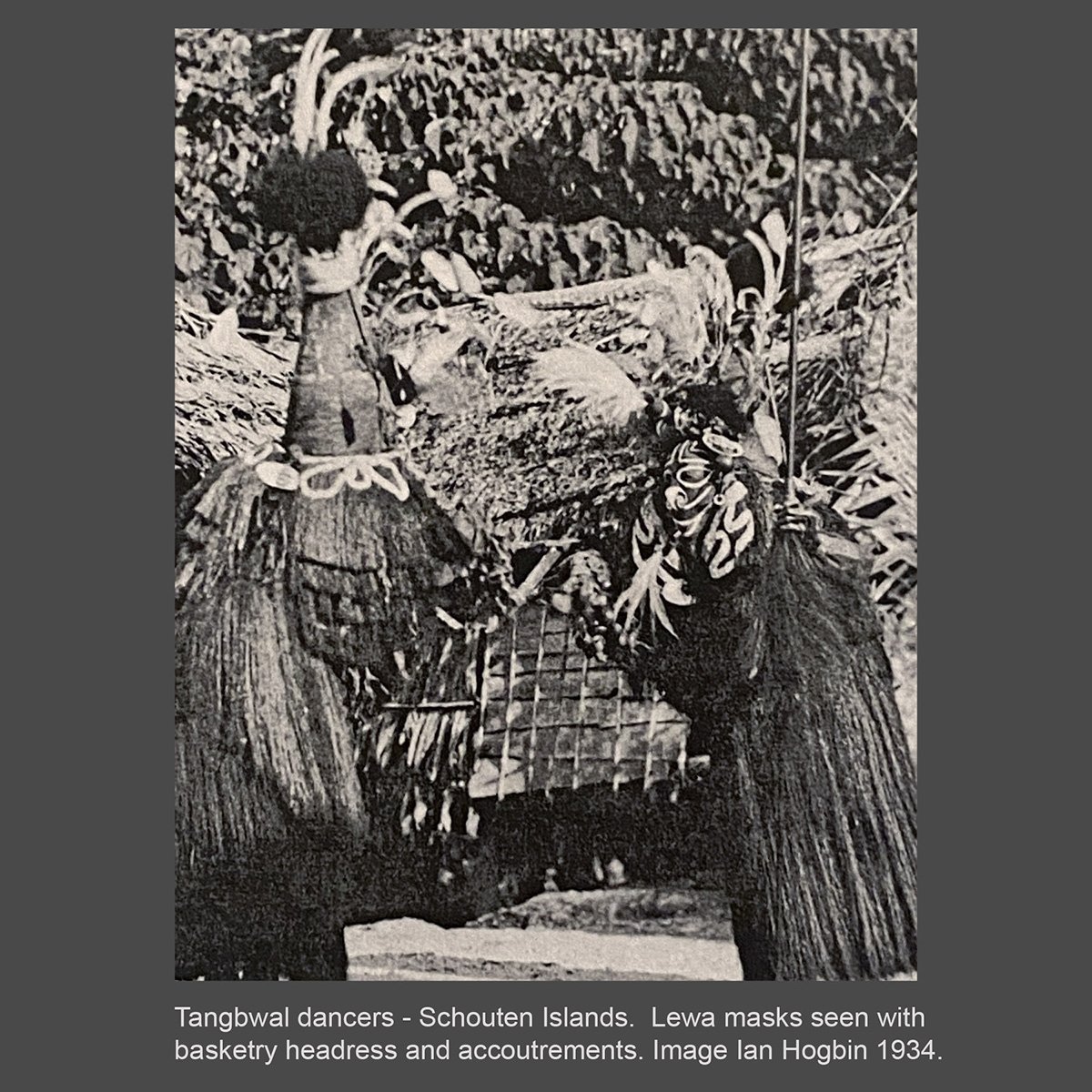 Image 8 of 9
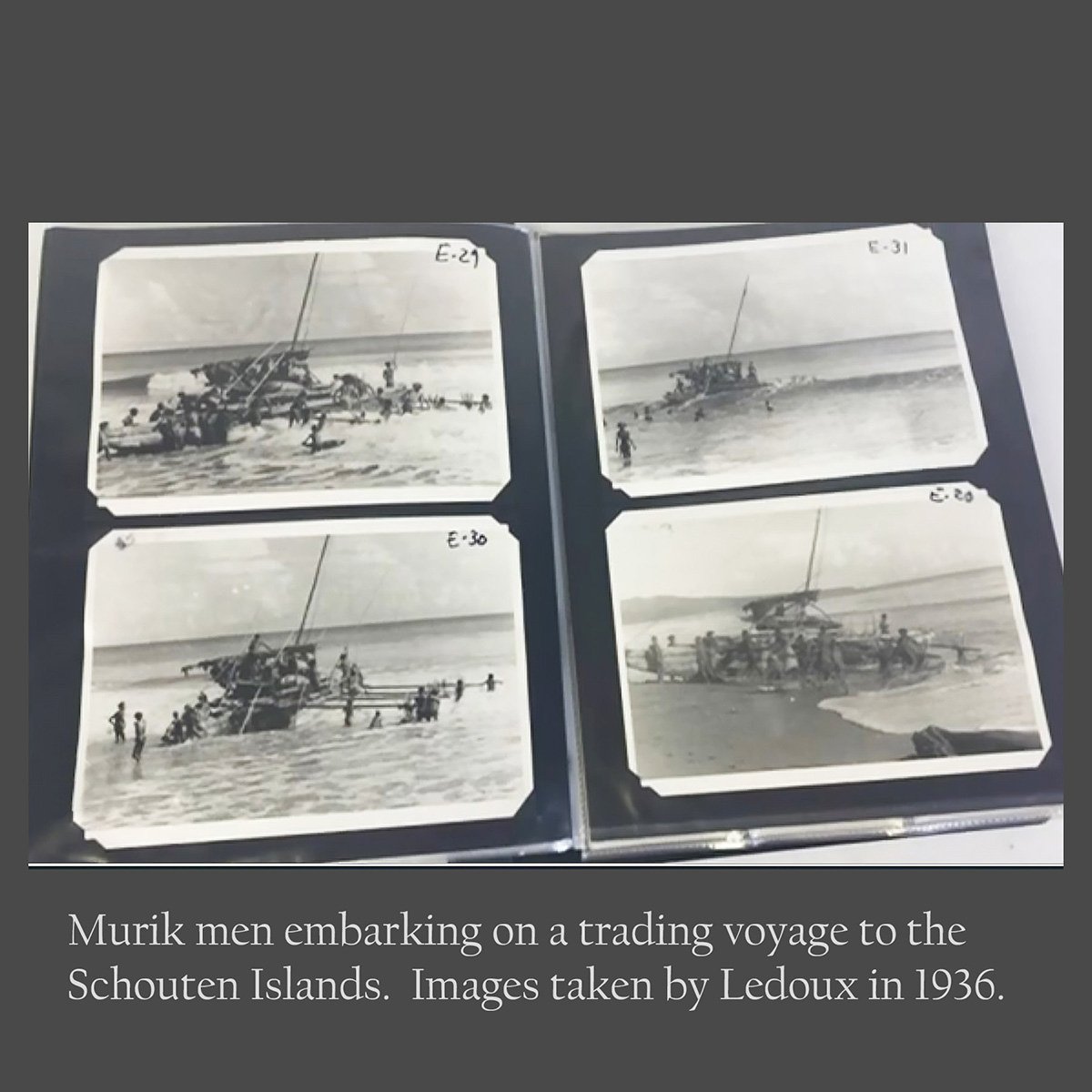 Image 9 of 9
Important Early Lewa Ceremonial Mask
Schouten Islands, Coastal Sepik Region, Papua New Guinea
Wogeo People
Wood, traces of ocher pigments
19th century – field collected in 1936
Height: 19.25 inches (49 cm)
Provenance: Field collected in New Guinea’s Murik region in 1936 by Louis Pierre Ledoux. By descent to Joan Ledoux until 2015 / Australian private collection
Spirits associated with the village and the forest lie at the center of the artistic and ceremonial life of the peoples of the Schouten Islands, a small offshore archipelago just west of the Sepik River delta, in northern New Guinea. Many types of spirits can only be heard, their voices manifest as the sounds produced by sacred flutes, bull-roarers, whistles, or bamboo trumpets played by the village men. The spirits known as "village lewa," however, make themselves visible to the community in the form of masked dancers called tangbwal, who enforce ritual prohibitions during the lead-up to walage, ceremonial distributions of food made by the village headman.
Some months prior to the walage, the headman summons the village lewa from the world of the spirits. The first to appear is a female lewa, portrayed by a man in a bulky costume made from women's skirts, who "rises out of the sea" and walks into the men's house, imitating the movements of a heavily pregnant woman. In the men's house this female lewa "gives birth" to sons, typically twins, who emerge from the house the following morning. Each headman owns a pair of wooden masks, also called lewa, which represent the twin sons. The two male lewa perform together, each wearing a lewa mask as the central element of an elaborate costume embellished with shell and feather ornaments and worn with an enormous conical headdress and bushy garments of sago-palm leaves, which conceal the performer's body. Although the lewa spirits are said to be mute, each carries a shell rattle, whose sound accompanies his movements, as well as a spear. Thus arrayed, the lewa appear in the early morning and dance continuously until nightfall, the roles of the spirit brothers being assumed in turn by a series of dancers, who don the elaborate costumes when the preceding performers become exhausted. The conclusion of the dance is followed by a ceremonial meal, which signals the beginning of a prohibition on the harvesting of all ripe coconuts in the community.
During the three to four months required for a sufficient quantity of coconuts to ripen for the walage ceremony, the masked lewa dancers periodically reappear, patrolling the groves and gardens, ostensibly to enforce the ban but also to amuse themselves by playfully frightening the women and children at work in the fields. Delegations from nearby villages also visit, and pairs of guests are invited to don the masked costumes and perform the lewa dance." Once all the coconuts necessary for the walage have ripened, the lewa are sent back to the land of the spirits, accompanied by funerary chants and lamentations. A long, narrow platform is constructed at the edge of the village, which serves as a metaphorical canoe or kat, to carry the lewa on their homeward journey." The lewa proceed to the kat and dance, after which the masked costumes are removed and placed over cane frames, which serve as makeshift mannequins. The lewa mannequins are displayed within the canoe for two or three days, after which the costumes are dismantled and the masks returned to the headman for safekeeping until it is time to summon the lewa once again. While the lewa are primarily associated with the walage, the headman can also call upon them to appear on other occasions, such as the inauguration of a new men's house or trading canoe or the life-passage rites of his children.
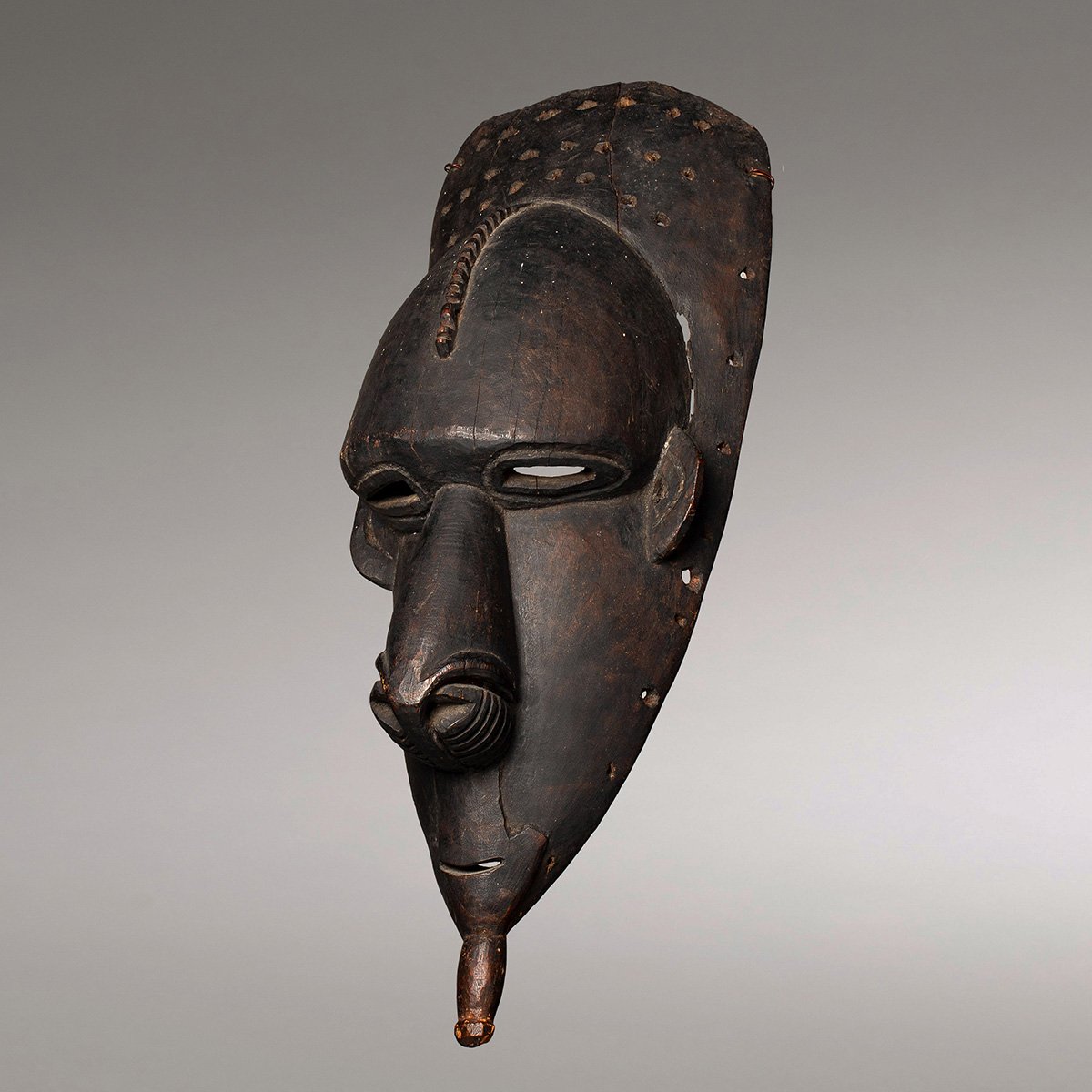
Stripped of their ceremonial accoutrements, lewa masks remain powerful works of sculpture whose striking contoured features combine to form powerful images of the spirits they portray. Skillfully carved with native tools of stone, shell, and soft iron, the lewa mask presented here perfectly embodies this supernatural being. The archaic visage, darkened by time and the men’s house smoke filled interior, exudes a powerful presence born from an intensity of artistic and spiritual expression. Like other early examples, the mask is rendered in deep voluminous form, the carefully hollowed interior spaces intended to make room for the occupying spirit and to effectively contain its potent animating energy. Divided by a crenulated medial ridge, the mask’s high domed forehead creates a pronounced brow line from which emerges almond-shaped eyes deeply set within its orbital hollows and shadows. The nose of the lewa spirit is prominently carved and is characterized by its distinctive multi-layered spiral nose ornament, modeled after the shell nose ornaments worn by high-ranking men. By contrast, the ears and mouth are delicate and minimally indicated, further emphasizing the depth and high relief rendering of the nose and brow ridge. Above the crania of the mask emerges an oval collar that is pierced with an array of holes that continue down the perimeter of the mask, intended to secure the attachment of a large conical rattan headdress to the mask. A close inspection of the mask’s ancient surface reveals the use of stone and soft iron tools in the carving of the mask, and the additional use of rodent or flying fox tooth chisels to perforate the mask’s surface. The back of the mask has been ritually scrubbed clean, revealing in fine detail the traces of native stone tooling.
The mask boasts a distinguished early provenance, having been field collected by anthropologist Louis Pierre Ledoux in 1936. Graduating from Harvard University in 1935, Ledoux immediately started searching for opportunities to travel and study distant primitive cultures. One day in late October 1935, after having wandered the halls of the American Museum of Natural History, Ledoux received a message that the renown Dr. Margaret Meade, who was the museum’s curator at the time, had requested a meeting with him. Immediately after introductions Meade told him “You go there, and you go alone” as she pointed to a map of Papua New Guinea. Ledoux would soon after be travelling to the village of Kaup, in the coastal Murik region. His fieldwork, encompassing a five-month period from February to June 1936, was intended to study the traditional trade networks of the region. After a short stay in Australia to secure the necessary equipment and provisions, Ledoux, accompanied by and an incredible sixty-nine wooden crates, disembarked at the village of Sumup, along New Guinea’s coast on February 13th, 1936. From there it was a mere seven-mile hike to his final destination in the village of Kaup. Ledoux had gone into the field with the general objective of studying indigenous trade networks, however he soon found himself recording, observing, photographing, and attempting to understand the daily lifestyle, relationships, and oral histories of the Murik people. It is not clear what steered his collecting agenda, though he did focus his efforts on collecting important and irreplaceable artifacts that the local catholic priest Father Schmidt, had asked him to collect and care for, lest they soon be burned by the local missionaries. Ledoux later wrote that he in fact intercepted a local missionary about to burn of an entire attic full of important Murik artifacts that had been recently removed from nearby villages. In addition to these artifact rescue missions, Ledoux also received a number of important artifacts from Father Schmidt, discreetly given to the young anthropologist with the understanding that their safekeeping was now his responsibility. Ledoux later wrote particularly fondly and respectfully of Father Schmidt, who had been living among the Murik for decades and had established wonderful relations with them. A significant figure in the history of the Murik people, Father Joseph Schmidt had arrived in New Guinea two decades earlier in 1913, under the patronage of the Catholic mission – The Society of the Divine Word, which twelve years later in 1925 established an additional mission in the Schouten islands.
The fact that Ledoux discovered this remarkable Schouten Islands lewa mask among the Murik people is not surprising. The people of Schouten Islands were intimately connected with the Murik people through a cycle of complex hereditary exchanges and were regarded as symbolic kin. Positioned some 30 miles (48 kilometers) from the Murik coastal villages, the Schouten Islands were reached by Murik men utilizing large oceangoing outrigger canoes, specially built to purpose for facilitating trade with the Schouten Islanders. Prior to the voyage, the large outrigger canoe was first ceremonially prepared as if for battle. In accordance with both the Murik and their Schouten Island trading partners, when the canoe first arrived in the islands, it had to be disarmed by a mock attack from its hosts. The ritual attackers shot spears at the canoe’s masthead in a dramatized effort to cut down the mast rope and drop its sail. This ceremonial attack presaged an exchange of prestigious valuables between the two groups. Outriggers from the Schouten Islands arriving at Murik coastal villages were greeted in the same fashion. The visitors called the name of their hereditary hosts, each of whom took one shot at the canoe mast before commencing trade. The arrival of a canoe thus converted a state of potential warfare between the two groups into an exchange of mutually beneficial wealth. It should be also noted that Father Schmidt in 1925 participated in the launch of a Murik outrigger trading canoe and voyaged to the Schouten Islands for the inauguration of its newly constructed mission station. Father Schmidt’s deep understanding of coastal New Guinea culture had provided him with a discerning eye when selecting objects of the greatest cultural significance for protection and preservation, and it is reasonable to ponder that he may have collected the lewa mask during his time in the Schouten Islands and returned with it to his mission station among the Murik, where the mask joined an assemblage of other important objects he later gifted to Ledoux for safekeeping in an American museum.
Upon his return to the United States, Ledoux successfully presented his collection of 279 Coastal Sepik objects to the American Museum of Natural History and was later named a patron of the museum. Other museums he presented objects to include the Peabody Museum of Archaeology and Ethnology at Harvard and later the Brooklyn Museum. Ledoux also presented to A.P. Elkin at the University of Sydney a small but select collection, some of which were featured at the 2015 “Myth and Magic, Art of the Sepik River” exhibition at the national Gallery of Australia, in Canberra. Ledoux had also retained a number of cherished objects for his personal collection, and for a period this remarkable lewa mask along with several others masks were displayed in his office in New York. Rene d’Harnoncourt, the curator and later director for New York’s Museum of Modern Art (MOMA), approached Ledoux with a request that several of the masks in his collection be included in an important oceanic art exhibition being assembled at the museum. That landmark exhibition titled “Arts of the South Seas” opened at MOMA on January 29th, 1946, and continued until June 19th of that year.
Ancient New Guinea artifacts that have survived to speak to us today are imbued with powerful and otherworldly stories, most of which are lost and which we can only begin to imagine. The Schouten Islands artist who created this mask over a century ago leaves to us no written records describing the world as he experienced it, yet the artist still speaks to us. As native tools were neither sharp nor efficient, the carver worked patiently, bit by bit, and moved over the wood slowly with prolonged spiritual reflection and artistic deliberation. This intensive creative process, which could take a month or longer to complete, resulted in a tangible material representation of the remote ancestral spirit very much alive in the artist’s mind, and permits us a glimpse into the artist’s magical and primeval inner world. Accompanying this mask are also the living histories of Father Joseph Schmidt’s remarkable time among the Murik in New Guinea and of the young and adventurous Louis Ledoux, who intriguingly had retained this mask for sixty-five years until his eventual passing in 2001.
Schouten Islands, Coastal Sepik Region, Papua New Guinea
Wogeo People
Wood, traces of ocher pigments
19th century – field collected in 1936
Height: 19.25 inches (49 cm)
Provenance: Field collected in New Guinea’s Murik region in 1936 by Louis Pierre Ledoux. By descent to Joan Ledoux until 2015 / Australian private collection
Spirits associated with the village and the forest lie at the center of the artistic and ceremonial life of the peoples of the Schouten Islands, a small offshore archipelago just west of the Sepik River delta, in northern New Guinea. Many types of spirits can only be heard, their voices manifest as the sounds produced by sacred flutes, bull-roarers, whistles, or bamboo trumpets played by the village men. The spirits known as "village lewa," however, make themselves visible to the community in the form of masked dancers called tangbwal, who enforce ritual prohibitions during the lead-up to walage, ceremonial distributions of food made by the village headman.
Some months prior to the walage, the headman summons the village lewa from the world of the spirits. The first to appear is a female lewa, portrayed by a man in a bulky costume made from women's skirts, who "rises out of the sea" and walks into the men's house, imitating the movements of a heavily pregnant woman. In the men's house this female lewa "gives birth" to sons, typically twins, who emerge from the house the following morning. Each headman owns a pair of wooden masks, also called lewa, which represent the twin sons. The two male lewa perform together, each wearing a lewa mask as the central element of an elaborate costume embellished with shell and feather ornaments and worn with an enormous conical headdress and bushy garments of sago-palm leaves, which conceal the performer's body. Although the lewa spirits are said to be mute, each carries a shell rattle, whose sound accompanies his movements, as well as a spear. Thus arrayed, the lewa appear in the early morning and dance continuously until nightfall, the roles of the spirit brothers being assumed in turn by a series of dancers, who don the elaborate costumes when the preceding performers become exhausted. The conclusion of the dance is followed by a ceremonial meal, which signals the beginning of a prohibition on the harvesting of all ripe coconuts in the community.
During the three to four months required for a sufficient quantity of coconuts to ripen for the walage ceremony, the masked lewa dancers periodically reappear, patrolling the groves and gardens, ostensibly to enforce the ban but also to amuse themselves by playfully frightening the women and children at work in the fields. Delegations from nearby villages also visit, and pairs of guests are invited to don the masked costumes and perform the lewa dance." Once all the coconuts necessary for the walage have ripened, the lewa are sent back to the land of the spirits, accompanied by funerary chants and lamentations. A long, narrow platform is constructed at the edge of the village, which serves as a metaphorical canoe or kat, to carry the lewa on their homeward journey." The lewa proceed to the kat and dance, after which the masked costumes are removed and placed over cane frames, which serve as makeshift mannequins. The lewa mannequins are displayed within the canoe for two or three days, after which the costumes are dismantled and the masks returned to the headman for safekeeping until it is time to summon the lewa once again. While the lewa are primarily associated with the walage, the headman can also call upon them to appear on other occasions, such as the inauguration of a new men's house or trading canoe or the life-passage rites of his children.
Stripped of their ceremonial accoutrements, lewa masks remain powerful works of sculpture whose striking contoured features combine to form powerful images of the spirits they portray. Skillfully carved with native tools of stone, shell, and soft iron, the lewa mask presented here perfectly embodies this supernatural being. The archaic visage, darkened by time and the men’s house smoke filled interior, exudes a powerful presence born from an intensity of artistic and spiritual expression. Like other early examples, the mask is rendered in deep voluminous form, the carefully hollowed interior spaces intended to make room for the occupying spirit and to effectively contain its potent animating energy. Divided by a crenulated medial ridge, the mask’s high domed forehead creates a pronounced brow line from which emerges almond-shaped eyes deeply set within its orbital hollows and shadows. The nose of the lewa spirit is prominently carved and is characterized by its distinctive multi-layered spiral nose ornament, modeled after the shell nose ornaments worn by high-ranking men. By contrast, the ears and mouth are delicate and minimally indicated, further emphasizing the depth and high relief rendering of the nose and brow ridge. Above the crania of the mask emerges an oval collar that is pierced with an array of holes that continue down the perimeter of the mask, intended to secure the attachment of a large conical rattan headdress to the mask. A close inspection of the mask’s ancient surface reveals the use of stone and soft iron tools in the carving of the mask, and the additional use of rodent or flying fox tooth chisels to perforate the mask’s surface. The back of the mask has been ritually scrubbed clean, revealing in fine detail the traces of native stone tooling.
The mask boasts a distinguished early provenance, having been field collected by anthropologist Louis Pierre Ledoux in 1936. Graduating from Harvard University in 1935, Ledoux immediately started searching for opportunities to travel and study distant primitive cultures. One day in late October 1935, after having wandered the halls of the American Museum of Natural History, Ledoux received a message that the renown Dr. Margaret Meade, who was the museum’s curator at the time, had requested a meeting with him. Immediately after introductions Meade told him “You go there, and you go alone” as she pointed to a map of Papua New Guinea. Ledoux would soon after be travelling to the village of Kaup, in the coastal Murik region. His fieldwork, encompassing a five-month period from February to June 1936, was intended to study the traditional trade networks of the region. After a short stay in Australia to secure the necessary equipment and provisions, Ledoux, accompanied by and an incredible sixty-nine wooden crates, disembarked at the village of Sumup, along New Guinea’s coast on February 13th, 1936. From there it was a mere seven-mile hike to his final destination in the village of Kaup. Ledoux had gone into the field with the general objective of studying indigenous trade networks, however he soon found himself recording, observing, photographing, and attempting to understand the daily lifestyle, relationships, and oral histories of the Murik people. It is not clear what steered his collecting agenda, though he did focus his efforts on collecting important and irreplaceable artifacts that the local catholic priest Father Schmidt, had asked him to collect and care for, lest they soon be burned by the local missionaries. Ledoux later wrote that he in fact intercepted a local missionary about to burn of an entire attic full of important Murik artifacts that had been recently removed from nearby villages. In addition to these artifact rescue missions, Ledoux also received a number of important artifacts from Father Schmidt, discreetly given to the young anthropologist with the understanding that their safekeeping was now his responsibility. Ledoux later wrote particularly fondly and respectfully of Father Schmidt, who had been living among the Murik for decades and had established wonderful relations with them. A significant figure in the history of the Murik people, Father Joseph Schmidt had arrived in New Guinea two decades earlier in 1913, under the patronage of the Catholic mission – The Society of the Divine Word, which twelve years later in 1925 established an additional mission in the Schouten islands.
The fact that Ledoux discovered this remarkable Schouten Islands lewa mask among the Murik people is not surprising. The people of Schouten Islands were intimately connected with the Murik people through a cycle of complex hereditary exchanges and were regarded as symbolic kin. Positioned some 30 miles (48 kilometers) from the Murik coastal villages, the Schouten Islands were reached by Murik men utilizing large oceangoing outrigger canoes, specially built to purpose for facilitating trade with the Schouten Islanders. Prior to the voyage, the large outrigger canoe was first ceremonially prepared as if for battle. In accordance with both the Murik and their Schouten Island trading partners, when the canoe first arrived in the islands, it had to be disarmed by a mock attack from its hosts. The ritual attackers shot spears at the canoe’s masthead in a dramatized effort to cut down the mast rope and drop its sail. This ceremonial attack presaged an exchange of prestigious valuables between the two groups. Outriggers from the Schouten Islands arriving at Murik coastal villages were greeted in the same fashion. The visitors called the name of their hereditary hosts, each of whom took one shot at the canoe mast before commencing trade. The arrival of a canoe thus converted a state of potential warfare between the two groups into an exchange of mutually beneficial wealth. It should be also noted that Father Schmidt in 1925 participated in the launch of a Murik outrigger trading canoe and voyaged to the Schouten Islands for the inauguration of its newly constructed mission station. Father Schmidt’s deep understanding of coastal New Guinea culture had provided him with a discerning eye when selecting objects of the greatest cultural significance for protection and preservation, and it is reasonable to ponder that he may have collected the lewa mask during his time in the Schouten Islands and returned with it to his mission station among the Murik, where the mask joined an assemblage of other important objects he later gifted to Ledoux for safekeeping in an American museum.
Upon his return to the United States, Ledoux successfully presented his collection of 279 Coastal Sepik objects to the American Museum of Natural History and was later named a patron of the museum. Other museums he presented objects to include the Peabody Museum of Archaeology and Ethnology at Harvard and later the Brooklyn Museum. Ledoux also presented to A.P. Elkin at the University of Sydney a small but select collection, some of which were featured at the 2015 “Myth and Magic, Art of the Sepik River” exhibition at the national Gallery of Australia, in Canberra. Ledoux had also retained a number of cherished objects for his personal collection, and for a period this remarkable lewa mask along with several others masks were displayed in his office in New York. Rene d’Harnoncourt, the curator and later director for New York’s Museum of Modern Art (MOMA), approached Ledoux with a request that several of the masks in his collection be included in an important oceanic art exhibition being assembled at the museum. That landmark exhibition titled “Arts of the South Seas” opened at MOMA on January 29th, 1946, and continued until June 19th of that year.
Ancient New Guinea artifacts that have survived to speak to us today are imbued with powerful and otherworldly stories, most of which are lost and which we can only begin to imagine. The Schouten Islands artist who created this mask over a century ago leaves to us no written records describing the world as he experienced it, yet the artist still speaks to us. As native tools were neither sharp nor efficient, the carver worked patiently, bit by bit, and moved over the wood slowly with prolonged spiritual reflection and artistic deliberation. This intensive creative process, which could take a month or longer to complete, resulted in a tangible material representation of the remote ancestral spirit very much alive in the artist’s mind, and permits us a glimpse into the artist’s magical and primeval inner world. Accompanying this mask are also the living histories of Father Joseph Schmidt’s remarkable time among the Murik in New Guinea and of the young and adventurous Louis Ledoux, who intriguingly had retained this mask for sixty-five years until his eventual passing in 2001.