Circa 1860
Height 8 3/4"
Diameter 9 1/2"
Provenance: Brimfield Flea Market, MA
McCarty's Polychrome designation for Acoma Pueblo pottery defines those vessels made after about 1850 and before 1900. Before then, a designation of Ako Polychrome describes the matte paint pottery produced at Acoma and Laguna Pueblos during the early eighteenth century. Before 1700, Acoma was known for its magnificent glazed ware. After 1900, the designation Acoma Polychrome is used.
McCarty's Polychrome designation was named for McCarty, an Acoma farming village below the Acoma Mesa. According to Harlow and Frank (1974), "McCarty's Polychrome vessels have several distinguishing features:
1. The jars are no longer sculptured into a lower and an upper body. The surface of one part simply curves smoothly to that of the other. The neck is no longer abruptly differentiated.
2. Once again the walls of the vessels are usually relatively thin, light and strong.
3. The paste is almost always a clear white color. The slip, too, is whiter than previously, in this example the olla has acquired a beautiful untouched patina.
4. The decoration begins to incorporate birds and floral motifs. They are relatively free and informal and more careful in execution. In this example a floral motif is located above the lower band.
A rare example of early Acoma art.
INQUIRE HERE
Circa 1860
Height 8 3/4"
Diameter 9 1/2"
Provenance: Brimfield Flea Market, MA
McCarty's Polychrome designation for Acoma Pueblo pottery defines those vessels made after about 1850 and before 1900. Before then, a designation of Ako Polychrome describes the matte paint pottery produced at Acoma and Laguna Pueblos during the early eighteenth century. Before 1700, Acoma was known for its magnificent glazed ware. After 1900, the designation Acoma Polychrome is used.
McCarty's Polychrome designation was named for McCarty, an Acoma farming village below the Acoma Mesa. According to Harlow and Frank (1974), "McCarty's Polychrome vessels have several distinguishing features:
1. The jars are no longer sculptured into a lower and an upper body. The surface of one part simply curves smoothly to that of the other. The neck is no longer abruptly differentiated.
2. Once again the walls of the vessels are usually relatively thin, light and strong.
3. The paste is almost always a clear white color. The slip, too, is whiter than previously, in this example the olla has acquired a beautiful untouched patina.
4. The decoration begins to incorporate birds and floral motifs. They are relatively free and informal and more careful in execution. In this example a floral motif is located above the lower band.
A rare example of early Acoma art.
INQUIRE HERE


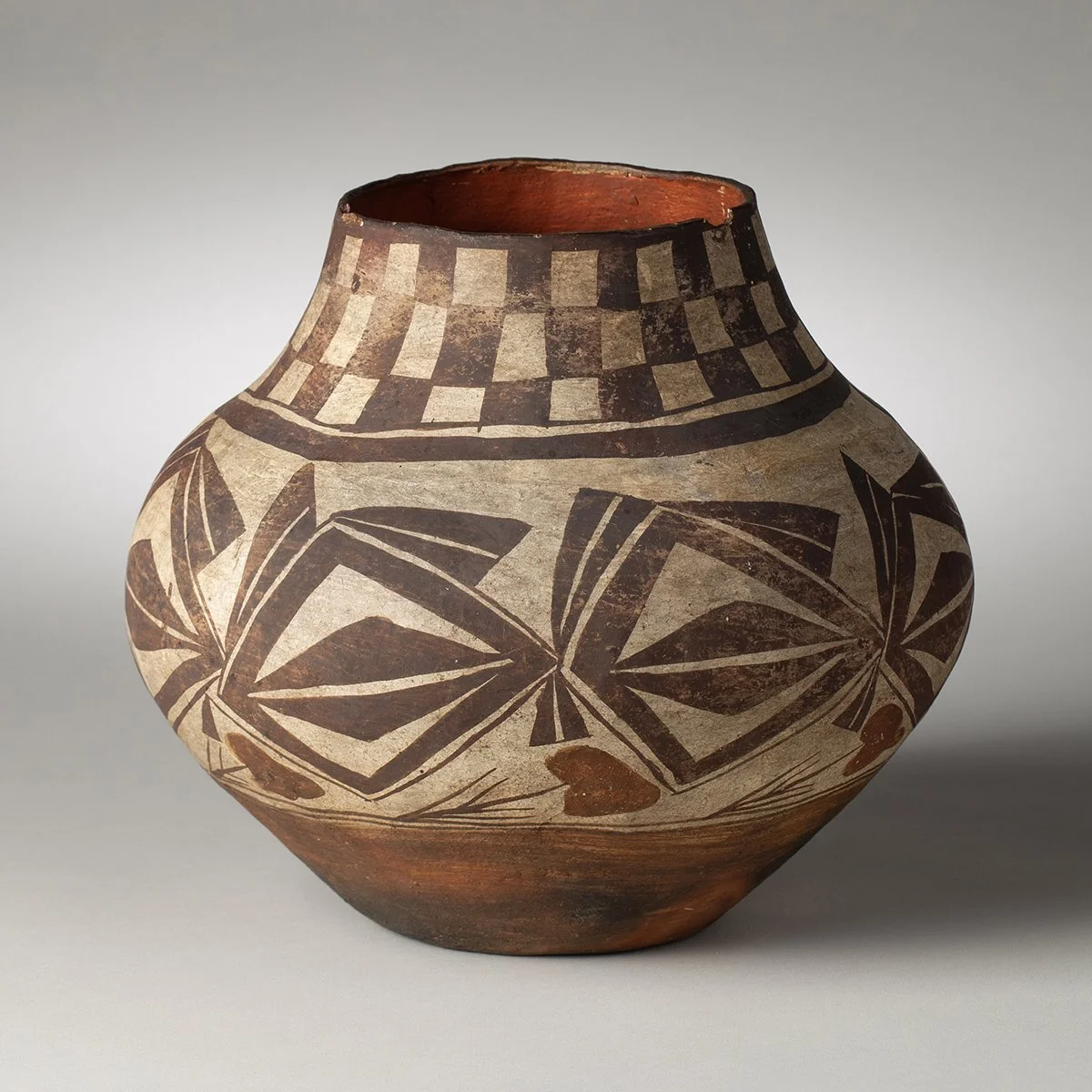 Image 1 of 7
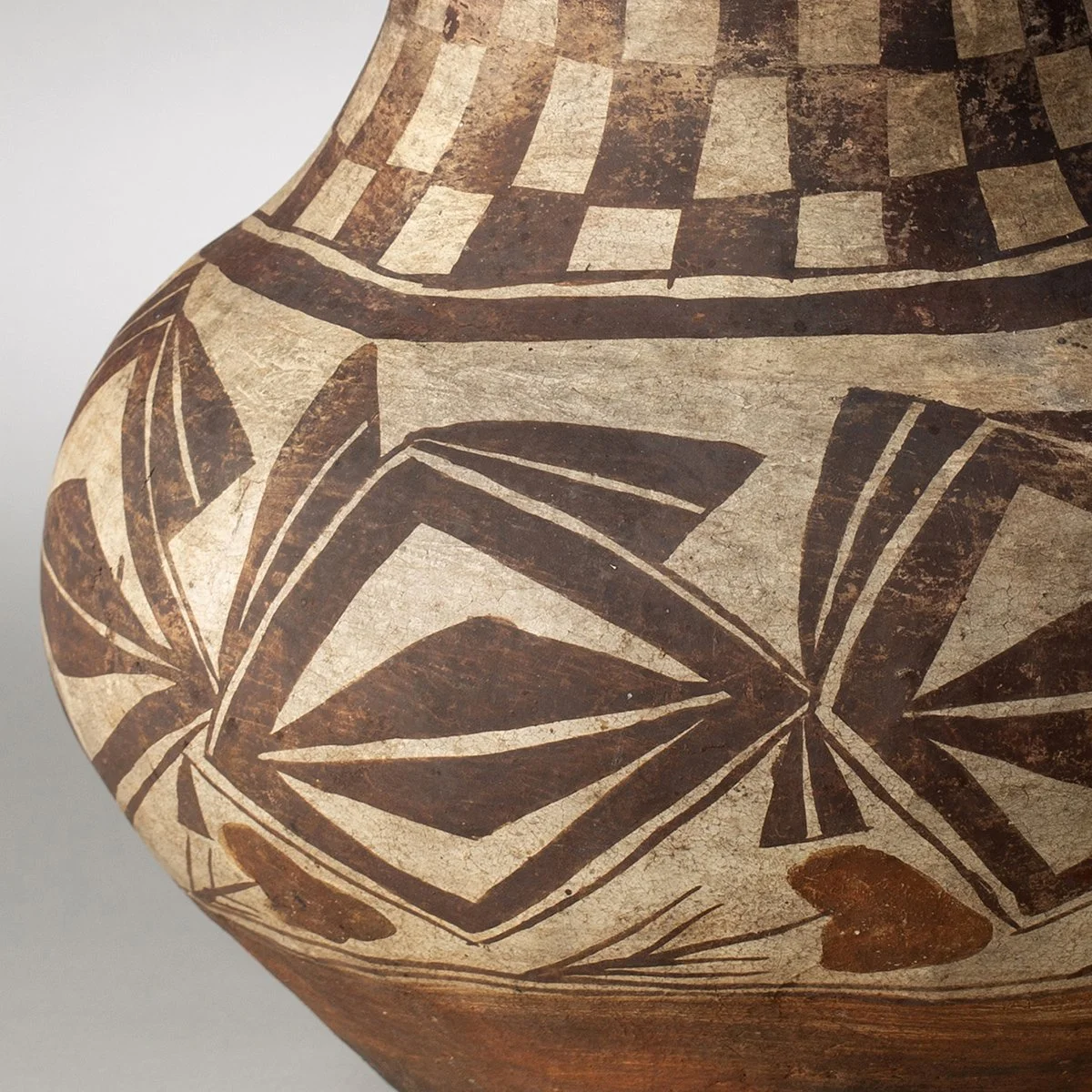 Image 2 of 7
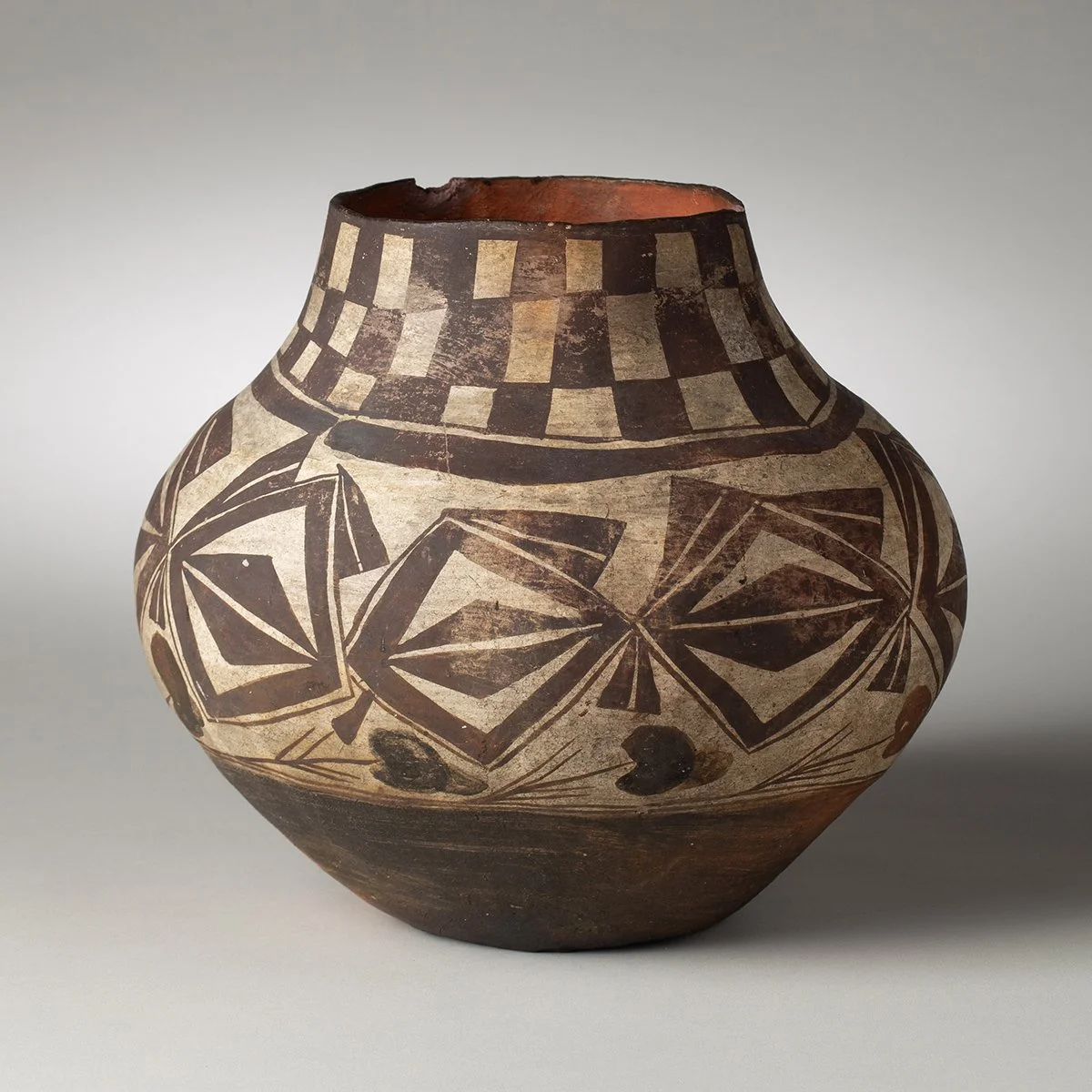 Image 3 of 7
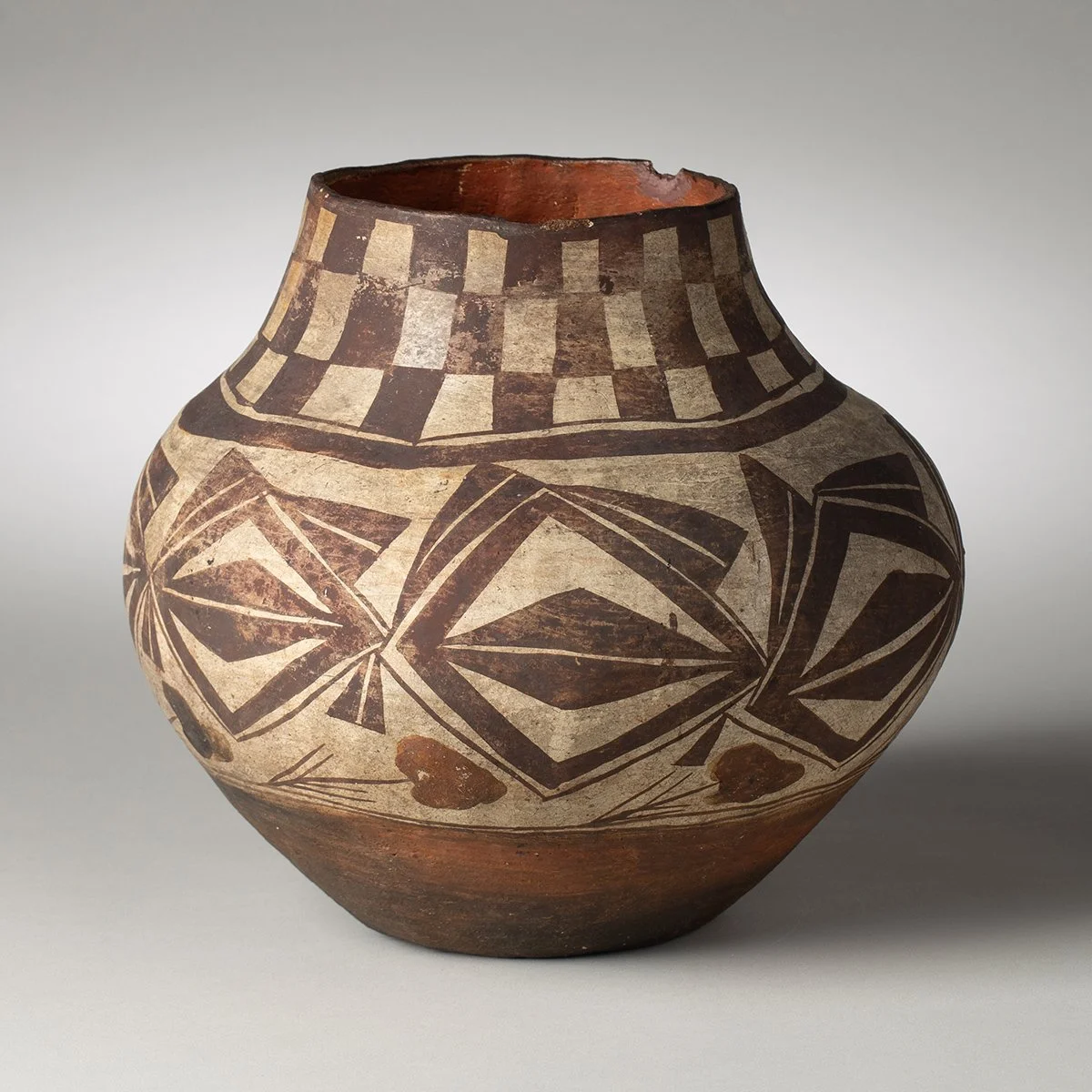 Image 4 of 7
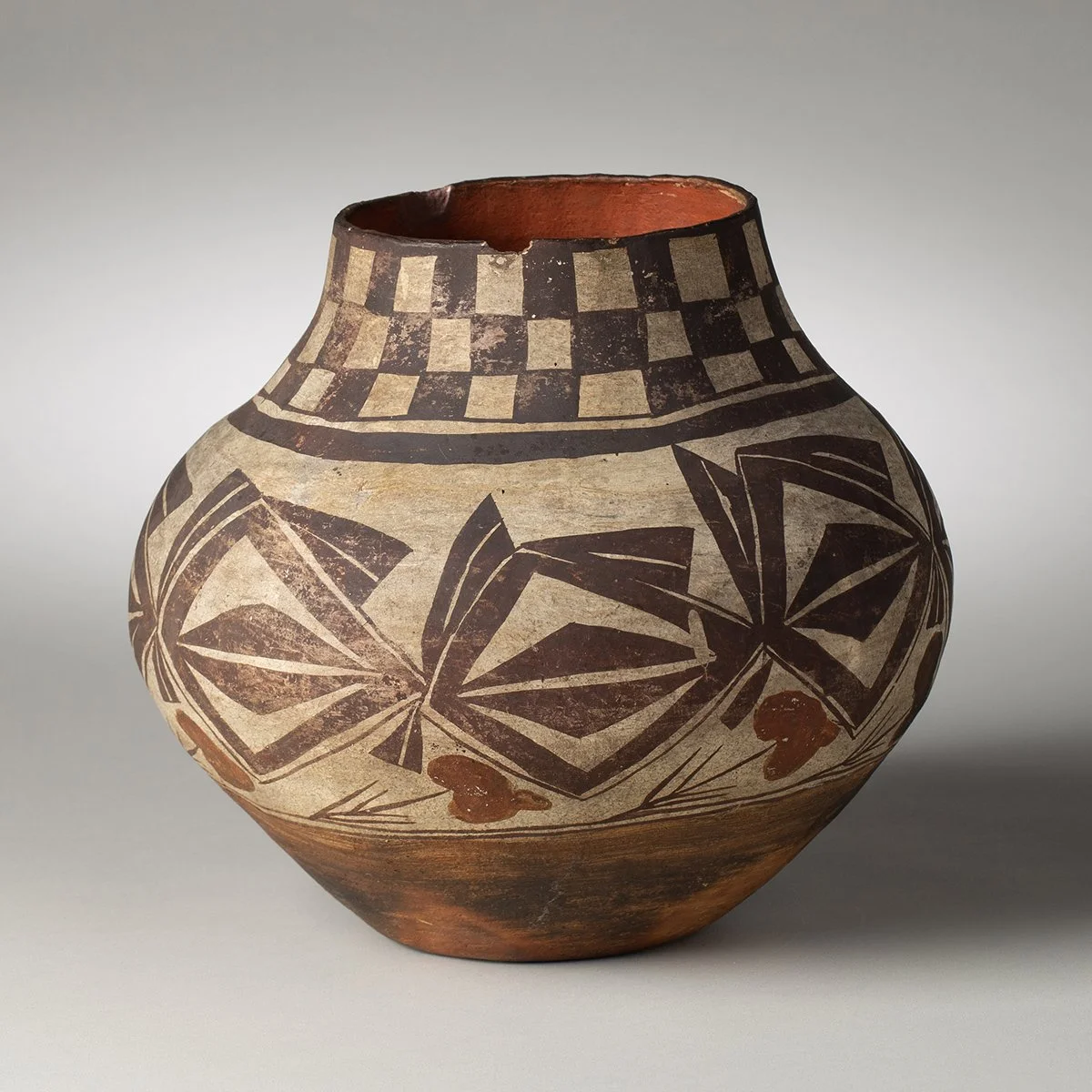 Image 5 of 7
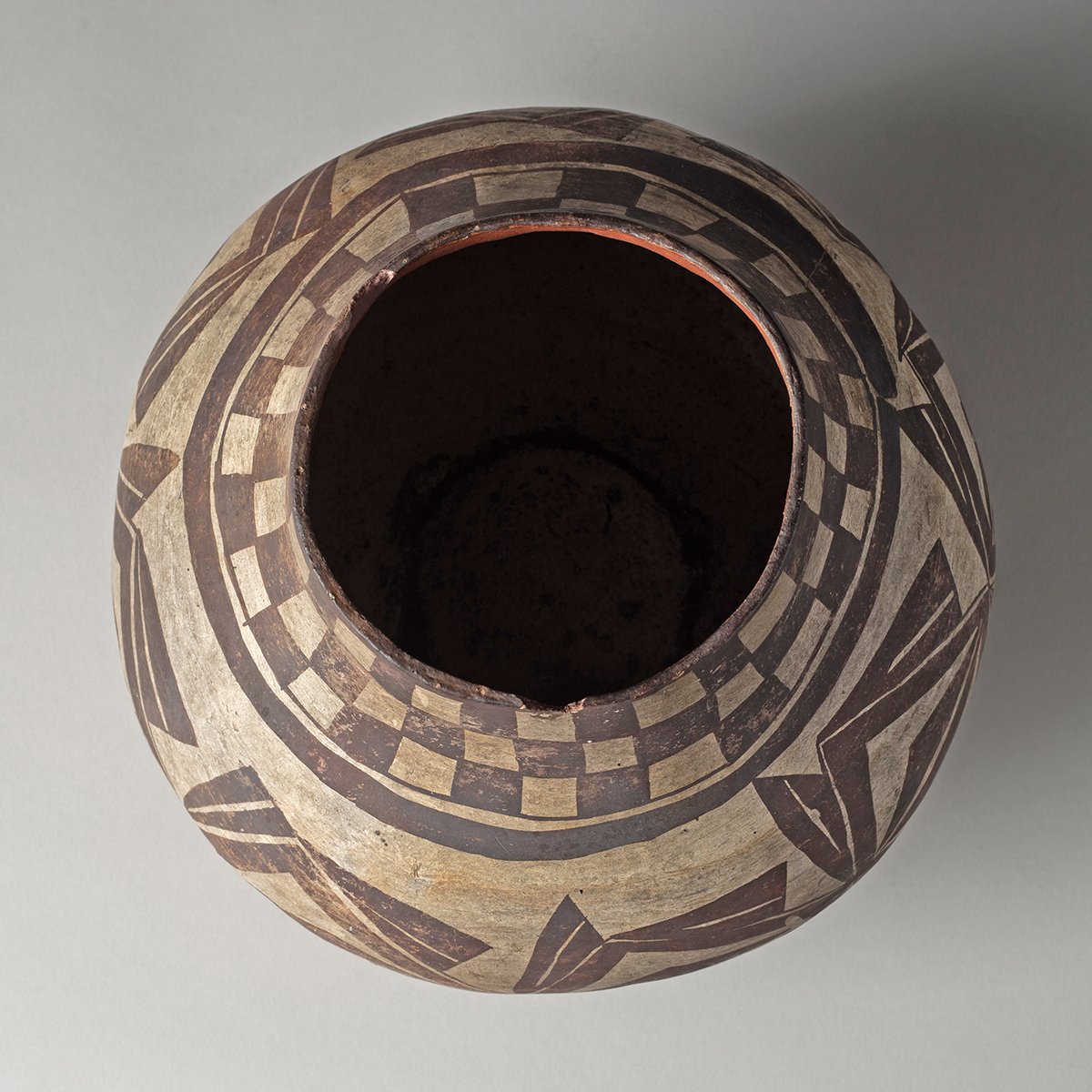 Image 6 of 7
 Image 7 of 7